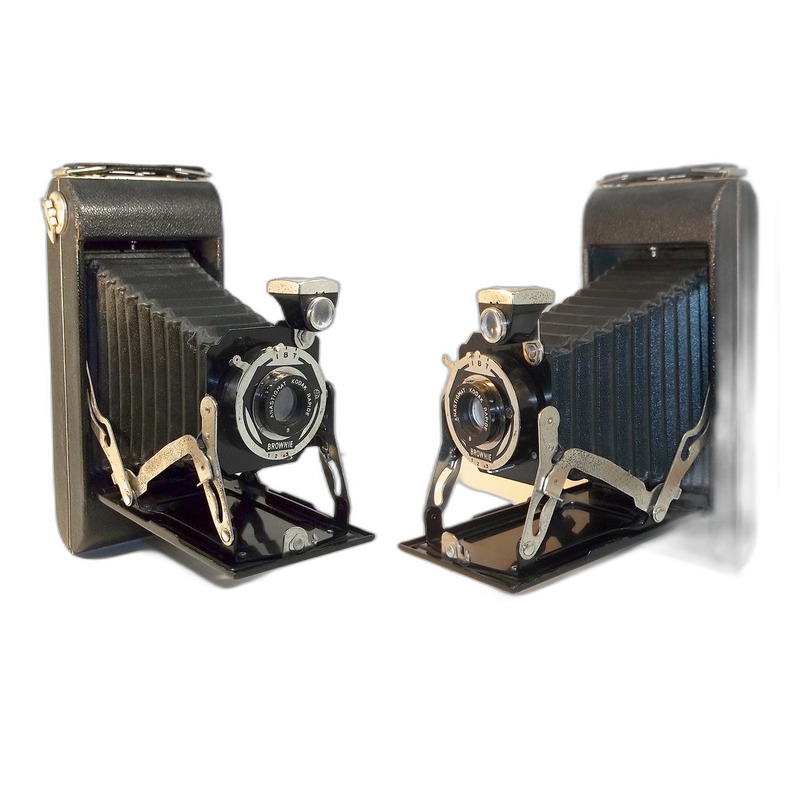
Kodak Six-16 Folding Hawk-Eye
Kodak · USA · 1933–1934 (1 years) · 135 film
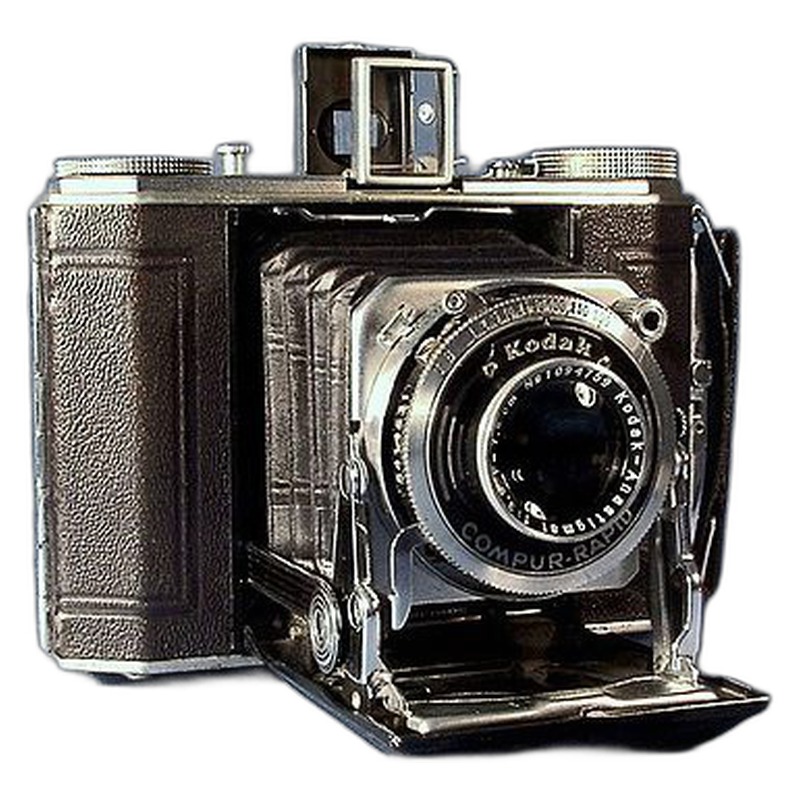
The Six-16 Folding Hawk-Eye represents an interesting transitional period for Kodak as the company began exploring 35mm photography during the early 1930s. This folding camera was produced for only one year (1933-1934), suggesting it may have been an experiment or mid-market offering rather than a flagship product. Its name hints at a design that potentially accommodated both 616 film plates and the emerging 135 format, reflecting Kodak's strategy of maintaining backward compatibility while advancing toward standardized smaller film formats. As a folding camera, it featured a bellows mechanism to extend the lens from its compact protective housing, making it portable enough for casual photographers while still maintaining the optical quality typical of medium format cameras of the era.
The camera showcases Kodak's engineering capabilities during the Great Depression, when the company maintained quality despite economic constraints. It likely included a simple yet reliable shutter mechanism and a moderate quality lens system, designed to deliver good results at an accessible price point. While not revolutionary in its design or features, the Six-16 Folding Hawk-Eye represents an important step in Kodak's evolution toward embracing 35mm photography that would later flourish with their Retina series. Its brief production run makes it a somewhat elusive piece of Kodak's historical lineup, appreciated today for its role in the company's transition toward the smaller formats that would eventually dominate consumer photography.
Specifications
| Film Format | 135 |
 Enjoy this museum? Support on Ko-fi