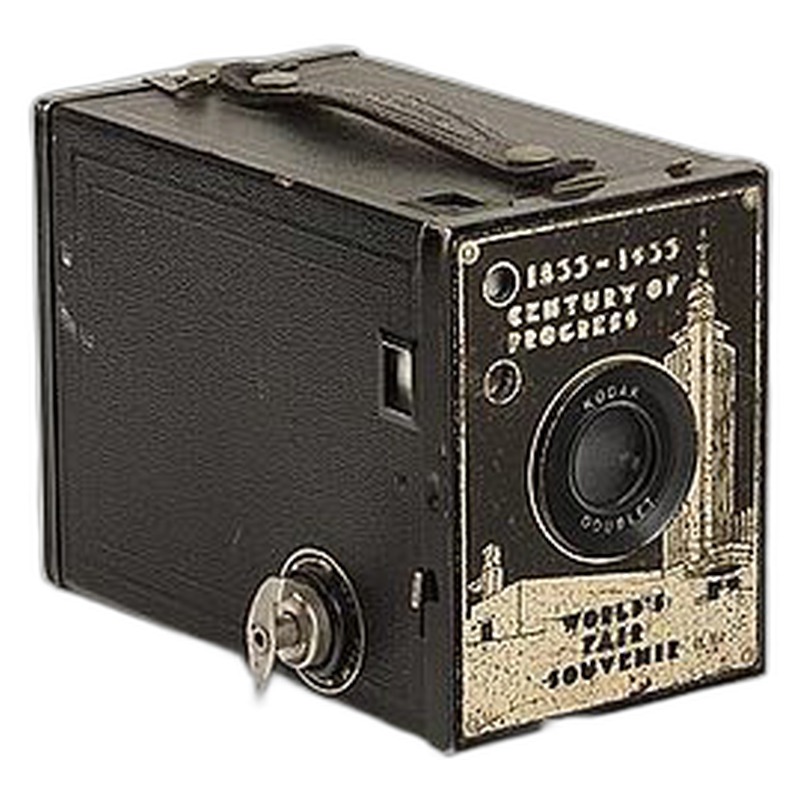
Kodak Century of Progress
Kodak · USA · 1933 · 135 film
Introduced in 1933 to coincide with the Chicago World's Fair, the Century of Progress represents Kodak's significant entry into the burgeoning 35mm still camera market at a time when this format was still establishing itself for amateur photographers. Designed as a straightforward, user-friendly camera, it featured a simple box-like construction typical of the era, utilizing 135 film cassettes but offering fixed focusing and a basic shutter speed range. Its primary appeal lay in its accessibility and the association with the futuristic "Century of Progress" theme, offering consumers a glimpse into modern photography without the complexity or cost of more sophisticated European models like Leica or Contax. The camera aimed to popularize 35mm shooting within the American market, leveraging Kodak's massive brand recognition and distribution network.
While technically unremarkable in features compared to contemporary imports, the Century of Progress holds importance as a marker in Kodak's history and the broader adoption of 35mm film for still photography. Its launch signaled Kodak's commitment to this format and its intent to bring it to the mass market. The camera embodies a transitional phase in photography, moving away from larger roll films towards the smaller, more convenient 135 cartridge that would eventually dominate. Its simple, functional design focused on ease of use over technical innovation, reflecting Kodak's strategy of making photography accessible to a wider audience during the Great Depression.
Specifications
| Film Format | 135 |
 Enjoy this museum? Support on Ko-fi