Pricing
Canon 7
Canon · Japan · 1961–1968 (7 years) · 135 film
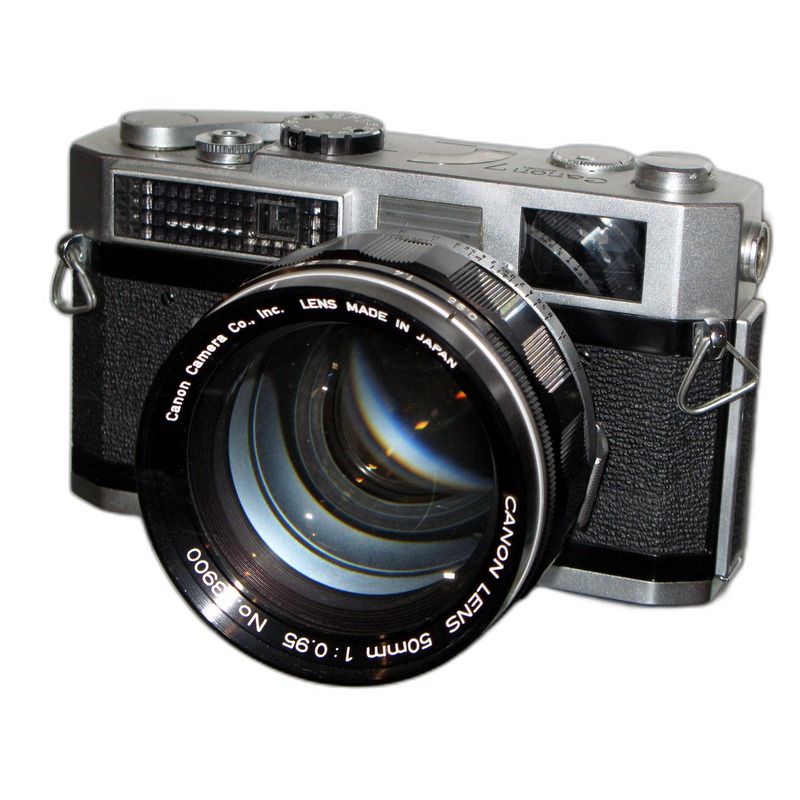
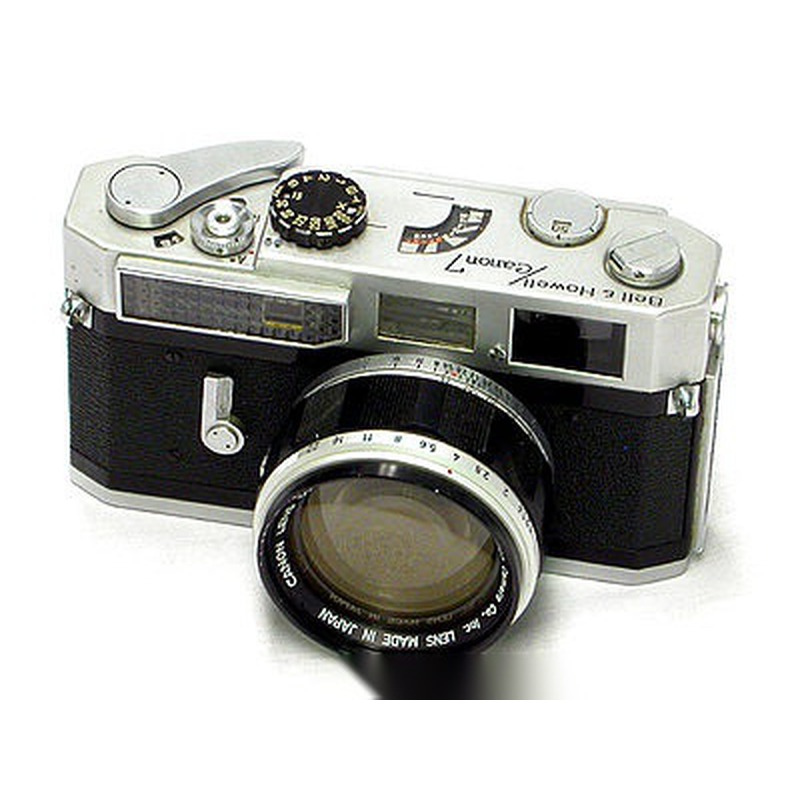
The Canon 7, introduced by Canon Inc. in September 1961, holds a significant place as the final model in the company's lineup compatible with the Leica M39 screw-mount lens system. Emerging during a period of intense innovation in 35mm photography, this rangefinder camera marked a transitional moment. Its design represented Canon's commitment to refining established rangefinder technology while integrating contemporary advancements like a built-in selenium light meter, catering to photographers seeking precision and convenience before the widespread adoption of single-lens reflex (SLR) cameras. Production continued until 1968, bridging the gap between classical rangefinder dominance and the emerging SLR era.
Manufactured with Canon's characteristic attention to detail, the Canon 7 featured a focal-plane shutter integrated within a robust, compact rangefinder body. This combination allowed for reliable operation and compatibility with a vast array of M39 lenses, offering users significant flexibility. A key design innovation was the incorporation of a coupled selenium light meter, providing real-time exposure readings directly within the viewfinder. This meter, powered by ambient light without needing batteries, was a notable step towards user-friendly automation, significantly simplifying exposure control for photographers accustomed to external meters or guesstimation. Its status as the last M39-mount rangefinder underscored a major shift in Canon's product strategy towards proprietary mounts and SLF technology.
Specifications
| Type | Rangefinder |
| Film Format | 135 |
| Lens / Mount | Leica M39 Screw Mount with special bayonet mount for 50 mm f0.95 lens and the Canon Mirror Housing 2 |
/main.jpg)
/main.jpg)
/main.jpg)
/main.jpg)
 Enjoy this museum? Support on Ko-fi