/main.jpg)
Pricing
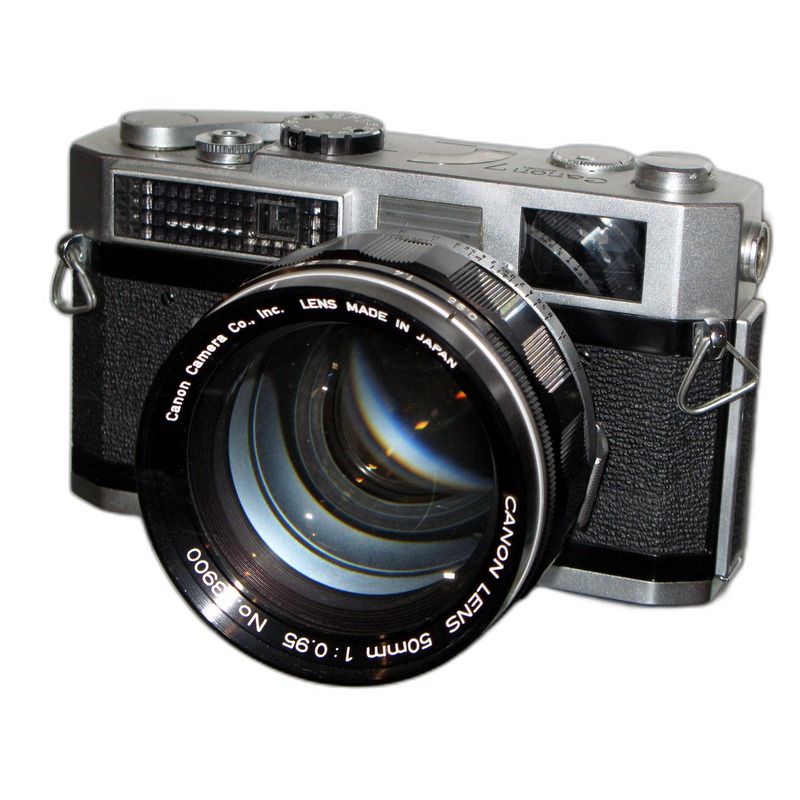
Canon 7 (black with 0.95 50mm lens)
Canon · Japan · 1961–1964 (3 years) · 135 film
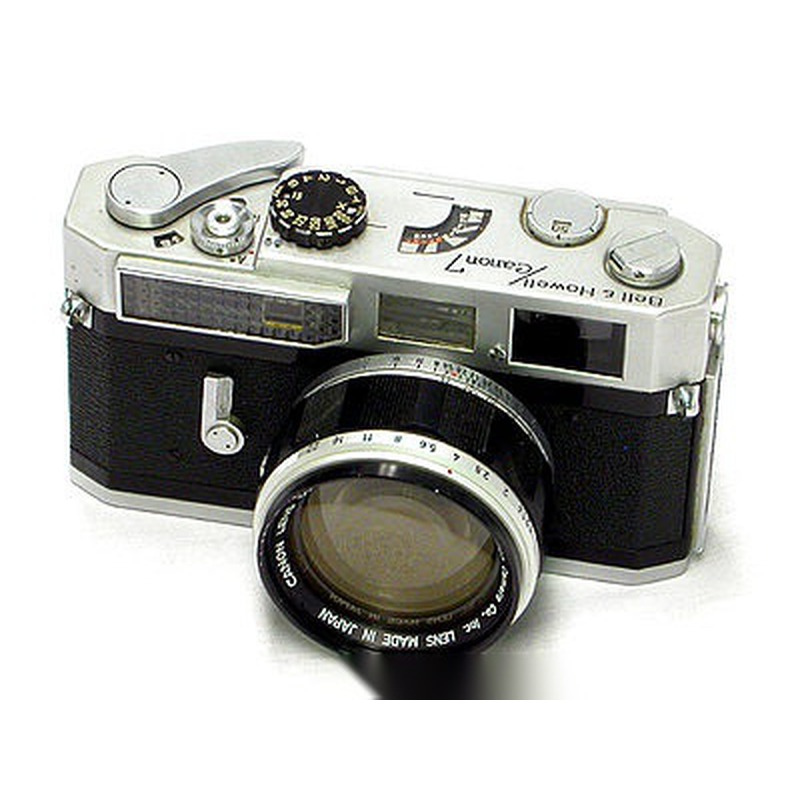
The Canon 7, particularly the black version equipped with the remarkable f/0.95 50mm lens, represents a pivotal moment in Canon's evolution and rangefinder camera history. Emerging in 1961, it was Canon's most ambitious and technologically advanced rangefinder camera, directly challenging the dominance of Leica in the professional market. Unlike many contemporary Canonet models aimed at enthusiasts, the 7 was positioned as a serious professional instrument, featuring a robust die-cast body with metal top and bottom plates and a bright, large viewfinder/rangefinder assembly with parallax correction lines. Its core innovation lay in compatibility with the Canonbayonet mount (later the FL mount), allowing access to a growing range of high-quality lenses. However, the true defining feature of this specific configuration was the inclusion of the f/0.95 50mm lens, an exceptionally fast optic developed jointly with Canon and the lens manufacturer Nikon (under a different brand name at the time). This lens pushed the boundaries of low-light photography, enabling photographers to capture images in conditions previously impossible with standard rangefinder lenses, earning it legendary status among users like war photographers and photojournalists requiring maximum light-gathering capability. While production ended in 1964, the Canon 7 and its f/0.95 lens remain highly coveted examples of Japanese craftsmanship and optical ingenuity, bridging the gap between Canon's earlier rangefinders and their eventual SLR dominance.
Specifications
| Film Format | 135 |
/main.jpg)
/main.jpg)
/main.jpg)
 Enjoy this museum? Support on Ko-fi