/main.jpg)
Pricing
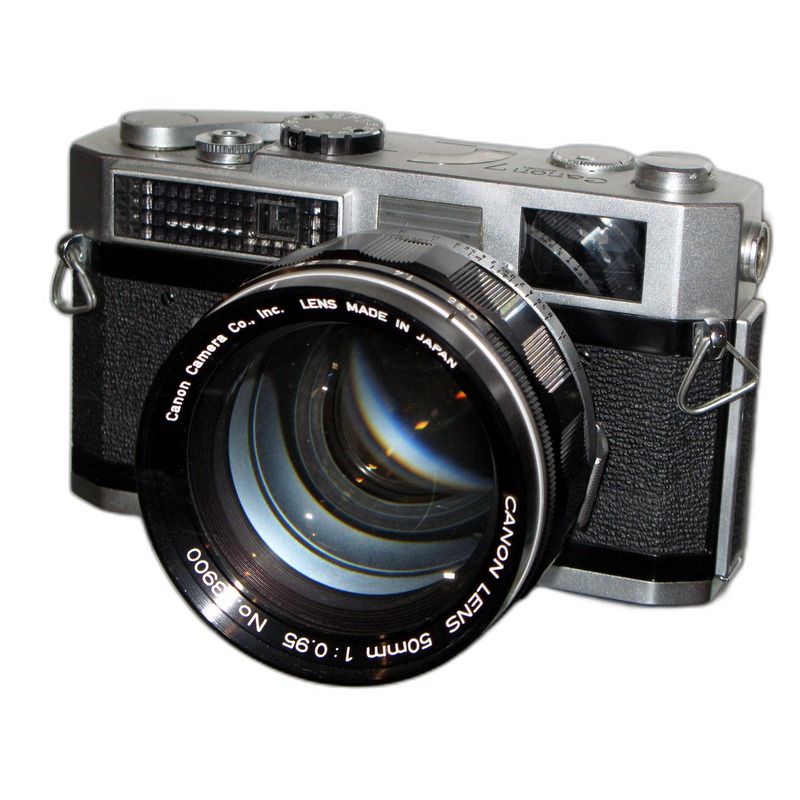
Canon 7 (Chrome)
Canon · Japan · 1961–1964 (3 years) · 135 film
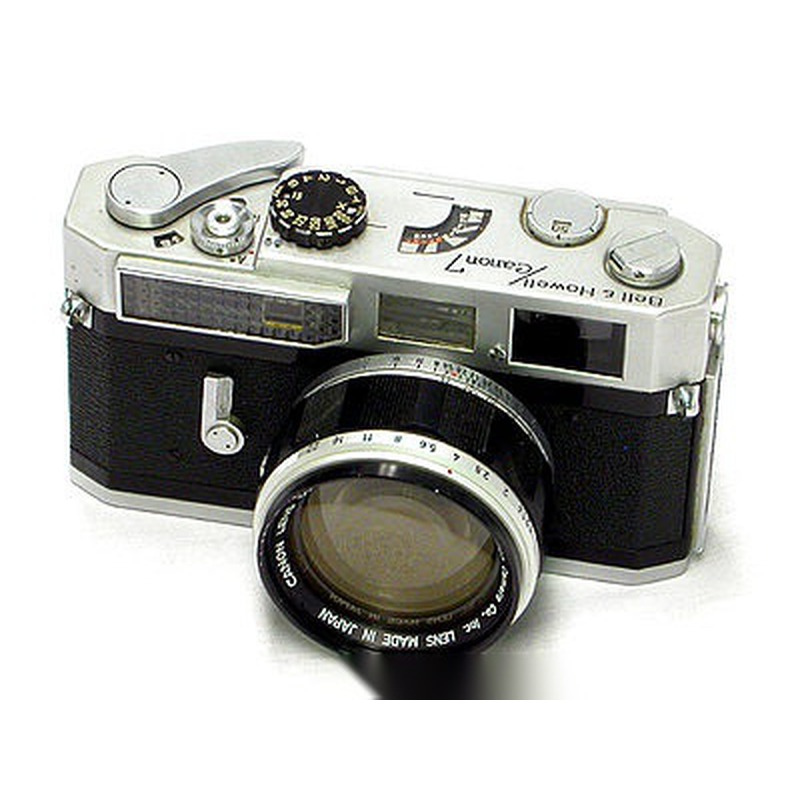
The Canon 7 (Chrome) represents a significant chapter in Canon's history as the company's flagship rangefinder camera launched in 1961, designed to compete directly with the likes of Leica in the premium 35mm market. Built to a high standard with a robust chrome-plated brass body and precision-machined components, it featured an advanced coupled rangefinder system with a unique 1:1 magnification viewfinder, allowing accurate focusing even with wide-angle lenses. It was the first Canon camera to introduce the new FL lens mount, replacing the earlier Canon R mount and offering a more precise flange-to-film distance compatibility for a new generation of Canon lenses. Integrated into the top plate was a selenium cell light meter coupled to a needle indicator visible in the viewfinder, providing exposure assistance without bulk. While maintaining the traditional rangefinder aesthetic and control layout, the Canon 7 incorporated several modern refinements for its time.
Although overshadowed by Canon's subsequent SLR revolution, the Canon 7 holds notable historical importance as Canon's most sophisticated and feature-rich rangefinder before the transition. It served as a technological bridge, showcasing the company's engineering prowess in building complex mechanical rangefinder systems while simultaneously developing its new lens mount infrastructure. Its production from 1961 to 1964 coincided with Canon's broader shift towards SLR dominance, marking the peak of their rangefinder development before models like the Canonet series captured the broader market. The Canon 7 remains respected among enthusiasts for its solid construction, excellent viewfinder, and its role in Canon's evolution beyond Leica-inspired designs.
Specifications
| Film Format | 135 |
/main.jpg)
/main.jpg)
/main.jpg)
 Enjoy this museum? Support on Ko-fi