/main.jpg)
Pricing
Leica Ic (18x24, prototype)
Leica · Germany · 1950 · 135 film
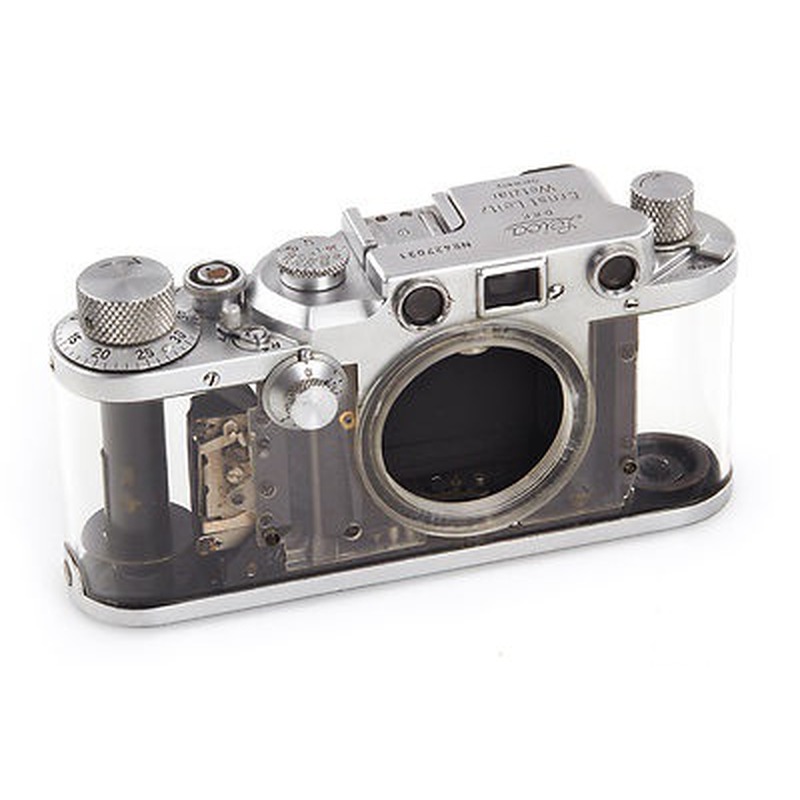
Introduced in 1950 as a prototype by Leica, the Leica Ic (18x24) represents a fascinating, albeit limited, experimental design built upon the classic Leica I body. Its defining characteristic is the adoption of the 18x24mm format on standard 135 film cartridges, effectively creating a half-frame system. This approach aimed to potentially double the number of exposures per roll compared to the standard 24x36mm format, likely targeting cost-conscious photographers or specific applications requiring smaller negatives. Sharing the core mechanics and aesthetic of the production Leica I series, it featured a coupled rangefinder viewfinder and a fixed lens mount, maintaining Leica's reputation for precision engineering typical of the post-WWII era. However, crucially, it remained a prototype, meaning it was never commercially manufactured or sold, surviving only in very small numbers as a testbed for this format concept on their earliest 35mm body.
The prototype status and its unique 18x24mm format make it a noteworthy, albeit niche, artifact in Leica's history. It underscores Leica's continuous exploration of film utilization and system design during this period. While embodying the solid build quality and fundamental optical principles expected of Leica, its existence purely as a experiment prevents it from achieving widespread historical impact beyond the realm of specialized collectors and camera historians interested in the evolution of 35mm photography formats.
Specifications
| Film Format | 135 |
_'Monte_en_Sarre'/main.jpg)
_Syn_'Leitz-Eigentum'/main.jpg)
 Enjoy this museum? Support on Ko-fi