/main.jpg)
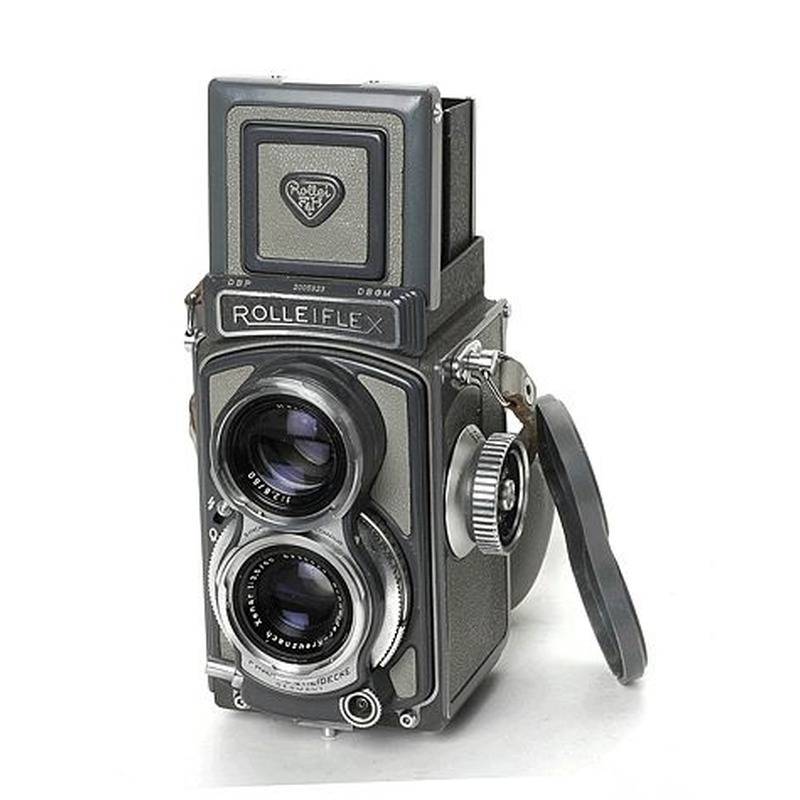
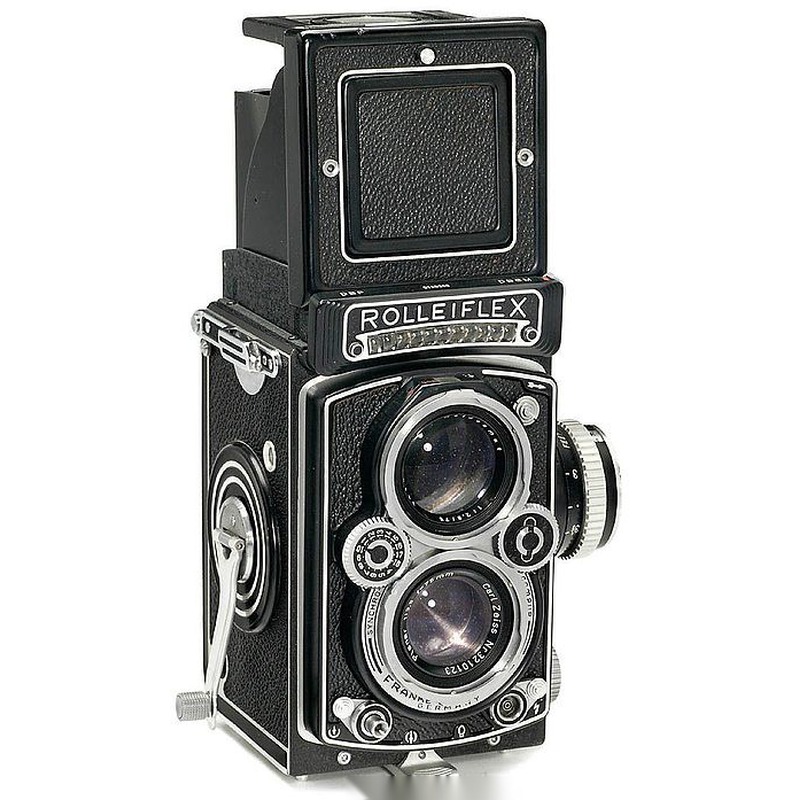
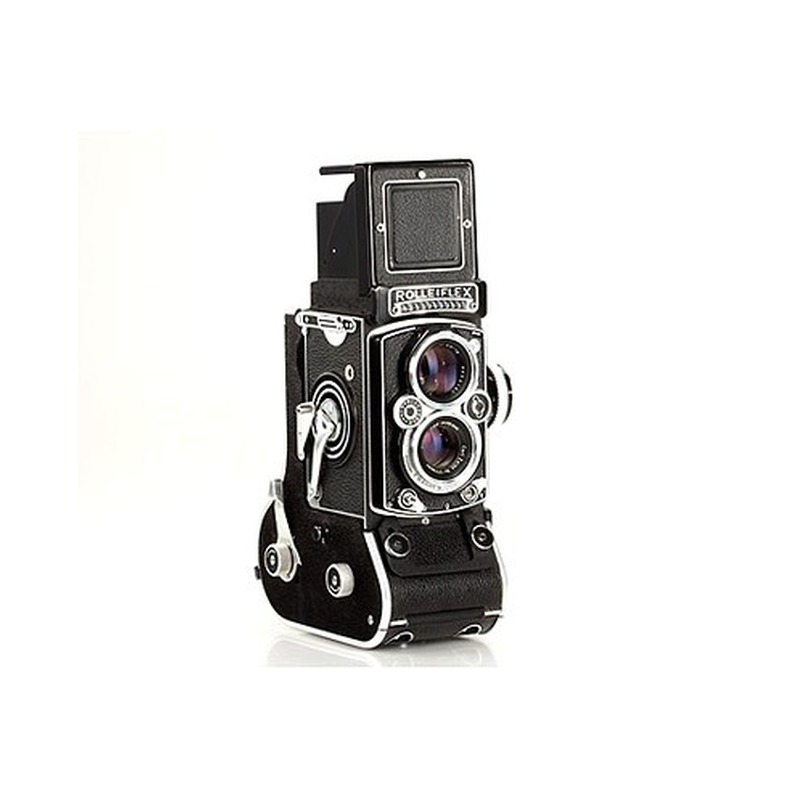
Rolleiflex 4x4 Baby (grey/black)
Rollei · Germany · 1957–1963 (6 years) · 120 film
The Rolleiflex 4x4 Baby (grey/black) represents Rollei's successful effort to extend the prestigious twin-lens reflex (TLR) medium format experience to a broader market. Introduced in 1957 as a smaller, lighter, and more affordable sibling to the iconic standard Rolleiflex models, the Baby utilized the same proven twin-lens reflex principle but was designed around a 4cm x 4cm image size on 120 film, making it the most compact and Rollei-produced Rolleiflex of its era. Its distinct grey finish (often with black trim) set it apart visually, while maintaining the robust build quality characteristic of Rollei construction. The camera featured the expected waist-level viewfinder with a brilliant focusing screen and a simple but reliable shutter-speed dial and aperture control system, enabling high-quality square format photography with the convenience and immediacy of a TLR, popularized primarily by amateur enthusiasts and photographers seeking a portable medium format option.
While not possessing the groundbreaking historical impact of Rollei's earlier standard models or other industry-defining cameras, the 4x4 Baby holds significant importance as a key instrument in popularizing medium format photography outside the professional realm. Its production run from 1957 until 1963 coincided with the peak years of TLR popularity. By offering a genuine Rollei experience in a smaller and more accessible package, it democratized the medium format square format aesthetic and the superior image quality associated with larger negatives compared to 35mm. Its legacy lies in being a well-built, practical, and relatively affordable entry point into the world of serious amateur and semi-professional medium format photography, embodying Rollei's engineering excellence in a more compact form.
Specifications
| Film Format | 120 |
 Enjoy this museum? Support on Ko-fi