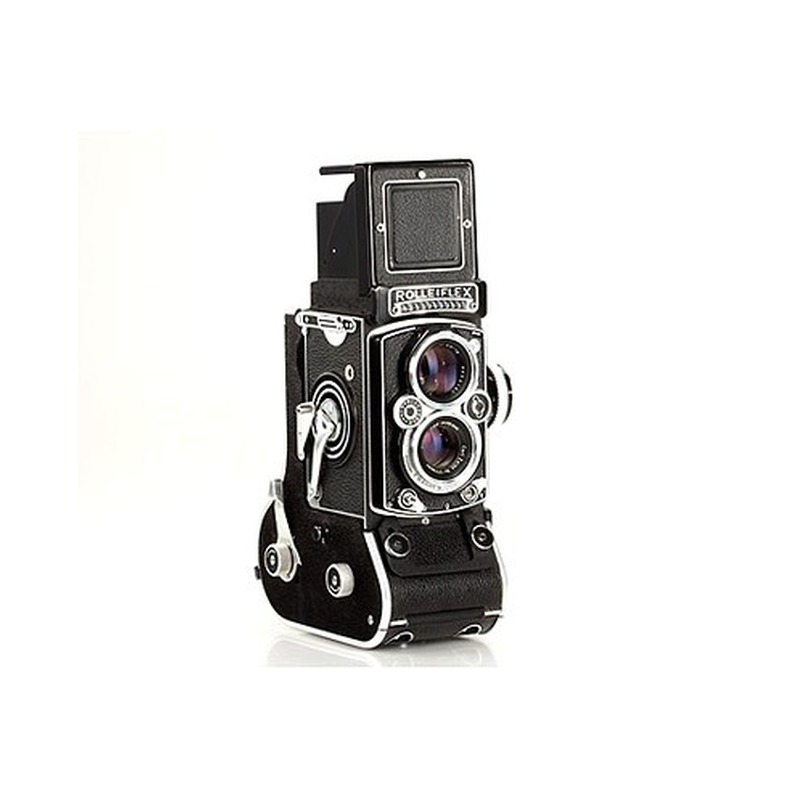
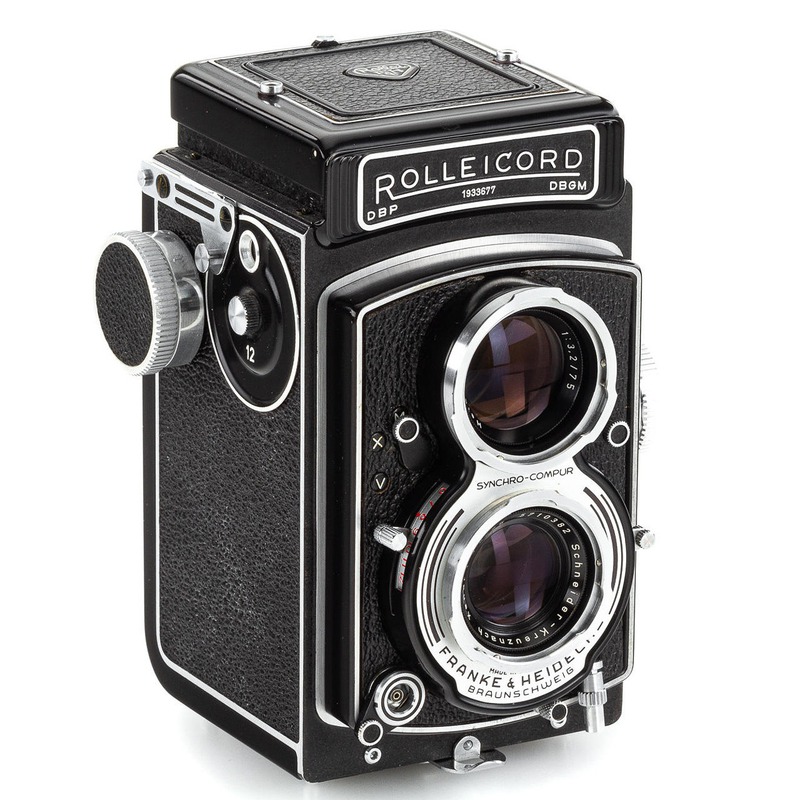
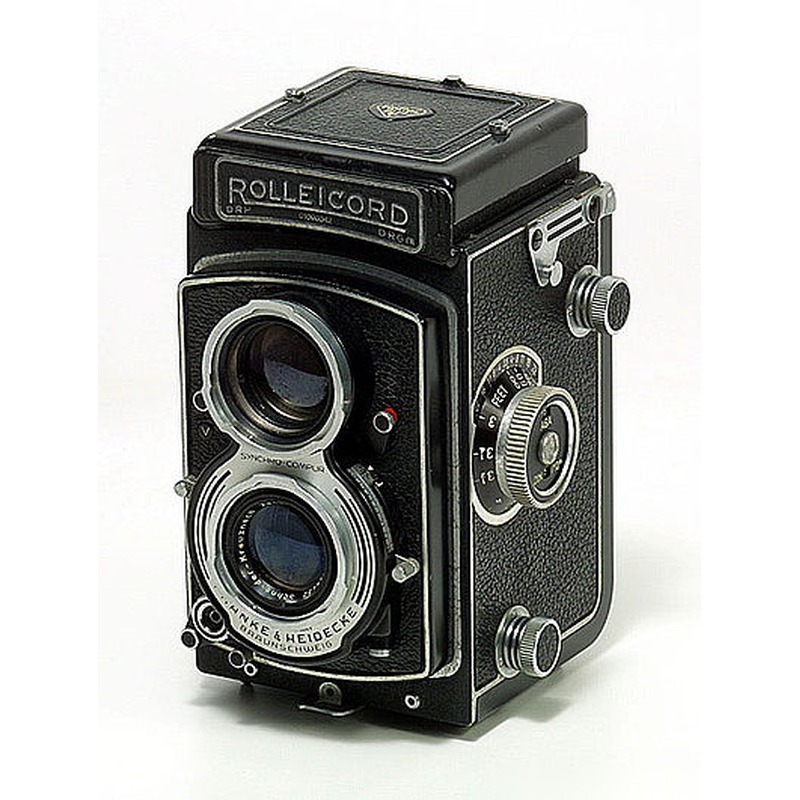
Rolleiflex 3.5 C Rollei-Mag 150
Rollei · Germany · 1958 · 120 film
The Rolleiflex 3.5 C Rollei-Mag 150 represents a refined iteration in Rollei's esteemed line of twin-lens reflex (TLR) medium format cameras. Introduced in 1958, it occupies a position within the mid-range "C" series, offering a combination of robust construction and advanced features for professional and serious amateur photographers. The core design remains characteristic of the Rolleiflex legacy: a waist-level viewing and focusing TLR system utilizing two matched lenses – a viewing lens and a taking lens – which provides a precise, laterally reversed image on a ground glass screen. The "3.5" designation typically signifies a high-quality lens system, often featuring Schneider Kreuznach Xenotar or Carl Zeiss Planar lenses renowned for their sharpness and contrast, capable of producing exceptional 6x6 cm negatives on 120 roll film. The inclusion of the "Rollei-Mag 150" refers specifically to its film magazine back, designed for 120 film loading, a standard and versatile format for the era. Its metal body and precise mechanics reflected Rollei's commitment to durability and reliability, competing in a market where SLRs like the Hasselblad 500C and Contaflex were also gaining traction.
While sharing the iconic TLR silhouette and operational principles of its predecessors, the 3.5 C incorporated refinements over earlier models. It offered improved focusing mechanisms, brighter viewing screens compared to older Rolleiflex models, and maintained Rollei's signature excellence in build quality with features like helical focusing and robust shutters. It served as a practical tool for portrait, documentary, and fashion photographers who valued the TLR's quiet operation, unique shooting perspective, and the square image format. Although eventually overshadowed in the long term by the rise of 35mm SLRs and later 120 SLRs, the Rolleiflex 3.5 C Rollei-Mag 150 stood as a significant and highly capable instrument in the late 1950s and 1960s, representing a peak of mid-century TLR design and manufacturing quality.
Specifications
| Film Format | 120 |
/main.jpg)
 Enjoy this museum? Support on Ko-fi