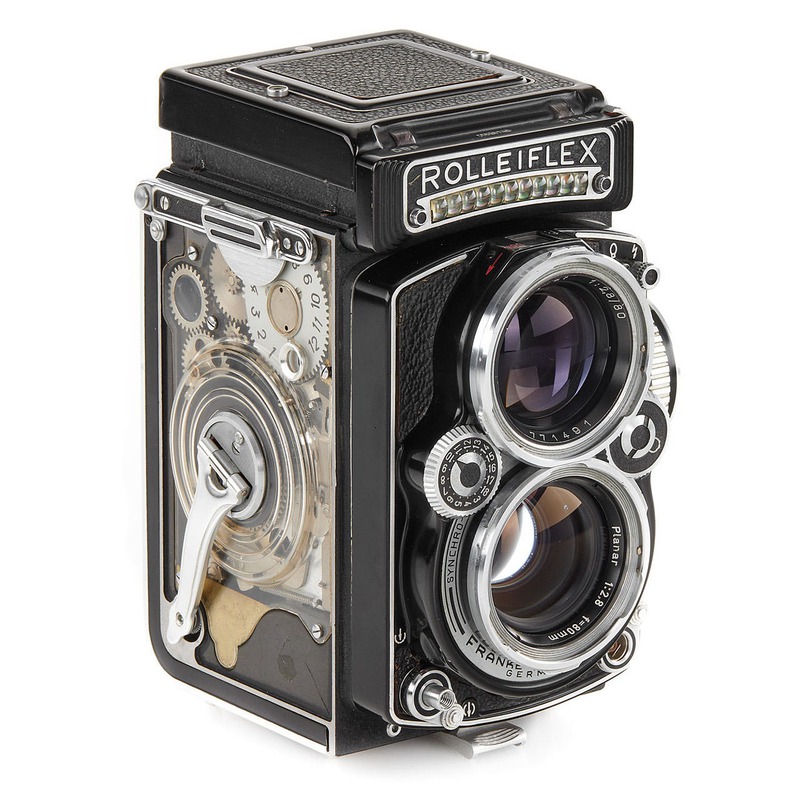
Rolleiflex 2.8 E Display
Rollei · Germany · 1956–1959 (3 years) · 120 film
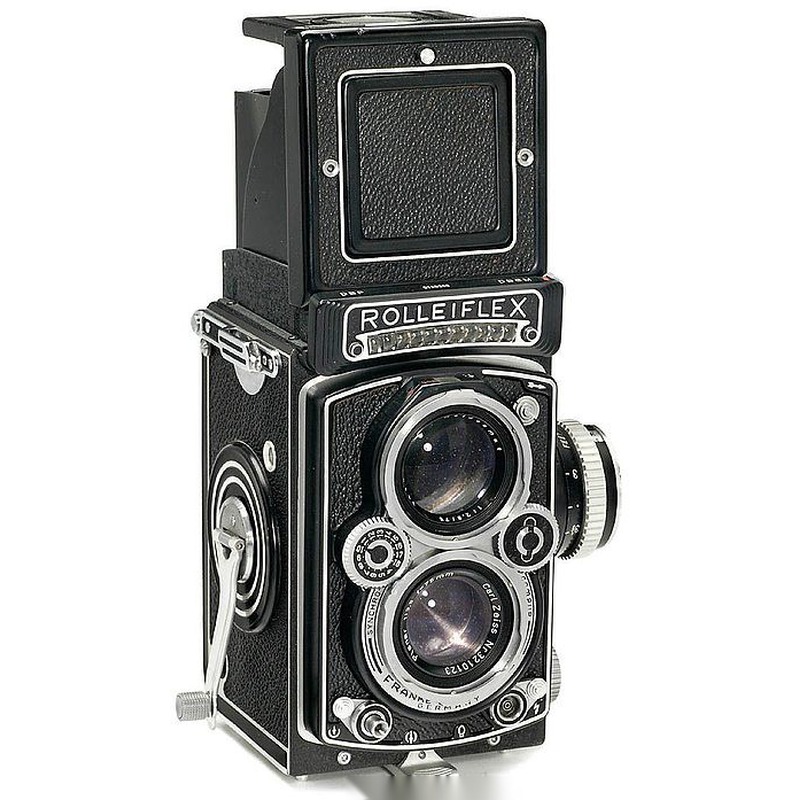
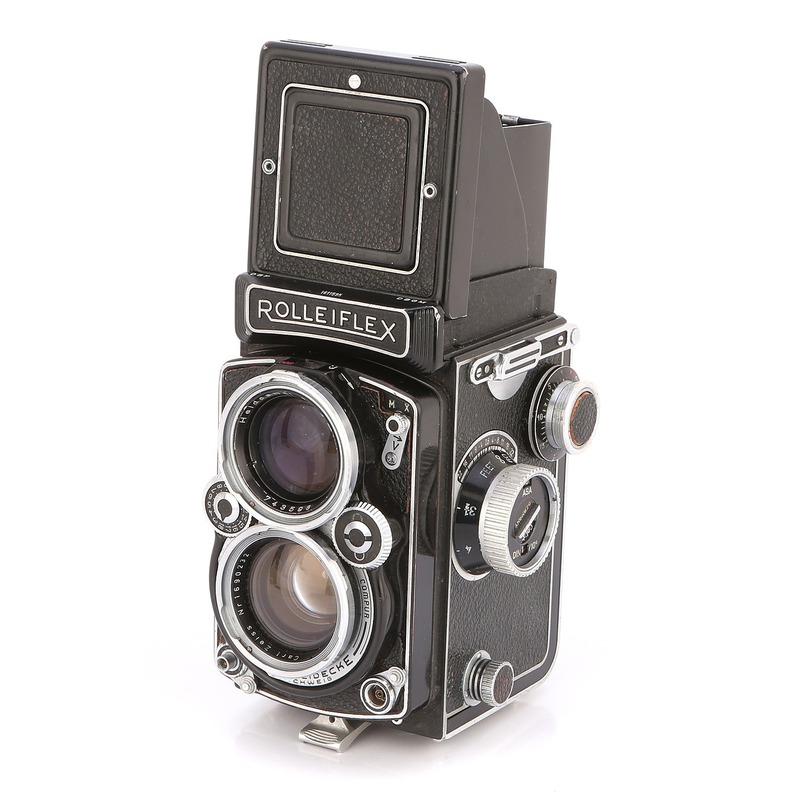
The Rolleiflex 2.8 E Display represents one of the pinnacle achievements in mid-century twin-lens reflex camera design. Produced by Rollei from 1956 to 1959, this medium format (120) camera exemplifies German precision engineering at its finest. The "2.8" designation refers to its Schneider-Kreuznach Xenotar lens, which offered a maximum aperture of f/2.8—a significant advancement over earlier Rolleiflex models and among the brightest lenses available in any TLR of its era. The "Display" variant featured a hooded magnifier that facilitated precise focusing, a critical advantage for professional photographers working with medium format film.
The Rolleiflex 2.8 E Display became the tool of choice for numerous renowned photographers across various disciplines. Photojournalists valued its reliability and superb image quality in demanding conditions, while portrait photographers appreciated its ability to render tones and details with exceptional fidelity. The waist-level finder provided a unique viewing experience that encouraged careful composition, contributing to the camera's distinctive aesthetic. Its robust construction, featuring a metal body and precision mechanics, ensured durability that has allowed many examples to remain in functional condition decades after production. The camera's influence extends beyond its production years, with its design principles continuing to inspire medium format camera development.
For ratings:
Specifications
| Film Format | 120 |
/main.jpg)
 Enjoy this museum? Support on Ko-fi