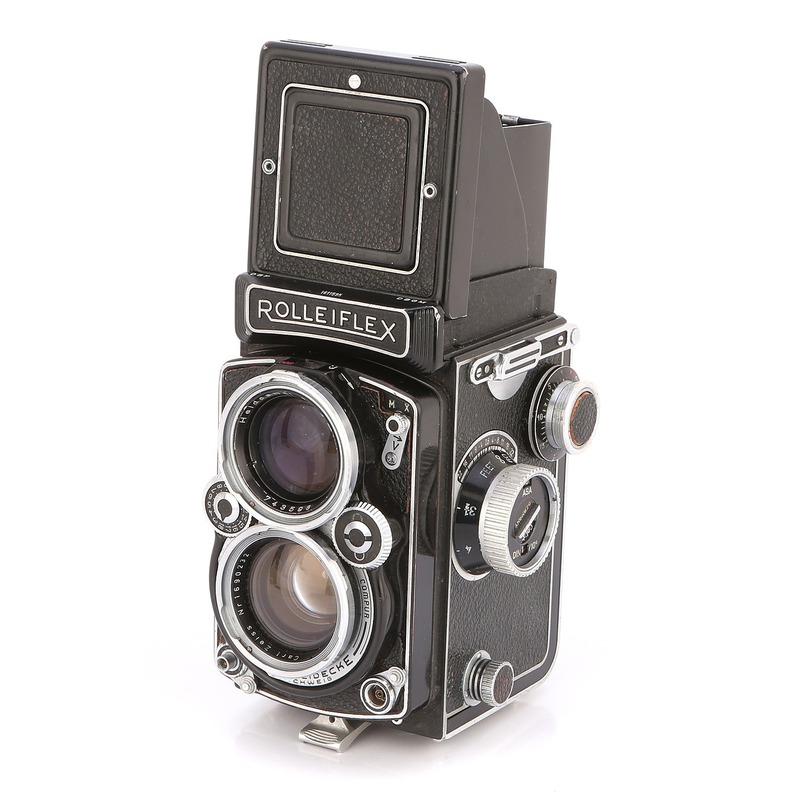
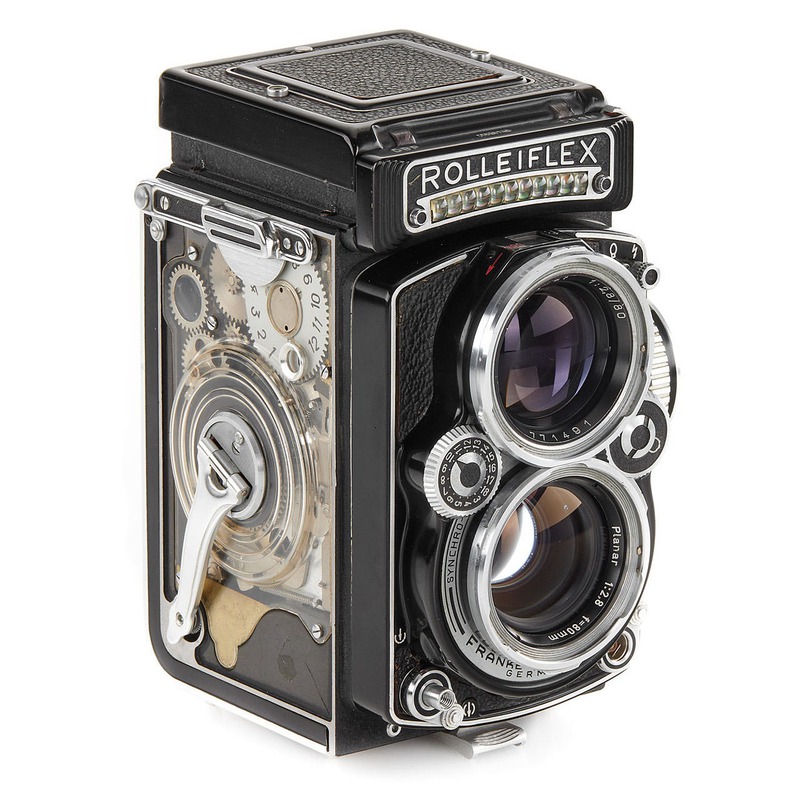
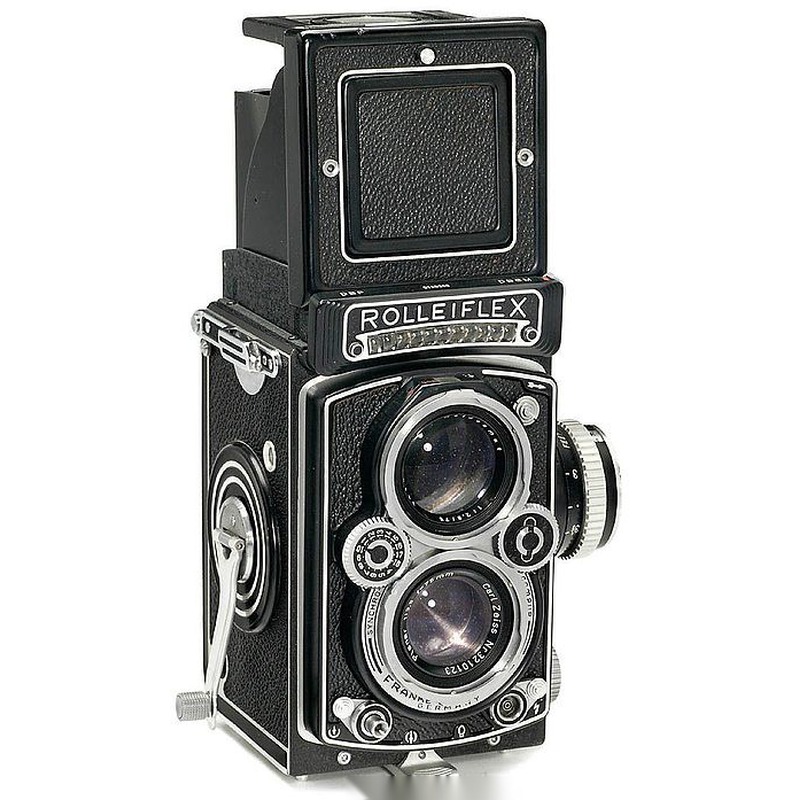
Rolleiflex 2.8 D
Rollei · Germany · 1955–1956 (1 years) · 120 film
The Rolleiflex 2.8 D represents a mid-1950s refinement in Rollei's celebrated twin-lens reflex line, distinguished primarily by its faster f/2.8 lens system compared to earlier models with f/3.5 optics. This medium format camera maintains the classic Rolleiflex design principles with its waist-level finder, 6x6 cm image size on 120 film, and exceptionally robust mechanical construction. Produced during a period when Rollei was perfecting their successful TLR formula, the 2.8 D appealed to professional photographers and serious enthusiasts who appreciated the improved available light capabilities while maintaining the excellent build quality and precision operation that defined the Rolleiflex name.
As a product rather than a revolution, the Rolleiflex 2.8 D exemplifies the German manufacturer's commitment to incremental improvements within their established framework. The camera continues the legacy of Rolleiflex as a preferred tool for portrait and documentary photography during the 1950s, valued for its sharp optics, reliable operation, and unique shooting experience that encourages a more deliberate approach to composition through its waist-level viewfinder. While not groundbreaking in the way earlier models or subsequent innovations might be, the 2.8 D solidified Rollei's position as a premier maker of medium format TLR cameras during the mid-20th century.
Specifications
| Film Format | 120 |
/main.jpg)
/main.jpg)
/main.jpg)
 Enjoy this museum? Support on Ko-fi