/main.jpg)
Pricing
Ernemann Kino I (Amateur-Aufnahme)
Ernemann · Germany · 1902–1904 (2 years) · 135 film
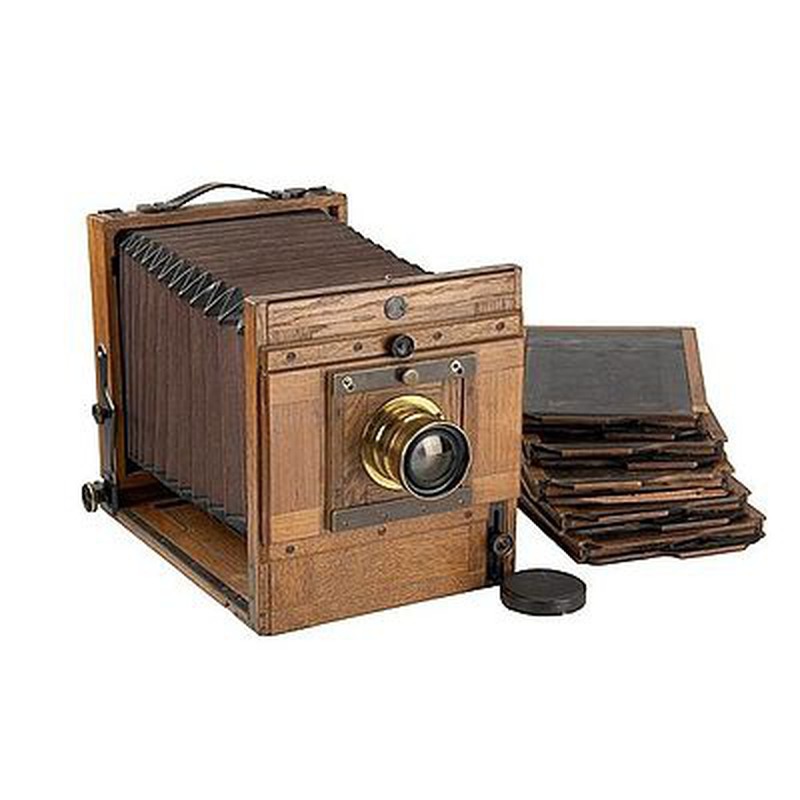
The Ernemann Kino I (Amateur-Aufnahme) represents an early and significant step towards the popularization of 35mm motion picture photography by amateurs. Produced by the German company Ernemann between 1902 and 1904, this camera was specifically designed for the burgeoning market of hobbyist filmmakers, offering a more accessible format compared to the bulky professional equipment of the era. Utilizing the 35mm perforated film strip that was rapidly becoming standard, the Kino I enabled amateurs to capture shorter scenes and experiment with motion picture creation on a smaller scale. Its design reflected practical considerations for non-professionals, likely featuring a simple hand-cranked mechanism for film transport and a basic viewfinder or focusing system. While it didn't achieve the legendary status of later icons like the Leica, the Kino I holds a place as a notable example of the transition towards smaller, more personal motion picture formats before the rise of 16mm and ultimately Super 8.
As a product of the early 20th century, the Kino I embodies the ingenuity of the Ernemann company in responding to evolving photographic trends. Its significance lies in its role as one of the first commercially successful cameras aimed squarely at the amateur cinematographer, utilizing the then-emerging 35mm format for non-professional use. This camera demonstrates Ernemann's commitment to innovation beyond its still photography roots and contributed to the groundwork for the home movie industry that would flourish later in the century. While surviving examples might be rare, the Kino I is historically recognized as a key artifact in the early history of amateur filmmaking.
Specifications
| Film Format | 135 |
/main.jpg)
/main.jpg)


 Enjoy this museum? Support on Ko-fi