/main.jpg)
Pricing
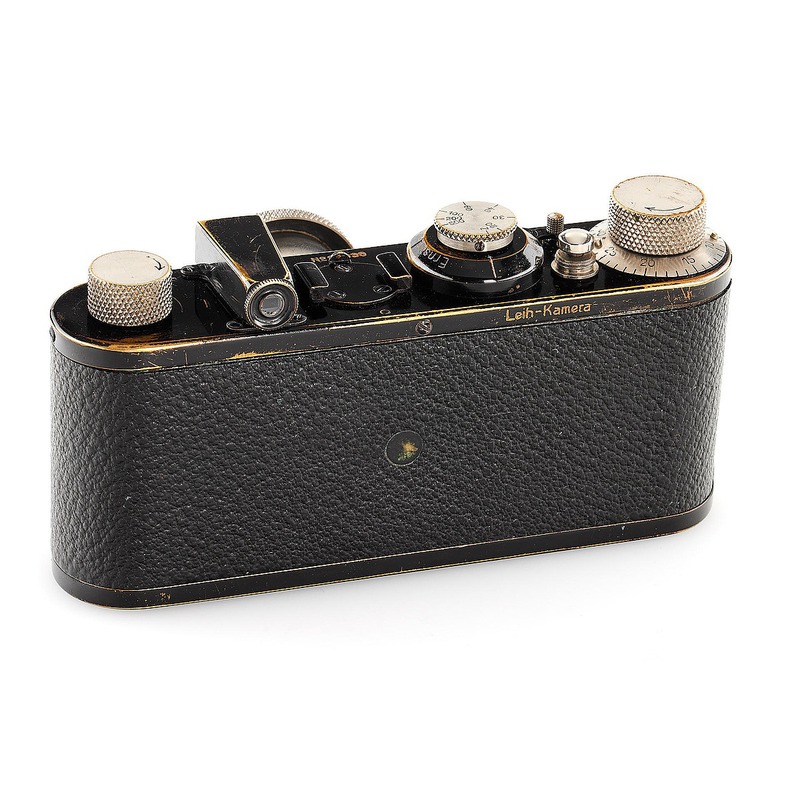
Leica I Mod A 'Calfskin' (Kalf Leather, suede, chequered)
Leica · Germany · 1925–1930 (5 years) · 135 film
The Leica I Mod A 'Calfskin' represents a pivotal moment in photographic history, emerging during the foundational years of 1925-1930 when Leica first established the practical viability of 35mm photography. This early variant embodies the revolutionary shift from cumbersome large and medium format cameras to compact, handheld devices that would transform how photographers worked and what they could capture. The distinctive calskin covering—a premium suede with chequered pattern—indicates this was likely a higher-tier version appealing to photographers seeking both technical excellence and aesthetic distinction in a camera that was already considered a luxury item when new.
Technologically advanced for its era, the Leica I Mod A featured a coupled rangefinder system for accurate focusing, high-quality Leitz optics, and a precision-crafted metal body that offered unprecedented portability. These early models standardized the 35mm film format that would become the industry standard for decades, featuring focal plane shutters and interchangeable lenses that allowed for creative flexibility previously unavailable to photographers working in small formats. The camera quickly gained favor among pioneering photojournalists and documentary photographers, including those who utilized its unobtrusive nature to capture historical events with a candidness that larger cameras couldn't achieve. Oskar Barnack's original vision, which led to the creation of the Leica I, fundamentally altered photographic practice by making high-quality, portable photography accessible to professionals and serious amateurs alike.
Today, the Leica I Mod A 'Calfskin' stands as a tangible artifact of photographic evolution, representing the birth of the modern 35mm system. The premium materials used in its construction have ensured remarkable longevity, with many surviving examples still functioning as intended nearly a century after production. Its distinctive calskin covering, combined with the historical significance of early Leica models, makes this variant particularly sought after by collectors and museums. The camera's legacy extends beyond its technical specifications; it represents a paradigm shift that democratized photography while simultaneously elevating it to new heights of technical and artistic achievement.
Specifications
| Film Format | 135 |
/main.jpg)
_close_focus/main.jpg)
/main.jpg)
/main.jpg)
/main.jpg)
 Enjoy this museum? Support on Ko-fi