/main.jpg)
Pricing
Leica I Mod A (Anastigmat, export)
Leica · Germany · 1925 · 135 film
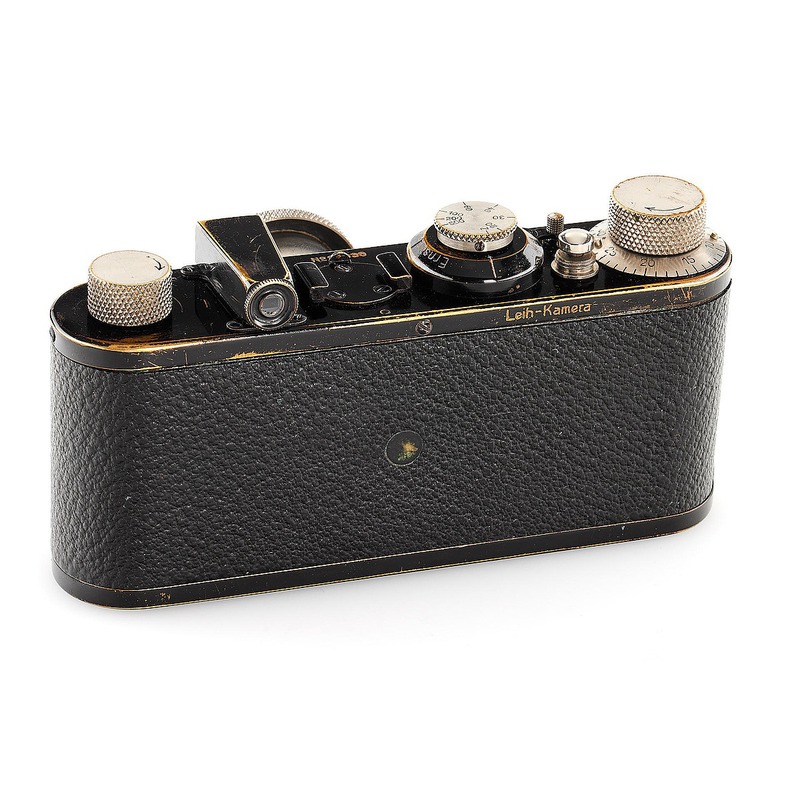
The Leica I Mod A (Anastigmat, export) represents the genesis of the modern 35mm camera system. Introduced in 1925, this camera, alongside its sibling models, fundamentally altered the course of photographic history. It was the first commercially successful camera to utilize 35mm motion picture film (loaded in special cassettes), dramatically reducing the size and weight required for high-quality photography compared to contemporary plate or sheet film cameras. Its compact, all-metal body housed a precision focal-plane shutter and featured the revolutionary coupling of the rangefinder and viewfinder, enabling sharp focusing through the lens. The inclusion of the "Anastigmat" designation specifically refers to its lens, likely the original Leitz Elmar 50mm f/3.5, a high-performance Cooke triplet-derived lens designed to correct optical aberrations. This export version was part of the initial push to bring this innovative tool to photographers beyond Germany, establishing Leica as a pioneer in portable, precise photographic instruments. Its adoption by pioneering photojournalists and artists demonstrated the potential of small-format photography for spontaneous, unobtrusive image-making, paving the way for the documentary and candid photography movements of the 20th century.
Design-wise, the Leica I Mod A embodies functional minimalism and meticulous engineering. Crafted from durable metal, its compact, leather-covered body houses the complex shutter mechanism and the coupled rangefinder system within a remarkably small footprint. It offered shutter speeds ranging from approximately 1/20th to 1/500th second, controlled by a dial on the top plate. Film loading and advance were performed via knobs on the top right and left, respectively, with a frame counter and rewind knob completing the ergonomic layout. The camera's simplicity of operation, combined with the high quality of its lens and the compactness of its format, made it an immediate favorite among professionals seeking greater mobility and faster shooting capabilities. Famous photographers like André Kertész and later Henri Cartier-Bresson, though often associated with later models, were inspired by the paradigm shift the Leica I represented, emphasizing speed, discretion, and the intimate connection between the photographer and the subject made possible by this revolutionary tool. The "Mod A" designation and "Anastigmat" lens specification denote this specific early variant, marking a crucial step in the evolution of the camera that would become the standard for serious photography worldwide.
Specifications
| Film Format | 135 |
/main.jpg)
/main.jpg)
_close_focus/main.jpg)
/main.jpg)
/main.jpg)
 Enjoy this museum? Support on Ko-fi