_close_focus/main.jpg)
Pricing
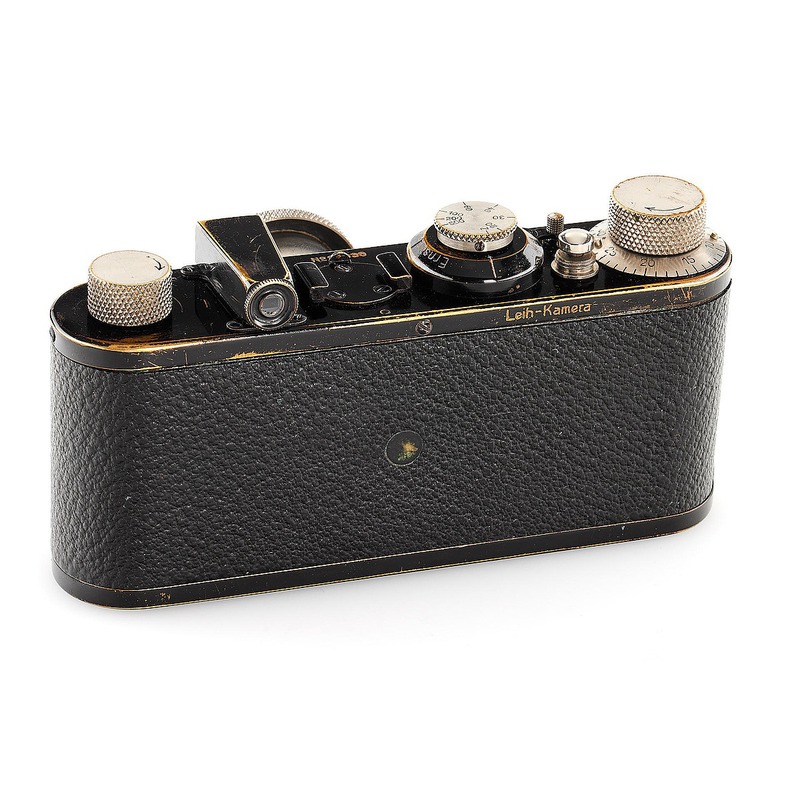
Leica I Mod A (4-digits Number) close focus
Leica · Germany · 1925–1930 (5 years) · 135 film
The Leica I Mod A (4-digits Number) close focus represents a pivotal evolution in camera history, building directly upon the groundbreaking original Leica I of 1925. As one of the earliest successors to the camera that effectively introduced the 35mm format to serious still photography, the Mod A (introduced circa 1927-1928) refined the revolutionary concept pioneered by Oskar Barnack. While the original Leica I offered a coupled rangefinder only on later models, the Mod A incorporated a coupled rangefinder from the start, significantly improving focusing accuracy and ease of use. The "close focus" designation refers to a specific mechanism modification allowing this model to focus closer than the initial Leica I, enhancing its versatility for photographers capturing subjects at varying distances. Constructed with Leica's characteristic precision engineering using high-quality materials like brass and leather, it embodied the shift from bulky plate and roll-film cameras to compact, portable tools capable of producing high-quality negatives on standard cine film.
Key design features included a focal-plane shutter with speeds ranging from 1 to 1/500 second (plus B and T), a coupled rangefinder combined with a separate viewfinder, and a removable back for film loading. The "4-digits Number" indicates its serial number range (starting from 1000), placing it within the early production batches. While retaining the basic layout of its predecessor, the Mod A introduced refinements like improved viewfinder clarity and a more ergonomic body design. Its significance lies not in being the absolute first, but in solidifying the practicality and appeal of the 35mm format for professional and serious amateur photographers, paving the way for decades of compact, high-quality rangefinder cameras. Famous photographers quickly adopted the Leica system, and the Mod A was a significant tool used in the crucial period where small-format photography began to dominate photojournalism and artistic expression.
The Leica I Mod A (4-digits Number) close focus stands as a foundational artifact of 20th-century photography. It bridged the gap between the experimental Leica I and the more refined models that followed, demonstrating the viability and superiority of miniature cameras loaded with 35mm cine film. Its innovations, particularly the integrated coupled rangefinder and enhanced close-focusing capability, addressed the practical limitations of the earliest models, making the Leica system a truly usable and desirable instrument for discerning photographers. This camera played an indispensable role in the history of photography, directly influencing the trajectory of photojournalism, documentary work, and street photography, proving that smaller cameras could capture decisive moments with unprecedented speed and discretion. Its legacy is deeply intertwined with the rise of iconic photographers who relied on the Leica's portability and image quality.
Specifications
| Film Format | 135 |
/main.jpg)
/main.jpg)
/main.jpg)
/main.jpg)
/main.jpg)
 Enjoy this museum? Support on Ko-fi