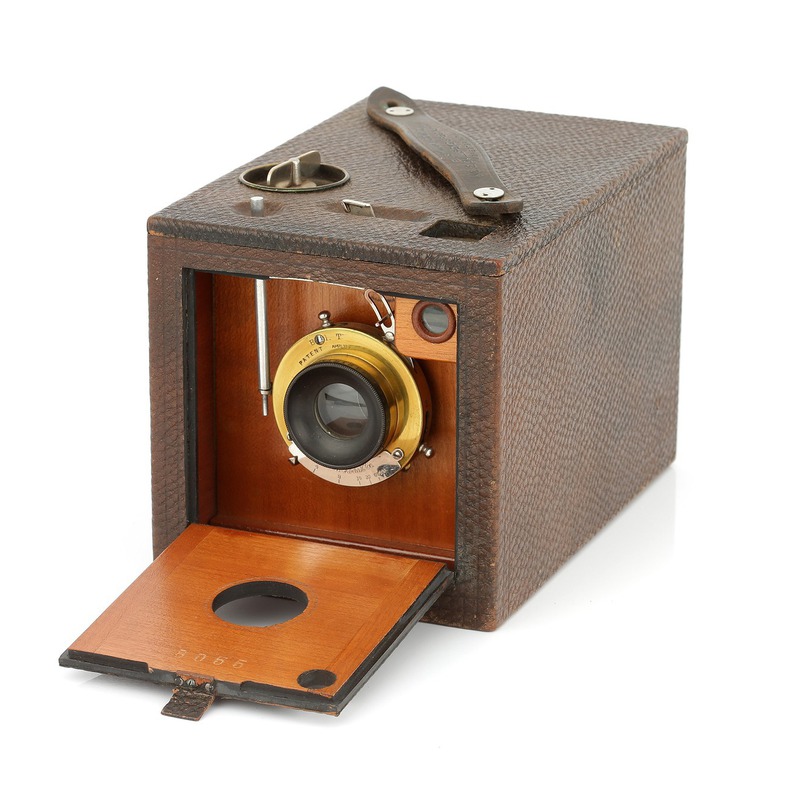
Kodak Bull's Eye Special No.2
Kodak · USA · 1896–1913 (17 years) · 135 film
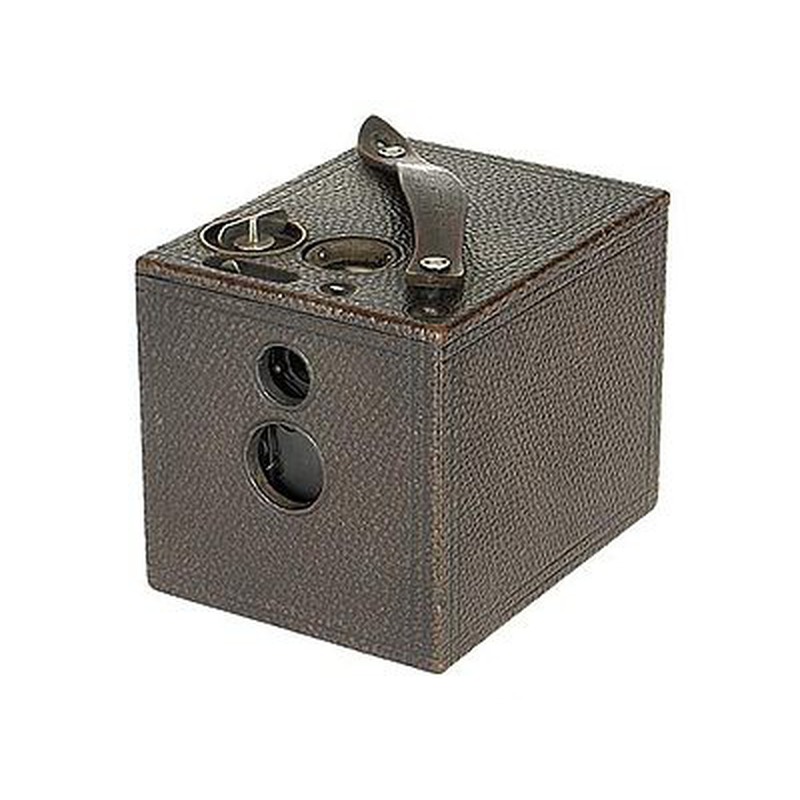
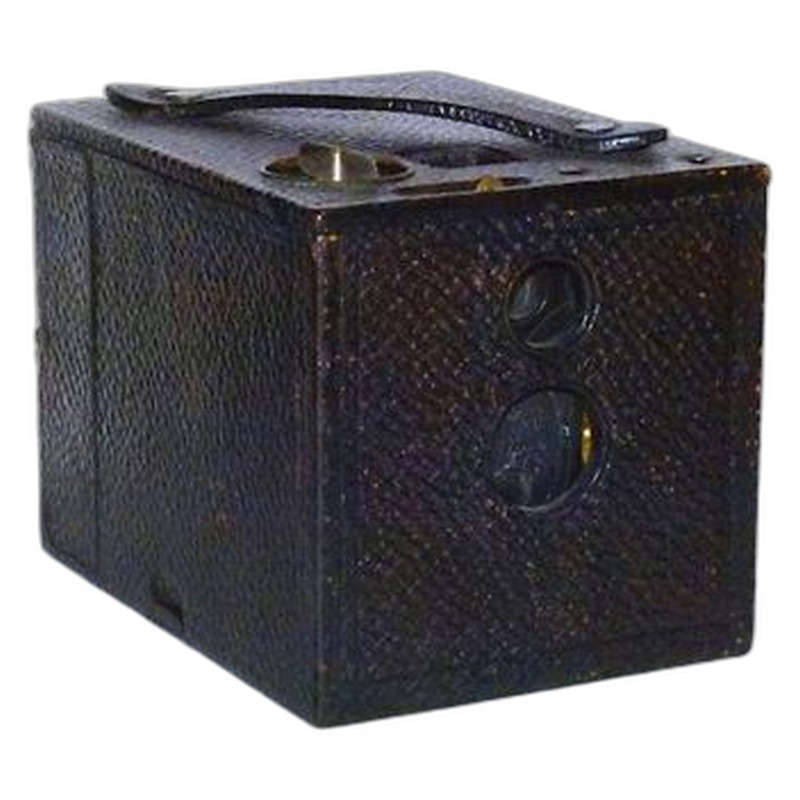
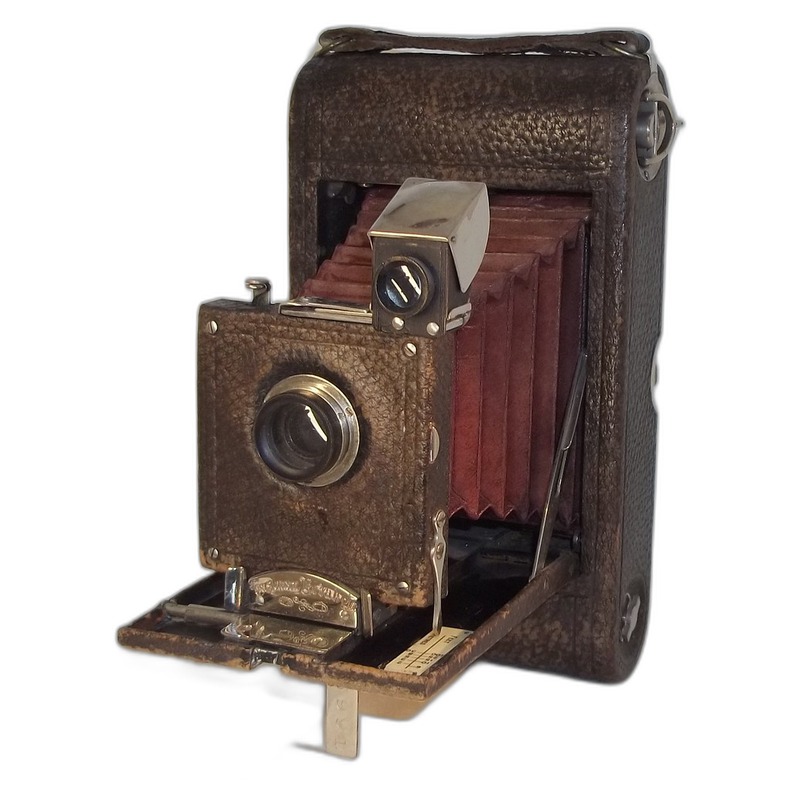
Produced by Kodak between 1896 and 1913, the Bull's Eye Special No.2 represents an early and somewhat experimental entry into the nascent field of 35mm still photography. As one of Kodak's first attempts to adapt the 35mm format used in motion picture film to a handheld still camera, it aimed to offer a compact alternative to larger roll-film models. The camera featured a simple box-like construction, typically finished in black leatherette with nickel-plated hardware. It utilized a simple rotary shutter and a fixed-focus lens, designed primarily for ease of use by amateur photographers seeking a lightweight, point-and-shoot experience. Its most defining characteristic was the unique "Bull's Eye" design, featuring a prominent circular viewfinder and a similarly shaped lens cover, which gave the camera its name and distinctive appearance.
While not revolutionary in its technology, the Bull's Eye Special No.2 holds significance as a tangible piece of Kodak's early exploration of small-format photography before the rise of more sophisticated 35mm cameras like the Leica. It catered to the growing market for snapshot cameras, aligning with Kodak's strategy of making photography accessible to the masses. Its long production run spanning nearly two decades suggests a degree of market acceptance for this compact format concept during that period, serving as a bridge between larger Kodak folding cameras and the eventual miniaturization of 35mm systems.
Specifications
| Film Format | 135 |
/main.jpg)

 Enjoy this museum? Support on Ko-fi