Pricing
Houghton Folding Ensign
Houghton · UK · 1911–1925 (14 years) · 135 film
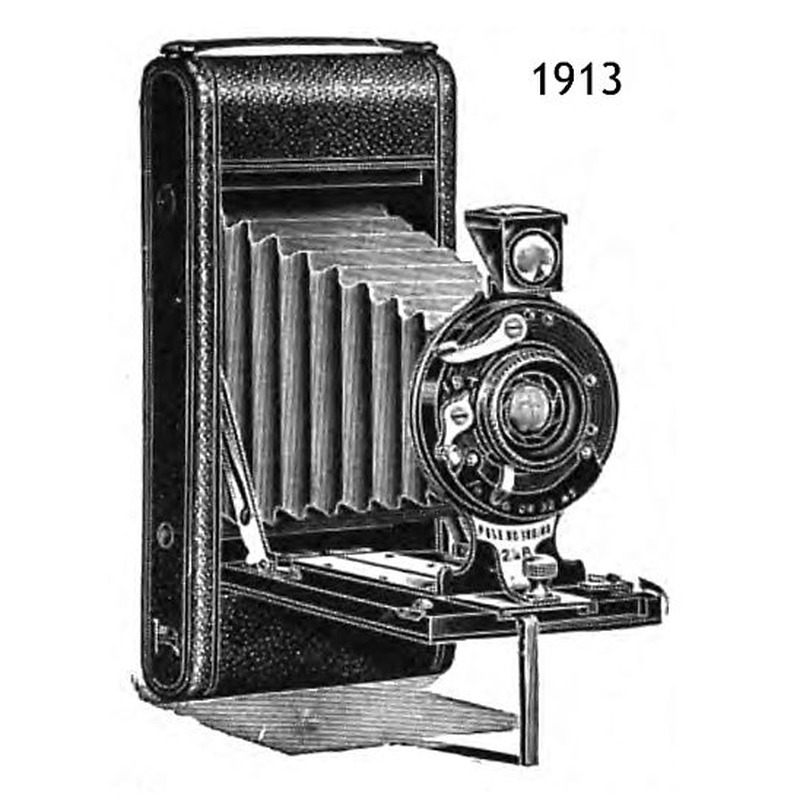
The Folding Ensign by Houghton represents an early and practical iteration of the 35mm camera format, manufactured continuously from 1911 through 1925. As a folding camera, it offered the portability of collapsing into a compact, protective case when not in use, making it suitable for travel snapshots. It utilized standard 135 (35mm) perforated film, loading into distinctive cassettes or spools, and featured a simple box-type folding body, typically constructed from materials like leatherette-covered wood or early synthetic composites for its main structure. The lens and shutter assembly was mounted on a board that slid outwards when extended. While specific lens and shutter models varied over the production run, common configurations included a doublet or triplet lens and a simple instantaneous shutter, capable of capturing everyday scenes with sufficient quality for amateur photographers during the Edwardian and early post-WWI eras.
This camera holds significance as one of the commercially successful early 35mm folding designs available in the UK market. It predates the iconic Leica by several years and demonstrates the ongoing evolution towards miniature photography before the rise of the precision 35mm rangefinder. The Folding Ensign filled a niche for photographers seeking a more portable alternative to larger roll-film folders, helping to establish the practical viability of 135 film for general use. Its consistent production over fourteen years indicates steady consumer demand, though its design remained fundamentally utilitarian rather than technologically innovative. It embodies the experimental yet accessible phase of 35mm camera development.
Specifications
| Film Format | 135 |
/main.jpg)
/main.jpg)
/main.jpg)
/main.jpg)
/main.jpg)
/main.jpg)
 Enjoy this museum? Support on Ko-fi