/main.jpg)
Pricing
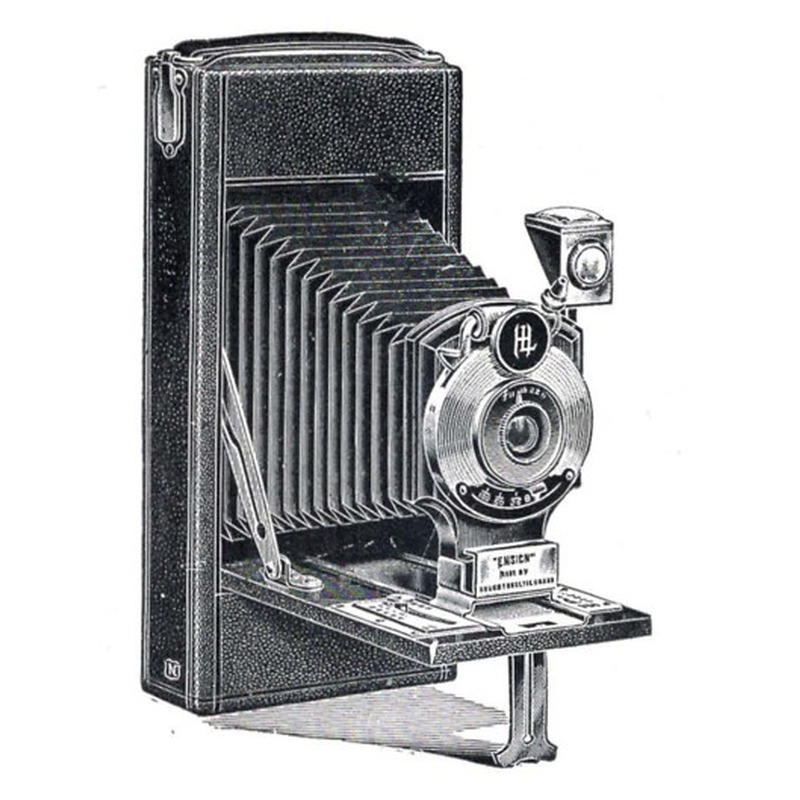
Houghton Ensign 2 1/4 A (box)
Houghton · UK · 1912–1920 (8 years) · 135 film
The Ensign 2 1/4 A (box) represents a significant, though not revolutionary, early attempt at utilizing the 35mm format for still photography. Produced by the British manufacturer Houghton & Butcher (later Houghton Ltd.) between 1912 and 1920, this simple box camera predates the commercially successful Leica I by over a decade. Utilizing standard 135 film canisters (originally designed for cinema), it aimed to offer a compact and relatively affordable option for amateur photographers. Its construction is typical for the era: a simple rectangular body, likely constructed from wood covered in black leatherette or similar material, featuring a simple meniscus lens and a basic shutter mechanism offering a single speed or perhaps a few rudimentary settings. The camera's design focused on simplicity and portability, embodying the practical approach of early British camera makers.
While not a landmark design that fundamentally altered photographic practice, the Ensign 2 1/4 A holds importance as an early and tangible example of 35mm film being adapted for still cameras outside the laboratory. Its production period, encompassing World War I, reflects the ongoing experimentation with smaller formats before the Leica established the 35mm standard in the mid-1920s. Surviving examples offer a glimpse into the technological stepping stones that paved the way for the modern 35mm camera, showcasing the materials and functional compromises inherent in these pioneering efforts. Its legacy lies more as a curious historical artifact demonstrating the direction photography was heading than as a major influence on subsequent camera design.
Specifications
| Film Format | 135 |
/main.jpg)
/main.jpg)
/main.jpg)
/main.jpg)
 Enjoy this museum? Support on Ko-fi