/main.jpg)
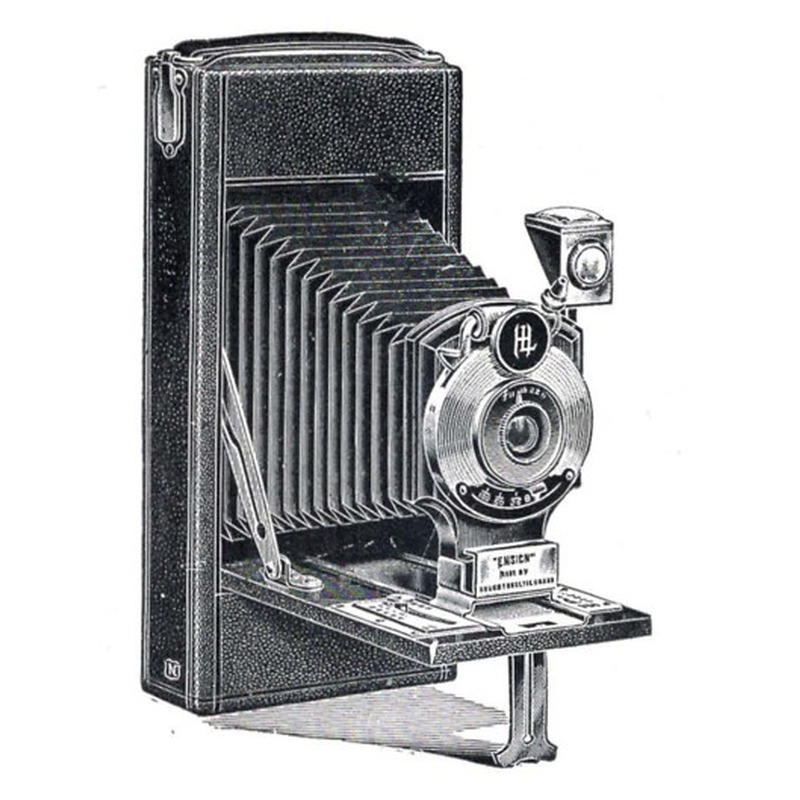
Houghton Ensign 2 1/4 B (box, red)
Houghton · UK · 1912 · 135 film
The Ensign 2 1/4 B (box, red) represents an early experiment in portable photography, introduced by Houghton in 1912 as an affordable option for amateur photographers. This simple box camera featured a compact design with a distinctive red finish, likely incorporating a fixed-focus lens and basic shutter controls typical of its era. Utilizing 135 film—the precursor to today's standard 35mm format—the camera positioned itself at the forefront of smaller, more accessible photographic equipment, though its actual mechanism specifications remain undocumented due to limited historical records. Despite predating the revolutionary Leica I by thirteen years, the Ensign 2 1/4 B did not achieve widespread recognition or influence the direction of camera development, leaving its significance confined to a niche position in photographic history.
As a product of Houghton, a British camera and lens manufacturer established in 1888, this camera reflects the early 20th-century market trend toward simplified, user-friendly equipment that made photography more accessible to the general public. Its box design followed the traditional form factor but likely incorporated innovations in film handling specific to the smaller format it employed. The camera represents an important transitional period before the emergence of more sophisticated 35mm systems, offering a glimpse into the technical solutions being explored to balance portability with image quality in the years before the Leica revolutionized photography.
Specifications
| Film Format | 135 |
/main.jpg)
/main.jpg)
/main.jpg)
/main.jpg)
 Enjoy this museum? Support on Ko-fi