/main.jpg)
Pricing
Kodak Six-16 (US)
Kodak · USA · 1932–1934 (2 years) · 135 film
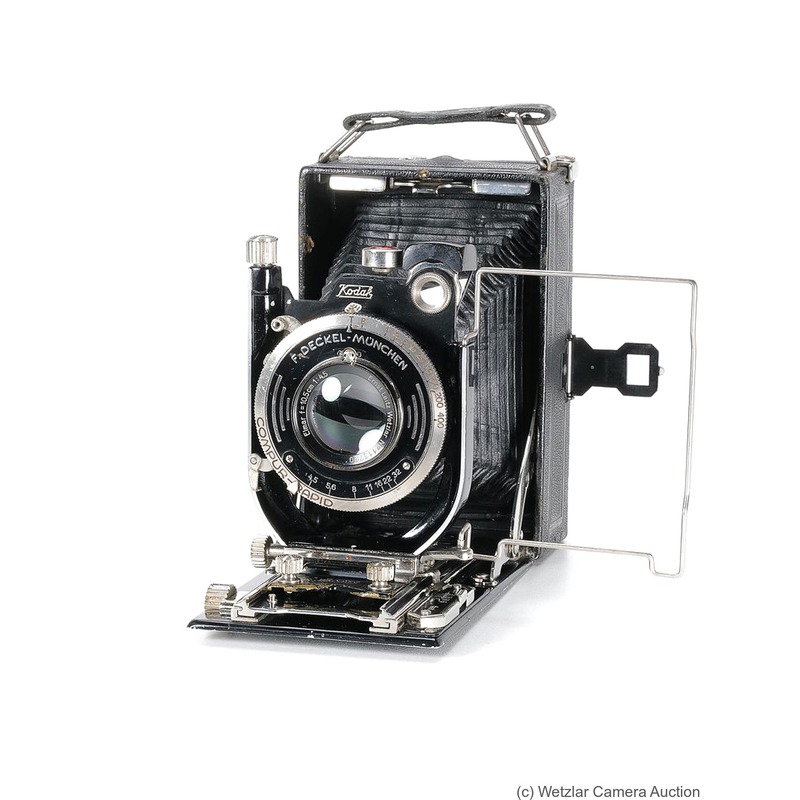
The Kodak Six-16 (US) is a compact, bakelite-bodied camera produced between 1932 and 1934, representing Kodak's entry into the burgeoning 135 format market. Despite its "Six-16" name suggesting compatibility with the earlier 616 roll film format, it exclusively used standard 35mm film cartridges, accommodating eight exposures per roll—a functional adaptation to the emerging smaller film size. Designed as a straightforward point-and-shoot camera, it featured a simple fixed-focus lens and a basic shutter speed, targeting amateur photographers seeking convenience and affordability in a portable package. Its release positioned Kodak alongside other manufacturers exploring the potential of miniature film before the rise of more sophisticated 35mm systems.
As a product of Kodak's extensive consumer division, the Six-16 (US) filled a practical niche for casual users, prioritizing ease of use and low cost over advanced features. Its construction utilized durable but economical materials typical of mid-1930s Kodak products, reflecting the company's strategy to popularize photography through accessible tools. While not groundbreaking in design or technology, it serves as an example of Kodak's response to the shift toward smaller film formats, bridging gap between larger roll-film cameras and later, more complex 35mm models that would dominate the market after World War II.
Specifications
| Film Format | 135 |
/main.jpg)
 Enjoy this museum? Support on Ko-fi