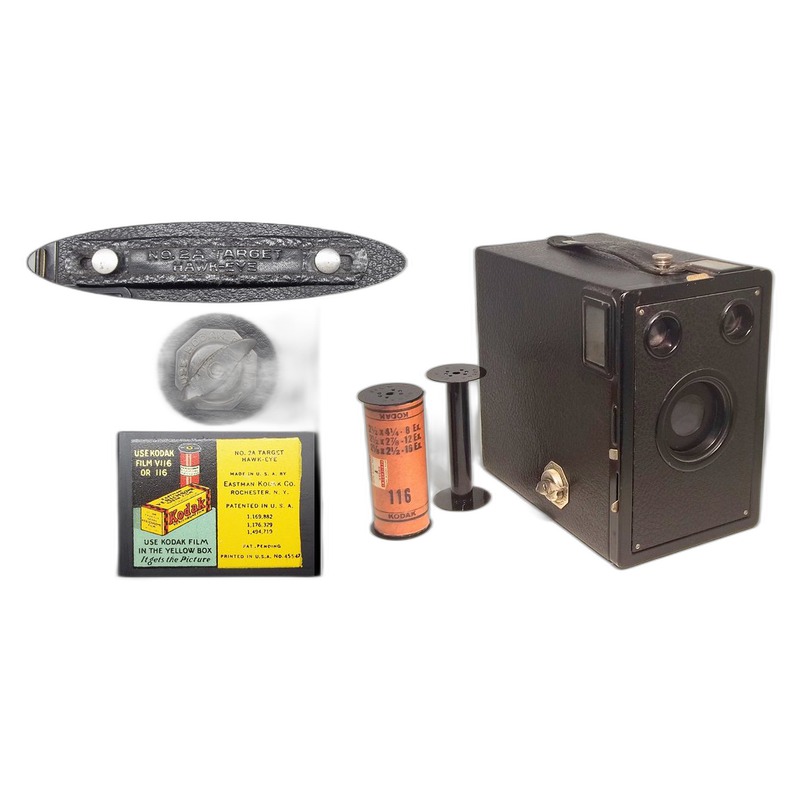
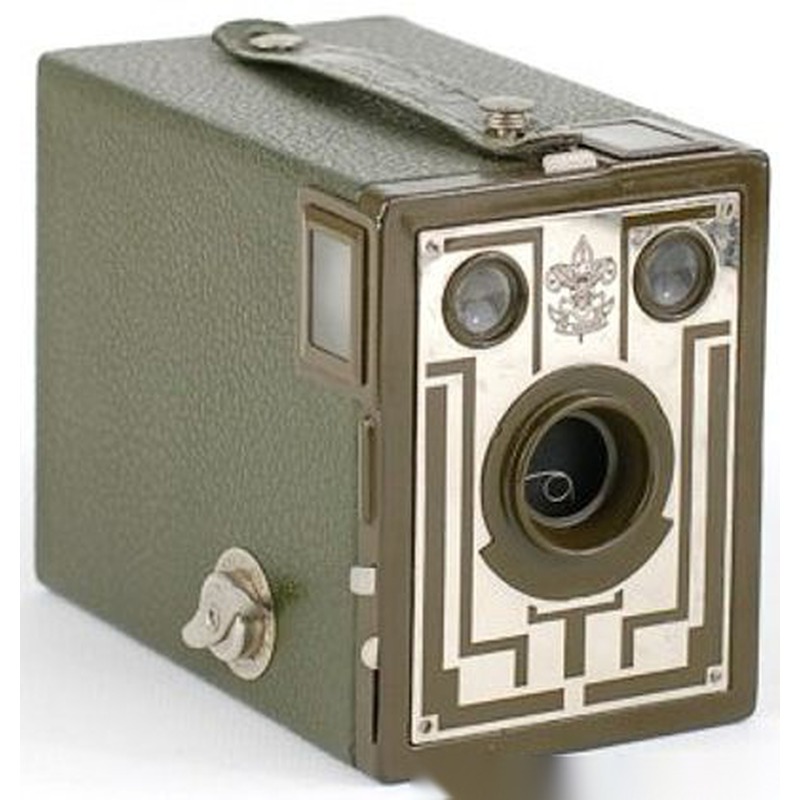
Kodak Target Hawk-Eye No. 2
Kodak · USA · 1932–1933 (1 years) · 135 film
The Target Hawk-Eye No. 2 was one of Kodak's earliest attempts to bring 35mm photography to a mass market audience during a pivotal period in the 1930s. As part of the familiar Hawk-Eye series, typically associated with box cameras for roll film, this model represented Kodak's entry into the burgeoning 135 format realm, targeting budget-conscious consumers seeking a compact, simple camera. It utilized standard 35mm cassettes, a significant step towards the format becoming mainstream, but retained the very basic design philosophy of the box camera: fixed focus, a single shutter speed, and minimal controls. Its construction was typical of Kodak's budget offerings of the era, primarily using pressed metal and bakelite, prioritizing affordability and ease of use over sophistication or durability. This camera served to popularize the concept of snapshot photography with small film format among the general public.
Its existence highlights Kodak's strategy of leveraging established brand names like "Hawk-Eye" to introduce consumers to new technologies. While it lacked the groundbreaking innovations or premium build of contemporaneous European 35mm cameras, the Target Hawk-Eye No. 2 holds a place as a significant transitional piece. It represents Kodak's large-scale effort to democratize 35mm photography just before the market explosion driven by more advanced models like the Retina series and the rise of Leica. Its straightforward, utilitarian design underscores the camera's role as an accessible tool for casual photography rather than a professional instrument, making it a noteworthy artifact of early American 35mm camera manufacturing.
Specifications
| Film Format | 135 |
/main.jpg)
 Enjoy this museum? Support on Ko-fi