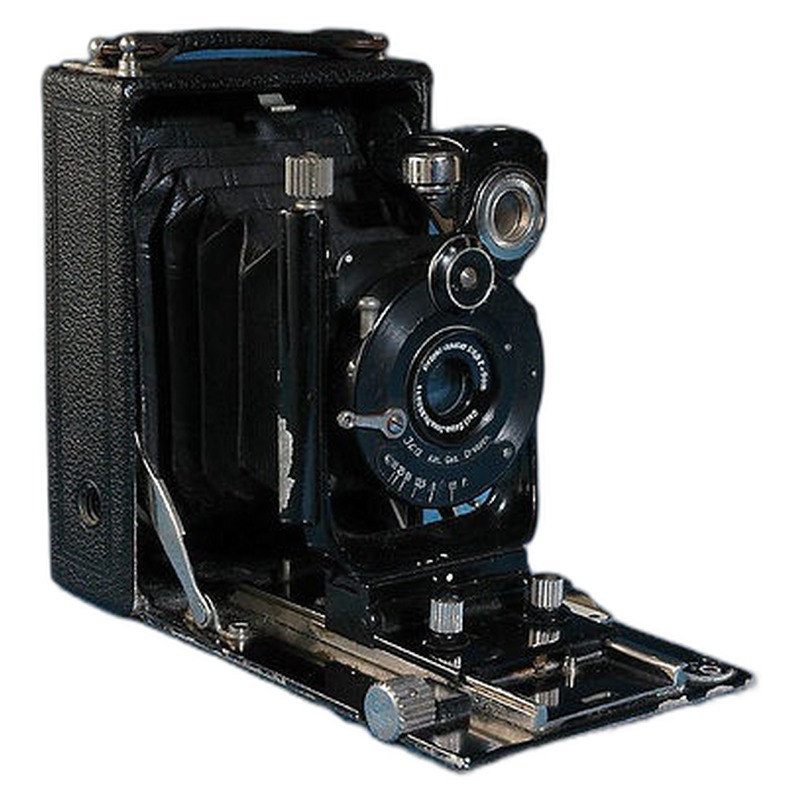
Zeiss Niklas 109
Zeiss · Germany · 1926 · 135 film
The Niklas 109 represents Zeiss Ikon's significant entry into the emerging 35mm still camera market in 1926. Following the pioneering success of competitors like Leica, Zeiss leveraged its vast optical expertise and engineering prowess to develop this compact camera utilizing the standardized 135 (35mm) cine film format. Designed as a practical, portable camera for amateur and advanced photographers, the Niklas 109 featured a straightforward fixed-lens system and basic controls typical of the era, emphasizing reliability and high-quality image reproduction synonymous with the Zeiss name. Its construction employed durable materials common to the period, reflecting Zeiss's commitment to build quality in its consumer products.
As one of the earliest 35mm cameras from a major German optical manufacturer, the Niklas 109 holds a notable place in the history of miniature photography, contributing to the popularization and acceptance of the 35mm format for still images during a crucial formative period. While it lacked the groundbreaking innovations or widespread acclaim of some contemporaries, its development underscores the intense competition and rapid technological advancement driving the 35mm market in the mid-1920s. The model served as Zeiss's practical response to the burgeoning demand for smaller, more convenient cameras beyond bulky plate or roll-film formats, solidifying the company's early presence in this significant new photographic category.
Specifications
| Film Format | 135 |
 Enjoy this museum? Support on Ko-fi