/main.jpg)
Zeiss Movikon 16 (5495)
Zeiss · Germany · 1936 · 135 film
The Movikon 16 (5495), introduced by Zeiss in 1936, represents an early entry in the burgeoning 35mm (135 format) camera market, a format rapidly gaining ground for its compactness and convenience. While Zeiss was renowned for its optical excellence, this particular model appears to have been positioned as a functional, relatively straightforward camera for amateur photographers. Its core function was to capture images on standard 35mm perforated film strips, utilizing the then-eminent miniature format. Design-wise, it likely featured a simple box or folding body, a coupled rangefinder for focusing, and a central shutter, adhering to the practical design ethos common for cameras of this era aimed at the broader public. It was part of the wave of cameras that made 35mm photography accessible beyond professional or avant-garde circles, contributing to the format's popularization.
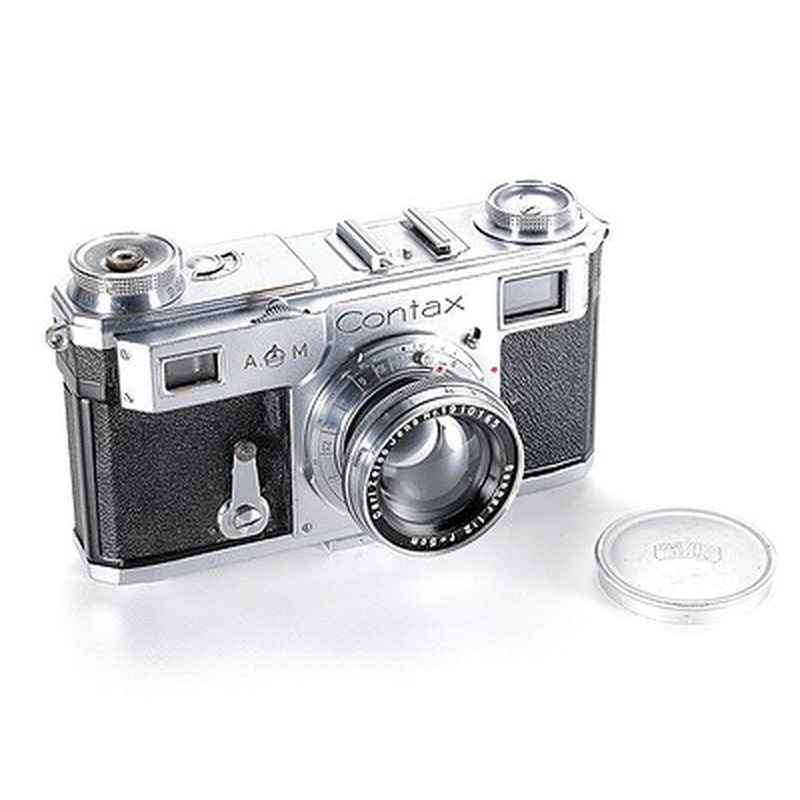
Though bearing the prestigious Zeiss name, the Movikon 16 (5495) is not documented as a groundbreaking or technologically innovative camera compared to contemporaries like the Leica III or Contax II. Its significance lies more in its role as a competent, mass-market product from a leading optical manufacturer, fulfilling the demand for reliable small-format cameras in the late 1930s. The model number suggests it was part of a specific product line, potentially distinct from Zeiss's higher-end offerings. Its construction would have been sturdy for the time, utilizing metal alloys typical of pre-war manufacturing, but without the extreme refinement or engineering marvels of Zeiss's flagship products. It represents a solid, utilitarian branch in the evolution of 35mm photography.
Specifications
| Film Format | 135 |
/main.jpg)
/main.jpg)
/main.jpg)
 Enjoy this museum? Support on Ko-fi