/main.jpg)
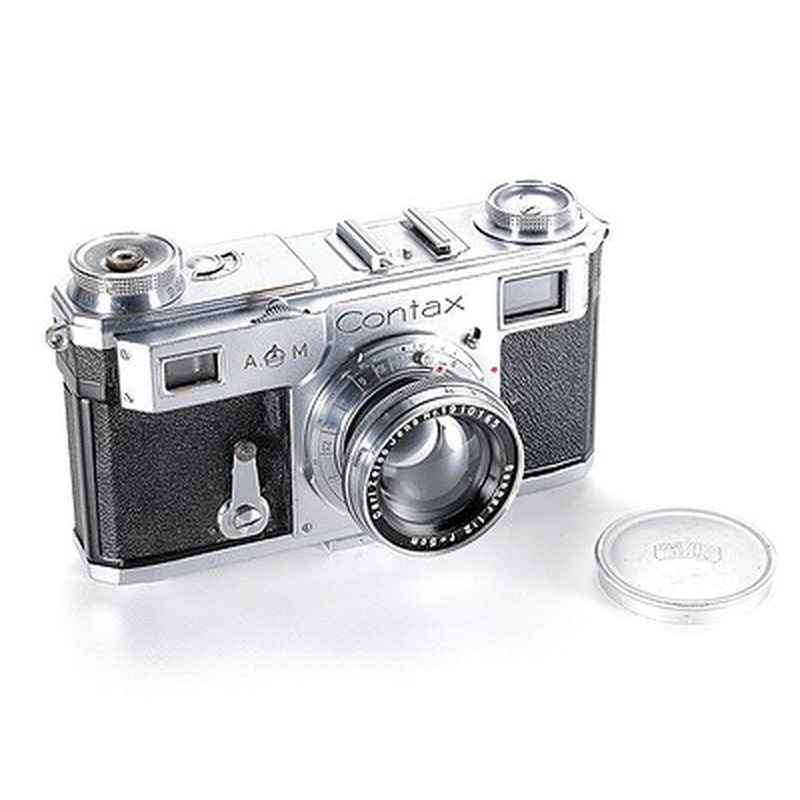
Zeiss Contax II (Geheime Staatspolizei)
Zeiss · Germany · 1936–1942 (6 years) · 135 film
The Contax II (Geheime Staatspolizei) represents a pinnacle of pre-war German camera engineering, produced by Zeiss Ikon from 1936 to 1942. Positioned as a direct competitor to the Leica II, it featured a sophisticated coupled rangefinder system and an exceptionally robust build utilizing brass and steel components, setting a high standard for durability and precision. Its interchangeable lens mount, coupled with Zeiss's superb optical glass, delivered outstanding image quality, making it a favorite among professional photographers, photojournalists, and intelligence operatives during that era. The association with the Geheime Staatspolizei (Gestapo) lends it a particularly sobering historical dimension, highlighting its use in covert surveillance and documentation activities by the Nazi regime, further cementing its place as a significant artifact of 20th-century history.
Beyond its notorious provenance, the Contax II was technologically advanced for its time. It introduced innovations like a rapid rewind knob, a film transport lever integrated into the wind mechanism, and a choice of high-speed Zeiss lenses, including the legendary 50mm f/1.5 Sonnar. While production was halted by wartime demands and the subsequent division of Zeiss, the Contax II lineage directly influenced the later, highly sought-after Contax IIa and IIIa models of the 1950s, demonstrating its enduring engineering legacy. Its combination of sophisticated features, exceptional build quality, and historical weight makes it a remarkable and sobering object, representing both the heights of pre-war German optical technology and its repurposing for oppressive state functions.
Specifications
| Film Format | 135 |
/main.jpg)
/main.jpg)
/main.jpg)
 Enjoy this museum? Support on Ko-fi