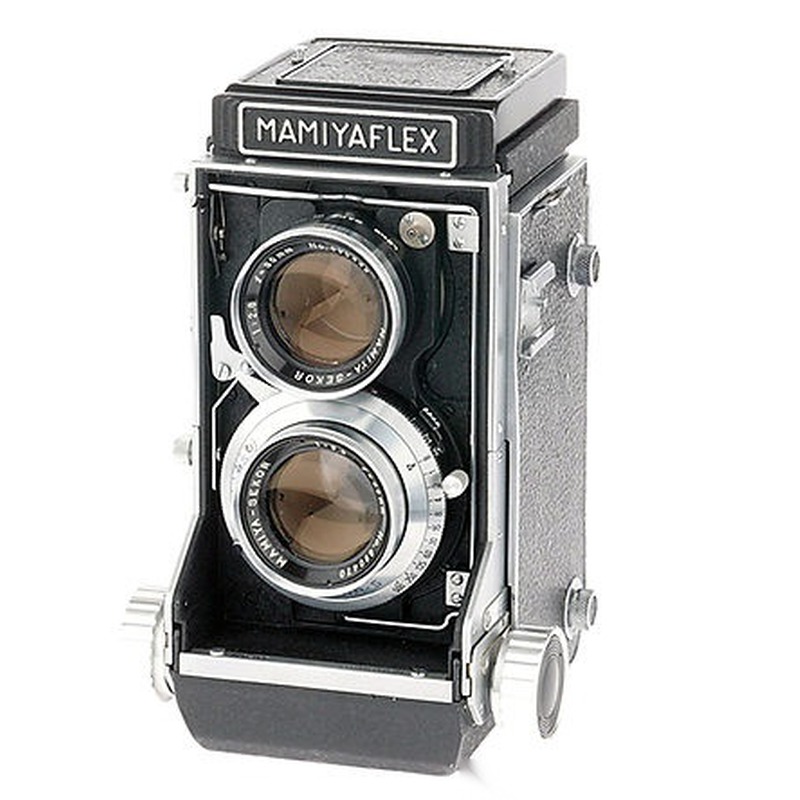
Mamiyaflex C
Mamiya · Japan · 1957–1958 (1 years)
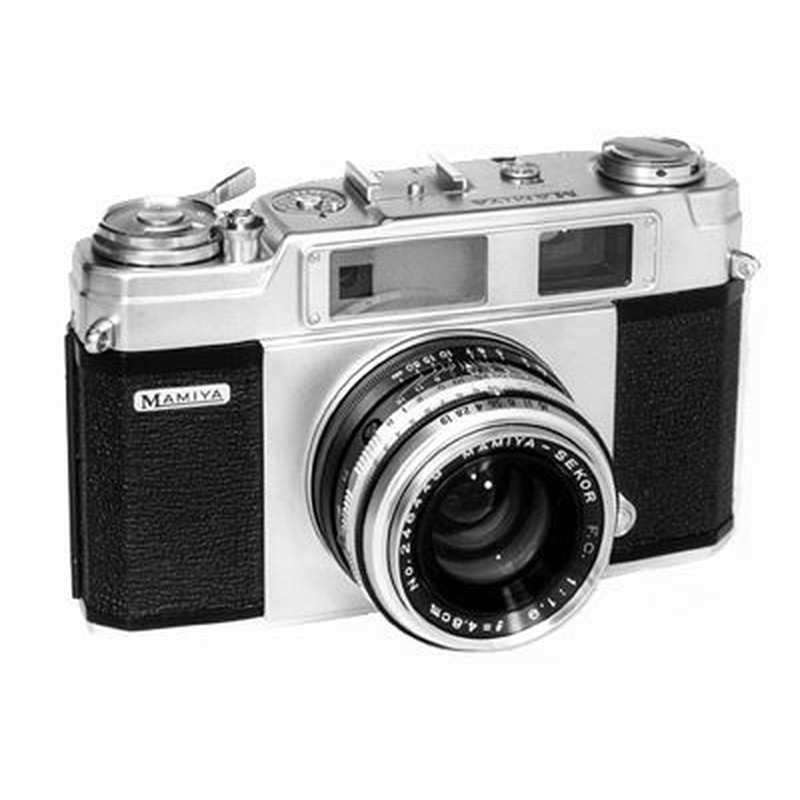
The Mamiyaflex C represents Mamiya's continued refinement of its successful line of medium format twin-lens reflex (TLR) cameras in the late 1950s. As part of the Mamiyaflex series that followed the earlier Mamiyaflex A, it offered photographers a robust, professionally oriented alternative to the dominant Rolleiflex. Designed for 6x6 cm exposures on 120 roll film, the C model likely incorporated improvements such as an improved viewing screen, brighter finders, or enhanced focusing mechanisms over its predecessors, maintaining Mamiya's reputation for solid engineering and reliable performance in the demanding studio and field photography market. Its production run from 1957 to 1958 indicates it served as a bridge between the initial Mamiyaflex models and the later, more advanced C33 and C330 models that would become Mamiya's flagship TLRs for decades.
While not fundamentally groundbreaking in the same way as contemporaries like the Nikon F, the Mamiyaflex C cemented Mamiya's position as a major player in the professional medium format arena. It offered a familiar and effective TLR platform valued for its leaf-shutter lenses, potential for interchangeable lens and back systems depending on the specific variant (though details are sparse for this model), and reliable build quality that appealed to commercial photographers seeking high-quality results. Its development underscores the era's continued dominance and evolution of the TLR design for serious work before the widespread adoption of single-lens reflex (SLR) systems in medium format.
/main.jpg)
 Enjoy this museum? Support on Ko-fi