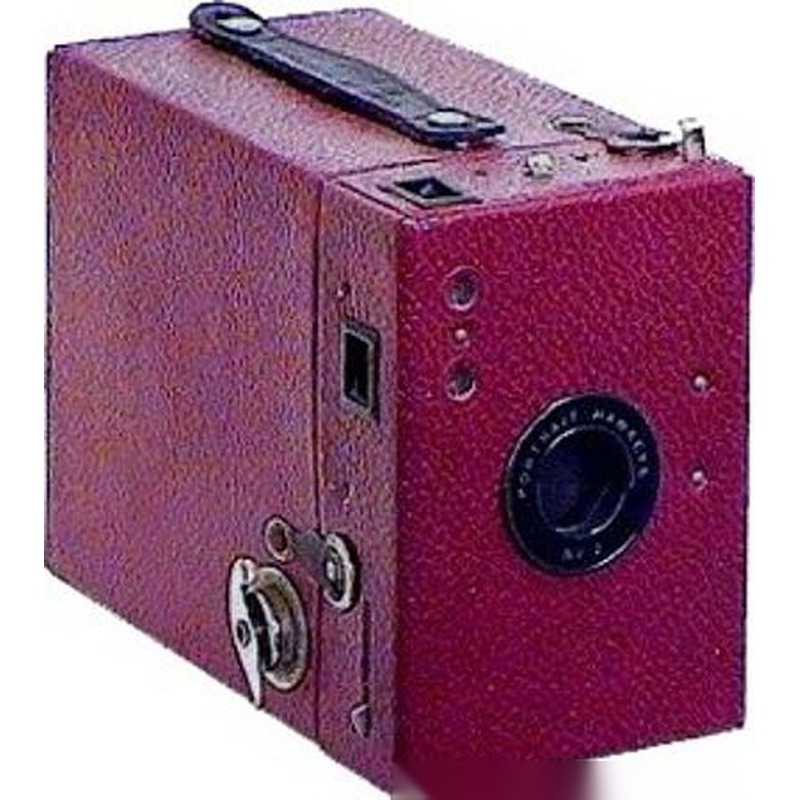
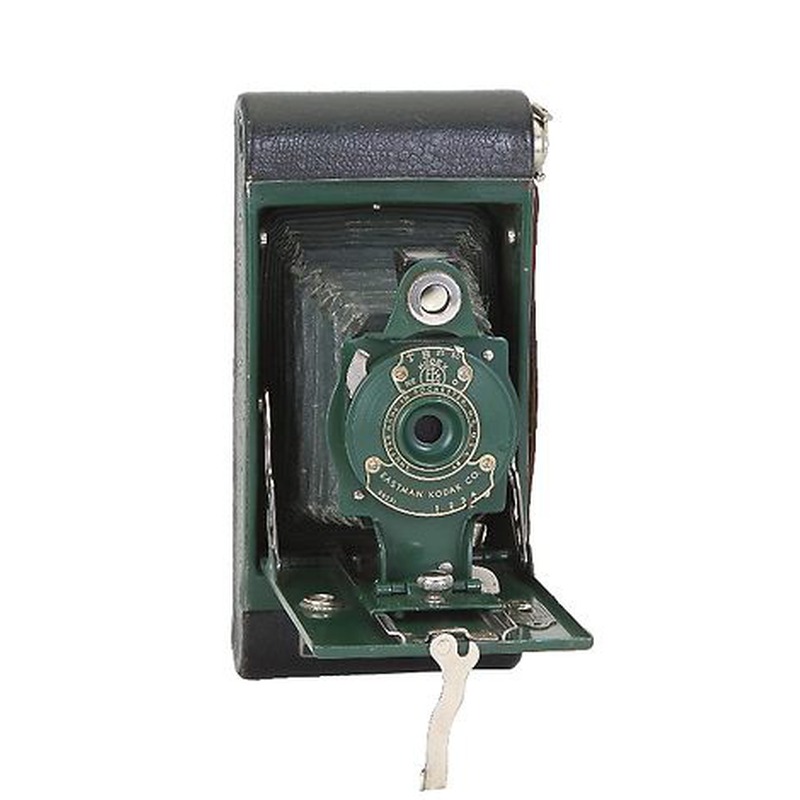
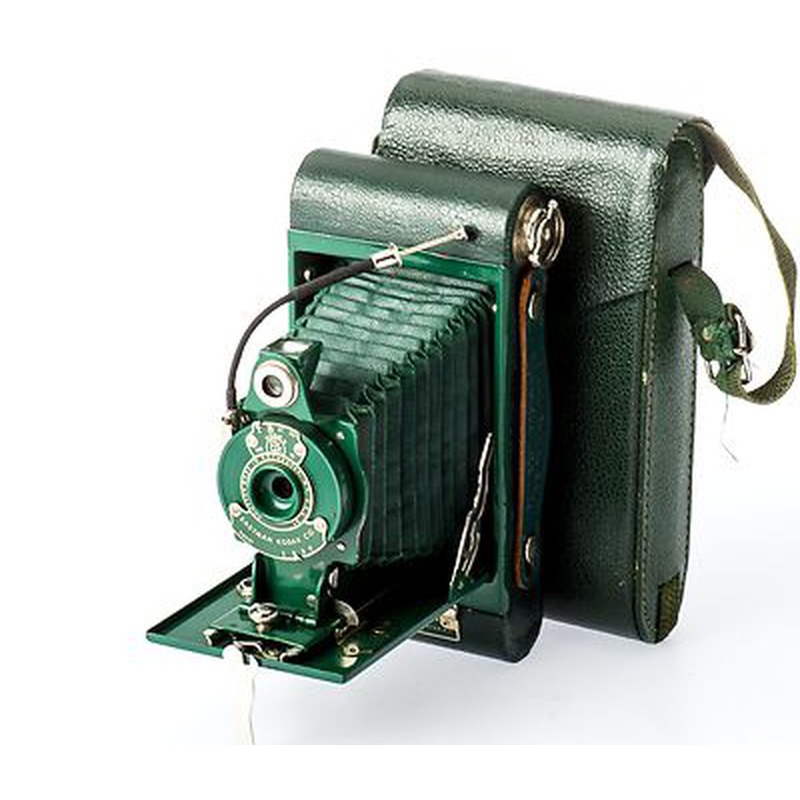
Kodak Portrait Hawk-Eye No.2
Kodak · USA · 1930 · 135 film
Introduced in 1930, the Kodak Portrait Hawk-Eye No.2 represents Kodak's early foray into utilizing 35mm film (135 format) outside the realm of movie film, specifically targeting amateur photographers interested in simpler snapshot photography. It essentially adapted Kodak's established box camera design and brand name to the smaller, more convenient 35mm format, offering a fixed-focus lens and a simple rotary shutter mechanism. As part of the Hawk-Eye series, it likely featured a characteristic bright viewfinder and straightforward controls, aimed at making roll film photography accessible to a broad consumer base. Its introduction occurred several years after the pioneering Leica I, placing it within Kodak's strategy of popularizing miniature photography without the complexity or cost of high-end European models. While not a groundbreaking innovator like the Leica, it holds significance as a practical, American-made 35mm camera from the formative years of this popular format.
The camera's design prioritized ease of use and affordability over sophisticated features. Constructed primarily from bakelite and other durable but economical materials typical of Kodak consumer goods of the era, it offered a sturdy, lightweight chassis suitable for everyday use. The Portrait Hawk-Eye No.2 utilized standard 135 cartridges (perhaps requiring loading in a Kodak dark slide or proprietary loader initially), making film sourcing relatively straightforward for the time. Its fixed lens and basic shutter system, while limiting creative control, perfectly matched its intended purpose: capturing clear, adequate snapshots, particularly portraits as its name suggests. It served as a bridge between Kodak's legacy box cameras and the increasingly popular 35mm still cameras emerging in the 1930s, fulfilling a niche for entry-level users attracted to the smaller format.
Specifications
| Film Format | 135 |
/main.jpg)
 Enjoy this museum? Support on Ko-fi