Pricing
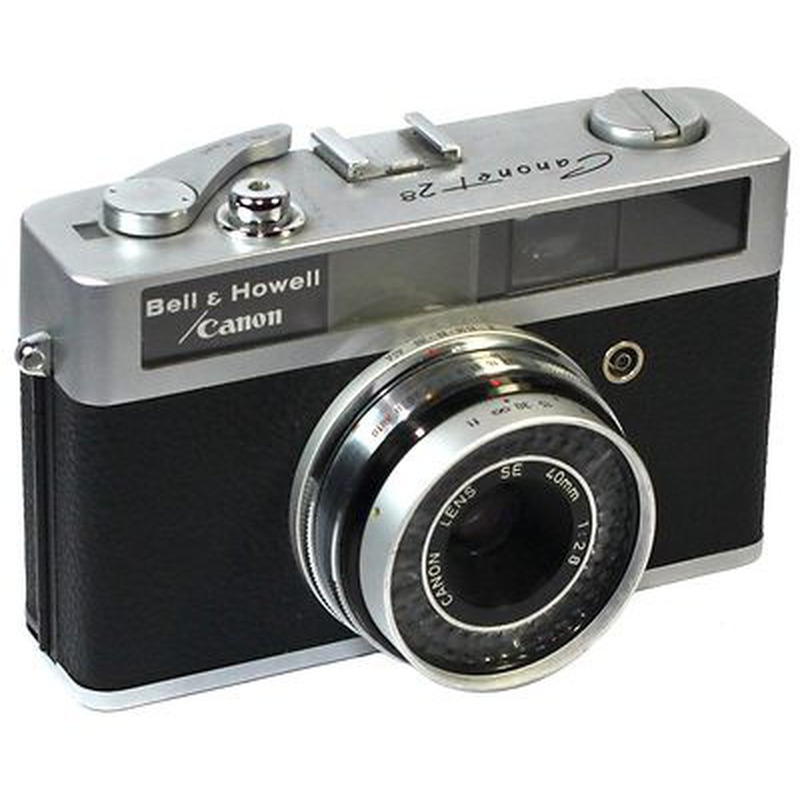
Canonet 28 Bell & Howell
Canon · Japan
The Canonet 28 Bell & Howell by Canon is a variant of Canon's popular Canonet series of 35mm rangefinder cameras, likely produced in the late 1960s or early 1970s for the North American market under the Bell & Howell brand. As a member of the Canonet line, it offered a fixed 28mm lens, positioning itself as a compact, wide-angle option for photographers seeking a portable yet capable camera. It featured Canon's signature Canonet rangefinder focusing system and typically included automatic exposure control (likely aperture-priority), making sophisticated metering accessible to advanced amateurs and enthusiasts. The Bell & Howell branding indicates a distribution partnership, common for Japanese cameras entering the US market during this period, aiming to leverage the established American importer's reputation. While sharing the core Canonet DNA, the specific model with its 28mm lens provided a distinct wide-angle perspective compared to the standard Canonet QL17's 40mm lens, catering to a more specific photographic need like landscapes or street shooting.
Manufactured during an era when Japanese cameras were rapidly gaining global market share by offering features and quality previously found only in more expensive European models, the Canonet 28 represented Canon's strategy to expand its reach across different focal lengths and market segments. It exemplifies the practical, user-friendly approach of Japanese consumer cameras of the time – reliable, relatively affordable, and featuring automation like CdS metering and auto-exposure that simplified the photographic process for users moving beyond basic box cameras. Its build quality was generally solid for its price point, utilizing metal construction typical of Canon's mid-range rangefinders of that era, though not approaching the premium finish of Canon's flagship models.
 Enjoy this museum? Support on Ko-fi