Pricing
Zorki 1
Zorki · Russia · 135 film
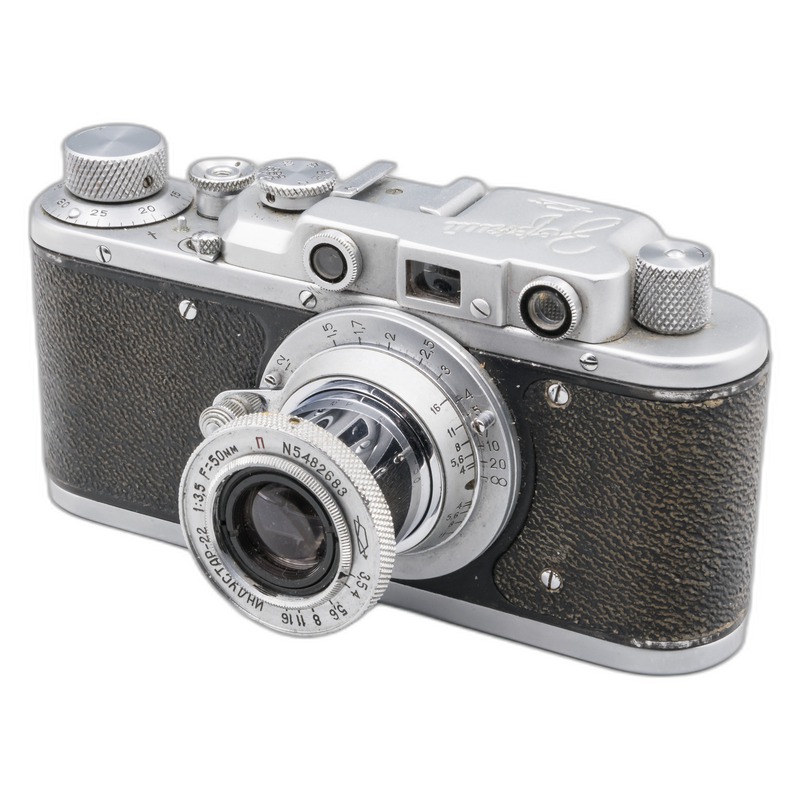
The Zorki 1 holds a significant place as one of the first Soviet Leica-inspired 35mm rangefinder cameras to emerge following World War II. Produced in Krasnogorsk near Moscow by KMZ (Krasnogorsky Mekhanichesky Zavod), it represented a crucial early effort by the USSR to establish domestic production of high-quality miniature cameras, moving beyond simple imitations towards developing indigenous capabilities. Its design was heavily based on the pre-war Leica II (Model D), featuring a coupled rangefinder integrated into the viewfinder, a horizontal cloth focal-plane shutter, and a threaded M39 lens mount, directly mirroring Leica's influential architecture. This foundation established the Zorki series and the later, more successful Fed series, becoming workhorses for Soviet photographers and enthusiasts during the late 1940s and 1950s.
Manufacturing was characterized by utilitarian Soviet engineering principles; the camera was constructed primarily from steel and brass, featuring robust but somewhat rough-finished components. The coupled rangefinder, its key technical innovation inherited from the Leica blueprint, provided significant accuracy benefits over earlier split-image or ground-glass focusing methods for handheld 35mm photography. While sharing core Leica principles, the Zorki 1 often suffered from variations in quality control, inconsistent tolerances, and sometimes less refined ergonomics compared to its German inspiration. Despite these limitations, it democratized accessible precision photography within the Soviet sphere, enabling countless amateur and professional photographers to shoot with high-quality interchangeable lenses at a fraction of the cost of imported Leicas. Its legacy lies in its role as the pioneering template for subsequent generations of Soviet rangefinder cameras that became icons of their era.
Specifications
| Type | Rangefinder |
| Film Format | 135 |
 Enjoy this museum? Support on Ko-fi