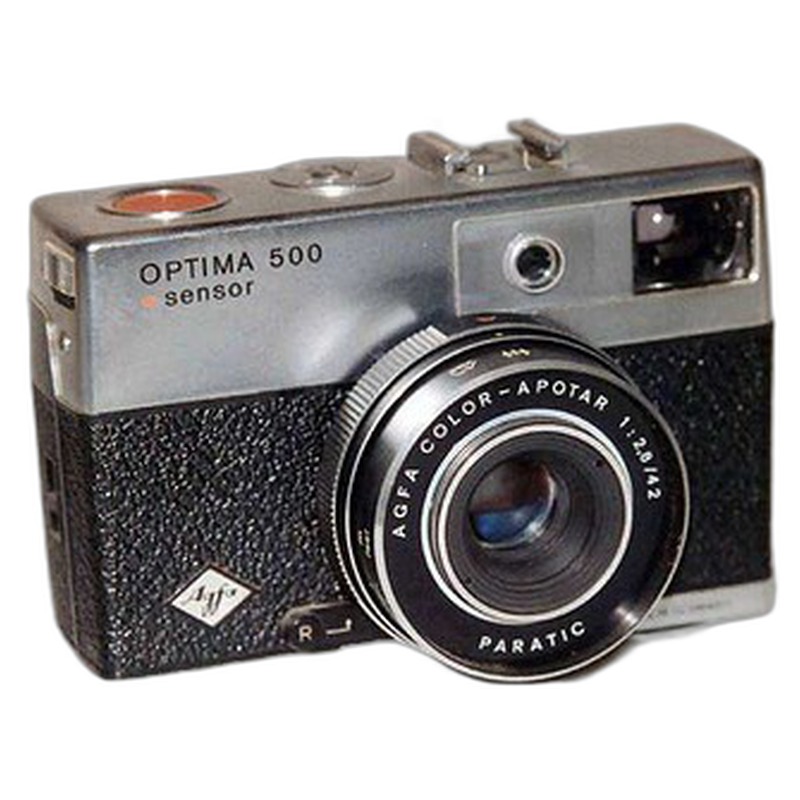
Agfa Optima 500 Sensor
Agfa · Germany
The Agfa Optima 500 Sensor represents a typical mid-20th-century compact camera from a major European manufacturer. Produced during the era when Agfa was a significant force in consumer photography, this camera likely features simple automation, such as a built-in selenium light meter coupled with a shutter speed selector or basic aperture control, common to the Optima series aimed at the amateur market. Its design would have prioritized ease of use and affordability, typical of Agfa's strategy to make photography accessible to the masses. Constructed primarily from materials like bakelite or early plastics, it offered a durable, functional solution for everyday snapshots without the complexity or cost of higher-end models. While not a groundbreaking design itself, it embodies the practical, user-focused ethos of Agfa during the post-war boom in casual photography.
As part of the successful Optima line, the 500 Sensor would have been a common sight in households across Europe and potentially exported markets. Its significance lies in its role as a reliable workhorse for capturing family memories, contributing to the widespread adoption of personal photography during this period. However, it lacks the distinctive innovations, cult status, or historical impact that define legendary cameras. Its existence underscores the normalization of automated exposure and compact design for the average consumer before the rise of fully automatic SLRs and later electronic models. The "Sensor" nomenclature indicates it utilizes an exposure metering system, a key feature of the Optima range, but it represents an evolutionary step rather than a revolutionary one in camera technology.
 Enjoy this museum? Support on Ko-fi