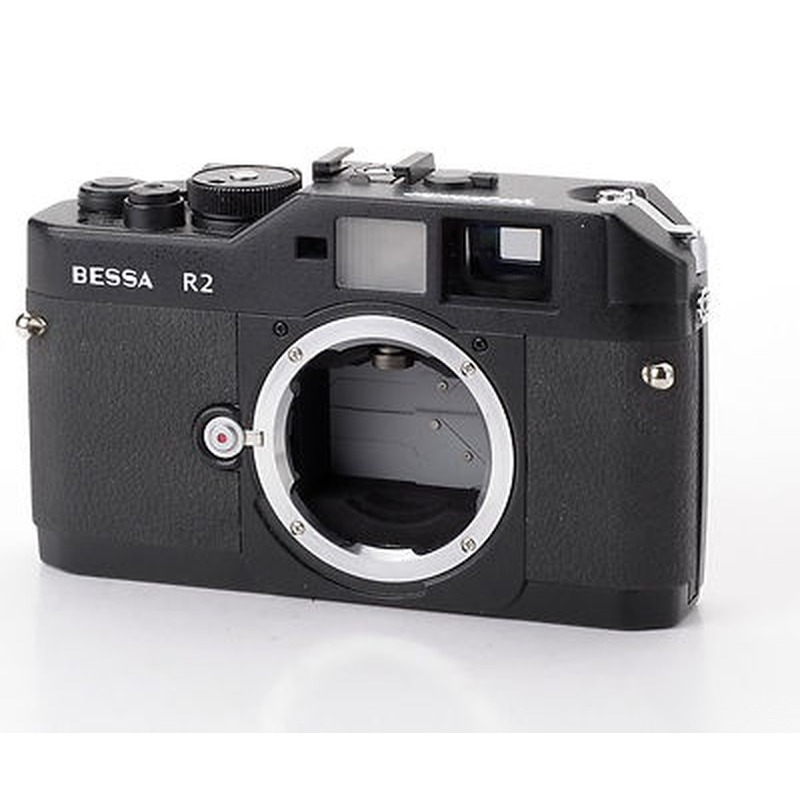
Voigtlander Bessa R2
Voigtlander · Germany
The Bessa R2 represents a significant contribution from Voigtlander's resurgence in the late 20th and early 21st centuries. As a 35mm film rangefinder camera launched circa 2000, it bridged the gap between classic rangefinder tradition and modern functionality at a relatively accessible price point. Designed primarily for manual photography enthusiasts, it featured a coupled rangefinder for accurate focusing, a bright viewfinder with brightline frame lines (typically for 35mm and 50mm lenses), and offered exposure modes including aperture priority and full manual control. Its metal construction, including aluminum top and bottom plates and robust controls, provided a substantial feel for a camera in its segment. While not possessing the groundbreaking innovations or iconic status of cameras like the Leica M3, the Bessa R2 solidified Voigtlander's position as a credible maker of high-quality, affordable rangefinder systems, particularly paired with their excellent modern lenses like the Color-Skopars or Heliars. It appealed to photographers seeking a manual alternative to SLRs or entry points into rangefinder photography without the Leica cost.
The Bessa R2 distinguished itself with its practical design and reliable operation within its class. Its shutter, typically a Copal electronic shutter, offered speeds up to 1/2000th second and synch at 1/125th, while exposure compensation and AE lock provided user flexibility. The camera's layout emphasized straightforward, tactile controls, catering to photographers who valued direct interaction over automation. Although it shared the rangefinder heritage of cameras like the Leica M series, it stood apart by offering a more contemporary feature set and significantly lower price, making high-quality manual photography achievable for a wider audience. Its build quality, while excellent for its market position, utilized polycarbonate bodies with metal components, achieving a balance of durability and cost-effectiveness.
/main.jpg)
 Enjoy this museum? Support on Ko-fi