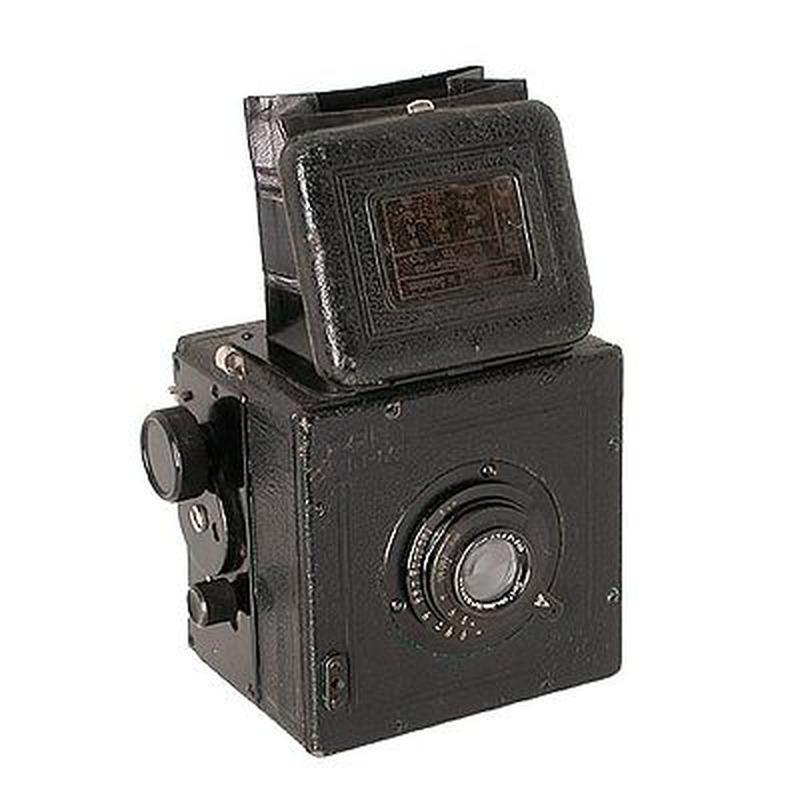
Zeiss Simplex Ernoflex 853
Zeiss · Germany · 1927–1929 (2 years) · 135 film
Produced during the formative years of 35mm photography, the Simplex Ernoflex 853 represents Zeiss Ikon's relatively brief entry into the emerging small-format market between 1927 and 1929. Designed as a straightforward, fixed-lens viewfinder camera, it utilized the standard 135 film cassette that would later become ubiquitous. Characterized by its compact, box-like construction typical of early 35mm models, the Ernoflex 853 featured a simple but functional design, incorporating a triplet lens and a leaf shutter, likely offering basic snapshot capabilities aimed at the amateur photographer seeking an affordable alternative to larger formats. Its production span coincided with Zeiss Ikon's consolidation of various German camera brands, placing the Ernoflex 853 within a period of significant industry transition rather than a revolutionary leap.
While bearing the esteemed Zeiss name, the Ernoflex 853 was not a technologically groundbreaking camera. Its significance lies more in Zeiss Ikon's early recognition of and participation in the developing 35mm market segment than in any innovative features. Compared to the contemporaneous and highly influential Leica I, the Ernoflex 853 was a more basic, utilitarian device aimed at a different price point and user. Its short production run suggests it was not a major commercial success for Zeiss, likely facing competition from established players and the rapidly evolving landscape of small-format photography. It serves today as a representative example of the simpler, more accessible side of the early 35mm camera offerings from a major German manufacturer.
Specifications
| Film Format | 135 |
/main.jpg)
/main.jpg)
/main.jpg)
/main.jpg)
 Enjoy this museum? Support on Ko-fi