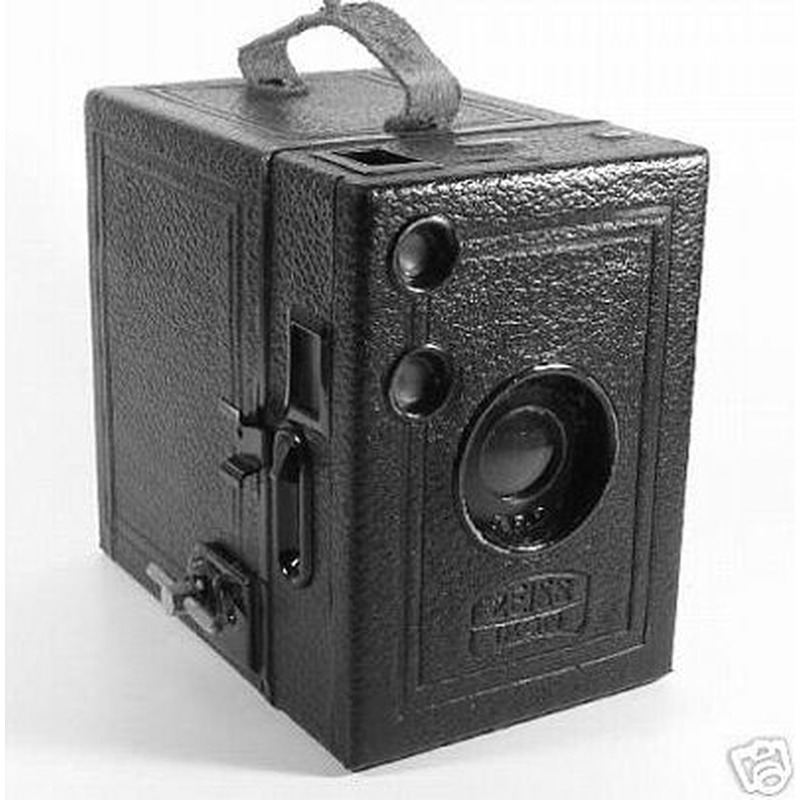
Zeiss Box Tengor 756
Zeiss · Germany · 1927–1928 (1 years) · 135 film
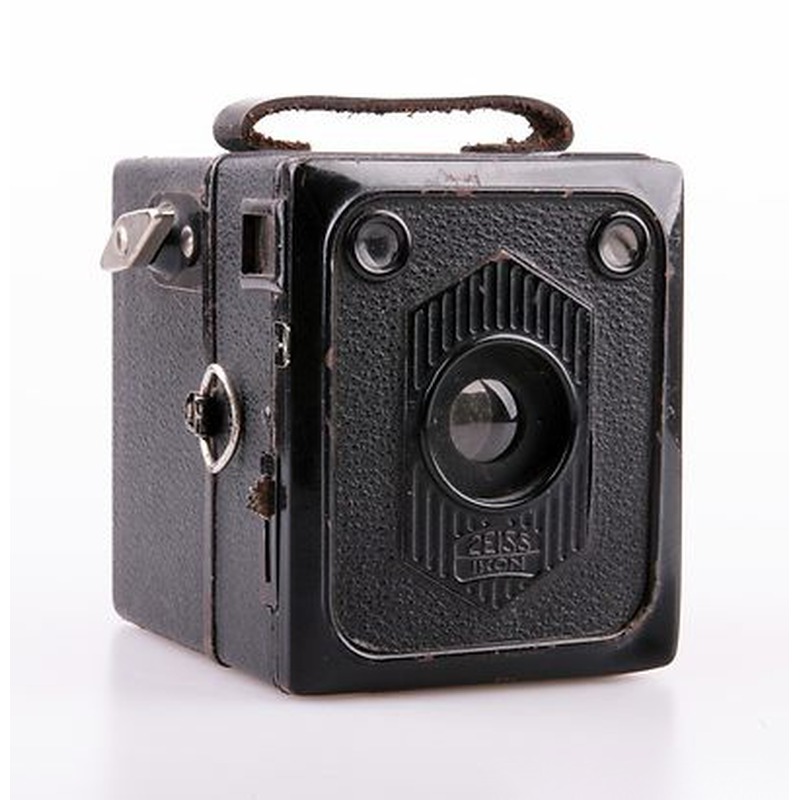
The Box Tengor 756 represents Zeiss Ikon's early entry into the burgeoning 35mm film market, produced during the critical transition years of 1927-1928. Designed as a simple and affordable box camera, it utilized the then-new 135 cartridge film (35mm perforated movie film adapted for still photography). Constructed primarily from sheet metal and featuring a basic Bakelite body, the camera offered straightforward operation: a simple viewfinder and a fixed-focus triplet lens, typically an f/6.3 or f/9 Zeiss Tessar or similar design. Its primary significance lies as Zeiss's attempt to provide a user-friendly and economical point-and-shoot option for photographers seeking the convenience of small format before the rise of more sophisticated rangefinder models. While innovative in its application of 135 film to a consumer box form, its build was utilitarian, lacking the advanced features or precision engineering associated with Zeiss's higher-end products of the era. It served as a foundational model within Zeiss's early 35mm lineup, bridging gap between larger roll-film box cameras and the emerging compact 35mm cameras.
Specifications
| Film Format | 135 |
/main.jpg)
/main.jpg)
/main.jpg)
/main.jpg)
 Enjoy this museum? Support on Ko-fi