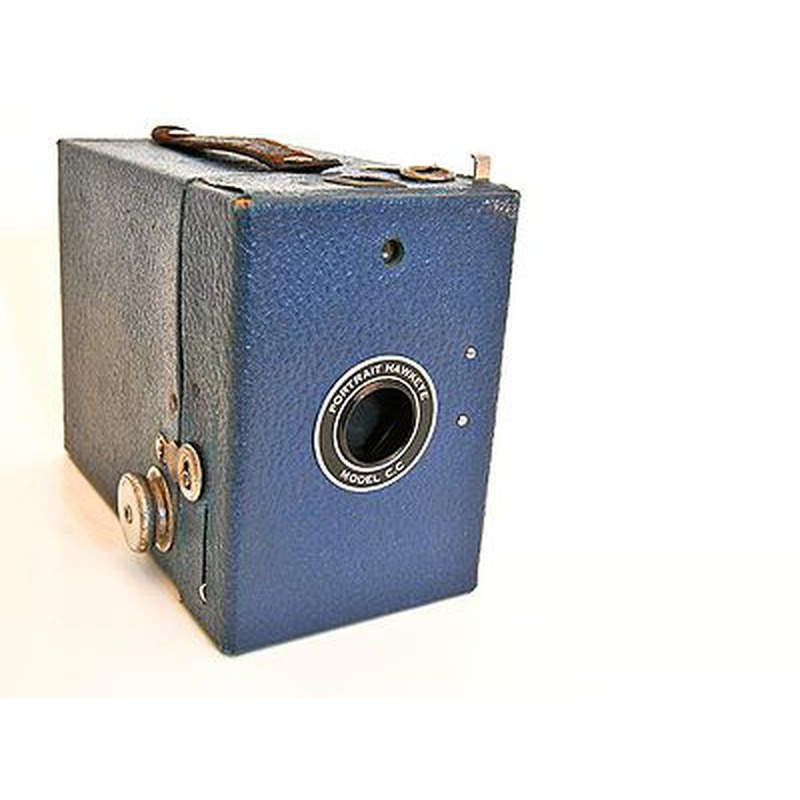
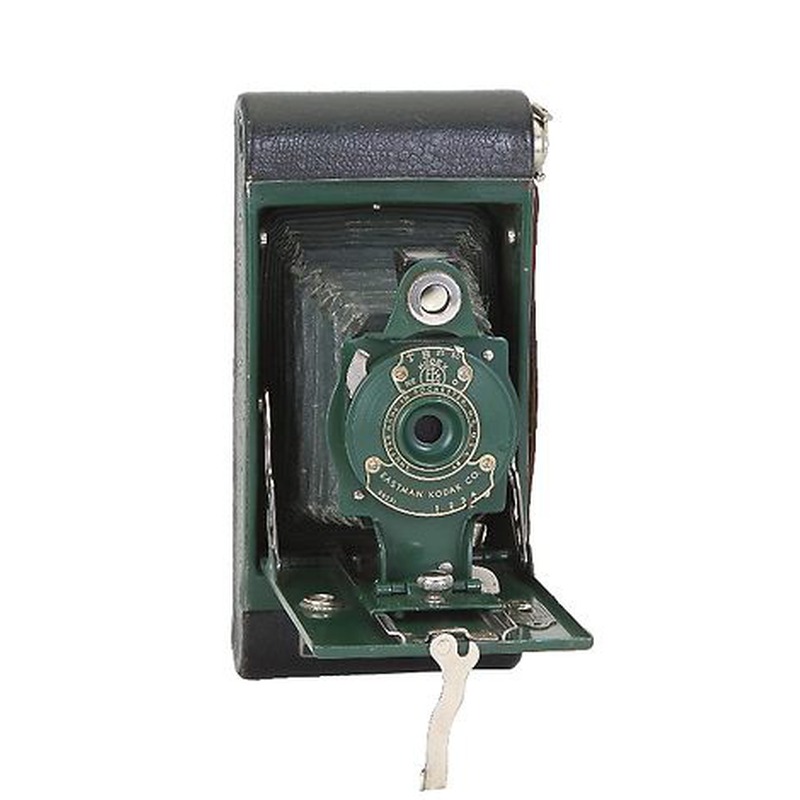
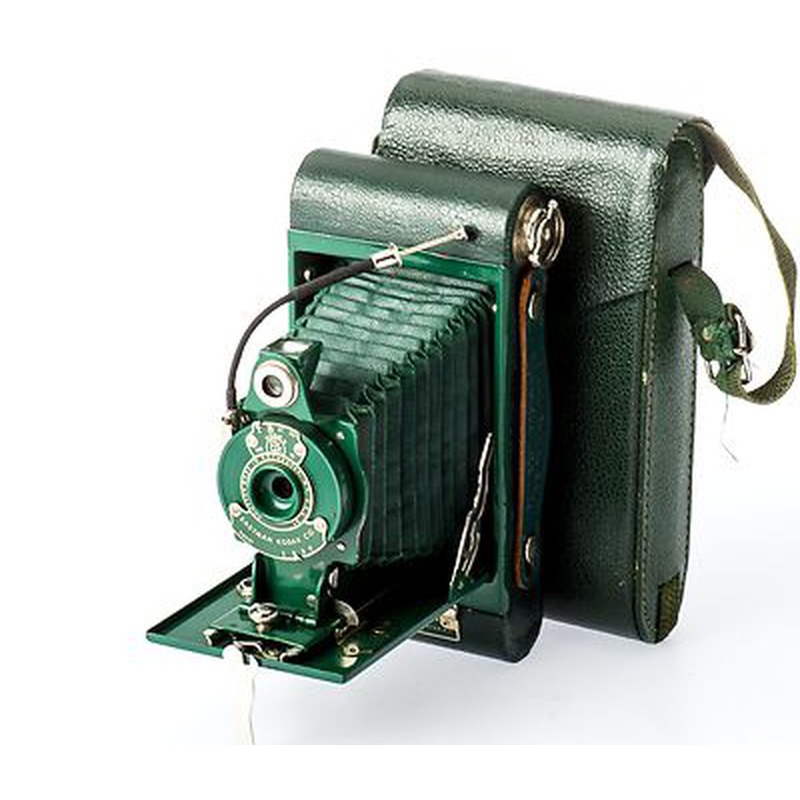
Kodak Portrait Hawk-Eye No.2 Model C.C.
Kodak · USA · 1930 · 135 film
The Kodak Portrait Hawk-Eye No.2 Model C.C., introduced in 1930, represents Kodak's early foray into the burgeoning 35mm film format during a period when roll film still dominated the amateur market. As a model within the Hawk-Eye series, which typically featured box-like designs for simplicity, this variant was adapted for the smaller 135 cassette film, marking a significant technological shift towards the smaller, more portable formats that would later dominate photography. Its introduction positioned Kodak alongside pioneers like Leica, demonstrating the company's recognition of the potential of 35mm, though its execution aimed at the amateur rather than the professional user. While not remembered for groundbreaking innovations like the first Leica, it served as a crucial step in popularizing the 35mm format for the general public, bridging the gap between traditional box cameras and more sophisticated miniature cameras.
Designated "Portrait" and bearing the Model C.C. designation, this camera likely catered to users seeking a simple, user-friendly way to capture snapshots or portraits on the new, convenient 35mm film. Its construction would have prioritized affordability and ease of use over complex features, aligning with Kodak's mass-market strategy. The placement of controls and viewfinder would have been straightforward, reflecting a design philosophy focused on accessibility for the non-professional photographer. As an early Kodak 35mm offering, it holds a place in the evolution of camera design, showcasing the practical application of the 135 format within the dominant Kodak ecosystem of the era.
Specifications
| Film Format | 135 |
/main.jpg)
 Enjoy this museum? Support on Ko-fi