Pricing
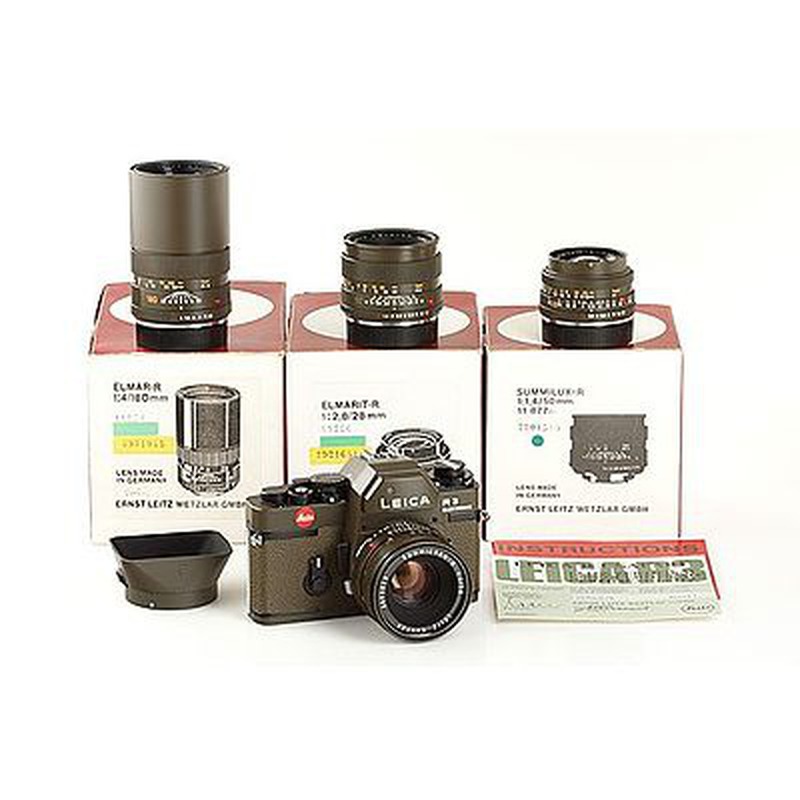
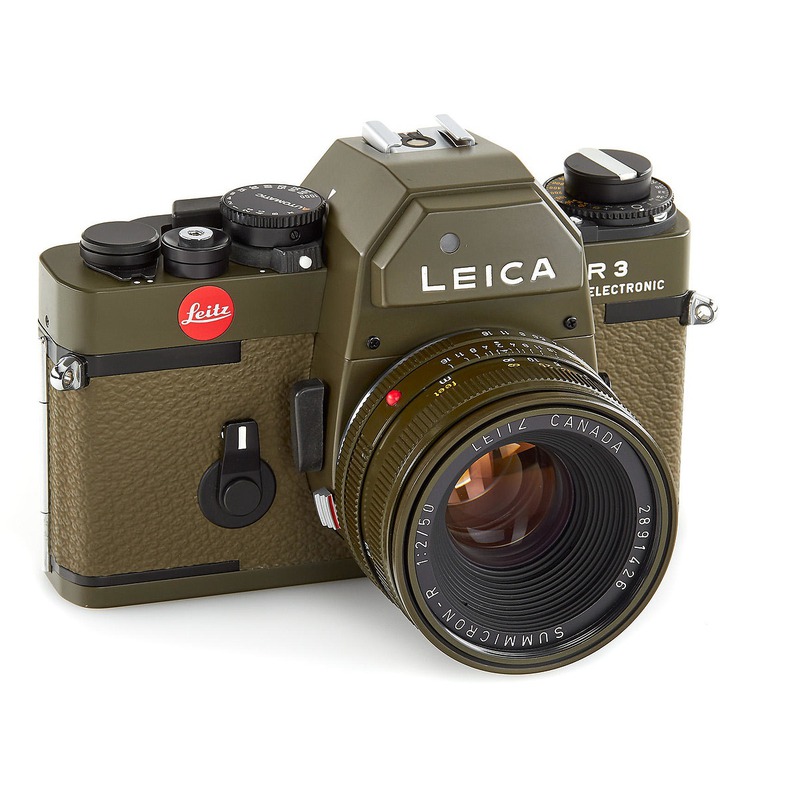
Leica R3 Safari outfit
Leica · Germany · 1977 · 135 film
The Leica R3 Safari outfit represents a distinctive chapter in Leica's single-lens reflex (SLR) history, introduced in 1977 as part of the Leica R system. Developed in collaboration with Minolta, the R3 was Leica's first SLR to incorporate an electronically controlled shutter, marking a significant technological shift from purely mechanical predecessors. While sharing its basic chassis and core mechanisms with the Minolta XE series, the R3 featured Leica's renowned R-bayonet lens mount and was meticulously finished and assembled to Leica's high standards. The "Safari" iteration was particularly notable for its olive drab finish and matching leather case, designed with an adventurous, outdoor aesthetic that differentiated it from the standard black R3, appealing to photographers seeking both robustness and a unique appearance. As a 35mm SLR, it offered reliable performance through its TTL metering and shutter priority automation, embodying Leica's commitment to precision engineering within a more modern electronic framework.
While technologically advanced for its time and benefiting from Leica's prestige and lens quality, the R3 Safari outfit did not achieve the iconic status of Leica's rangefinder cameras or truly revolutionize the SLR market. It served as a capable workhorse for professional and serious amateur photographers who valued Leica's build quality and system lenses, but faced stiff competition from established Japanese SLR giants like Nikon and Canon. The Safari version, while visually striking, was ultimately a limited production variation of the core R3 model, adding character without fundamentally altering the camera's capabilities or historical impact. Its significance lies more within Leica's specific product evolution and its place as a well-crafted, electronically controlled SLR of the late 1970s.
Specifications
| Film Format | 135 |
/main.jpg)
/main.jpg)
/main.jpg)
 Enjoy this museum? Support on Ko-fi