Pricing
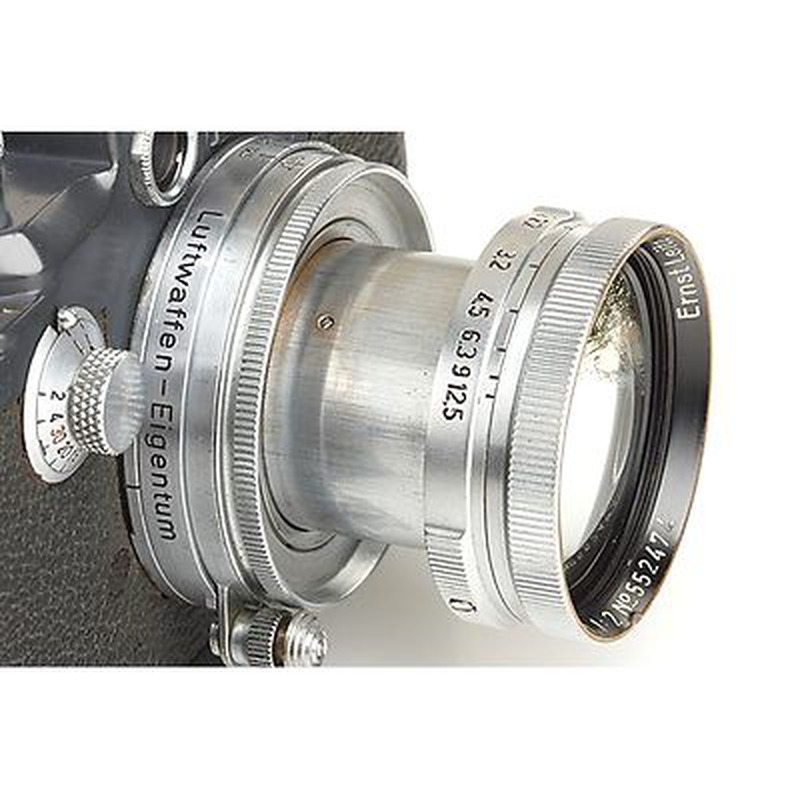
Leica IIIc K Luftwaffen Eigentum grey
Leica · Germany
The Leica IIIc K "Luftwaffen Eigentum" grey represents a significant chapter in Leica's history, marking a pivotal point in both camera design and wartime photography. Introduced in 1939 as the successor to the IIIa, the IIIc was the first Leica model to feature a fully die-cast body, replacing the previous brass and nickel construction. This shift towards aluminum alloy, often painted grey or black, resulted in a lighter, stronger, and more robust camera better suited for demanding field use. The "K" suffix indicates the inclusion of the slow-speed dial viewable in the finder, a refinement over earlier models. Its coupled rangefinder and viewfinder system, allowing precise focusing through a coupled window and a bright frame for the 50mm lens, set the standard for compact precision cameras of the era.
This specific variant, bearing the "Luftwaffen Eigentum" (Luftwaffe Property) marking, holds particular historical weight. Produced during World War II, these cameras were issued to German military photographers for aerial reconnaissance and combat documentation. Their grey finish served as camouflage. The IIIc's reliability, compactness, and the superb optics of Leica lenses made it the camera of choice for photojournalists and soldiers alike in documenting the conflict. While serial numbers and exact production details for specific military contracts are often elusive, these Luftwaffe-marked examples are tangible links to the photographic history of the war, embodying both technological advancement and its deployment in service of state power.
Leica's IIIc series, including this grey military version, cemented the 35mm Leica's reputation as the definitive small camera. Its build quality and innovative features directly influenced the design of countless subsequent rangefinder cameras for decades. The "Luftwaffen Eigentum" markings transform a technically significant camera into a unique historical artifact, reflecting its specific role within the machinery of war and its enduring mystique among collectors and historians of military and photographic technology.
/main.jpg)
/main.jpg)
/main.jpg)
 Enjoy this museum? Support on Ko-fi