_close_focus/main.jpg)
Pricing
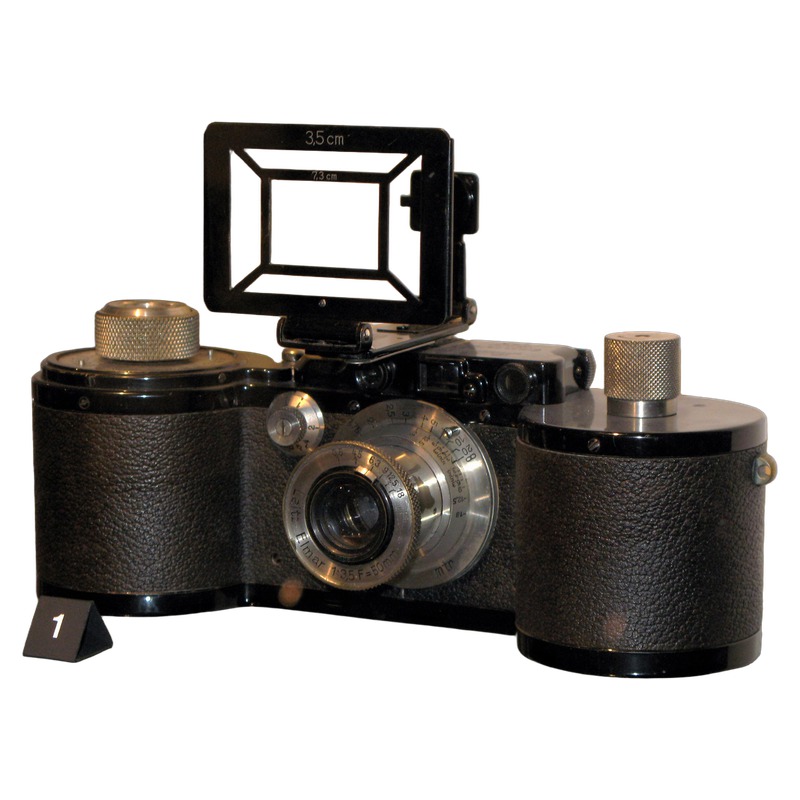
Leica I Mod A (5 digits Number) close focus
Leica · Germany
The Leica I Mod A (5 digits Number) close focus represents a critical refinement in the groundbreaking Leica series that introduced the practical 35mm camera format to the world. Building directly upon the original Leica I (1925), the Mod A variant introduced the crucial innovation of a coupled rangefinder offering close focusing capability. This modification expanded the camera's versatility beyond landscapes and distant subjects, enabling photographers to capture intimate portraits, details, and scenes at significantly closer distances than the standard 1-meter minimum focus of the initial model. The camera's core significance lies in its role within the foundational Leica system – it utilized the legendary 39mm screw lens mount and the 24x36mm film format that would become the 35mm standard, housed within a compact, precision-machined body crafted from aluminum and brass. The addition of close focus, achieved through modifications to the rangefinder mechanism and potentially the focusing helical, addressed a significant limitation of the early Leica I, making it a more practical and desirable tool for demanding photographers of the era. Its use by pioneering photojournalists and documentary photographers cemented the Leica reputation for portability and unobtrusive capture.
While sharing the basic silhouette and mechanical simplicity of the earliest Leica models, the Mod A close focus benefited from incremental improvements that enhanced user experience and image-making potential. The coupled rangefinder provided precise focus at closer distances, replacing or augmenting the crude auxiliary viewfinder and separate distance scale used on the original Leica I. This was essential for the emerging documentary style that required quick, accurate focusing on nearby subjects. The camera maintained Leica's characteristic high-quality construction, though its operation required manual winding (lever or knob) and cocking of the shutter, with speeds typically ranging from 1/20s to 1/500s. It was designed to be used with the excellent Leica screw-mount lenses, like the 50mm f/3.5 Elmar, which further defined the system's capabilities. The 5-digit serial number places it within an early production run, likely produced in the late 1920s or very early 1930s, making it a tangible link to the dawn of small-format, documentary photography. Its significance is less about single-model fame and more about its embodiment of the continuous refinement that made the Leica system the undisputed benchmark for serious photography for decades.
/main.jpg)
/main.jpg)
/main.jpg)
 Enjoy this museum? Support on Ko-fi