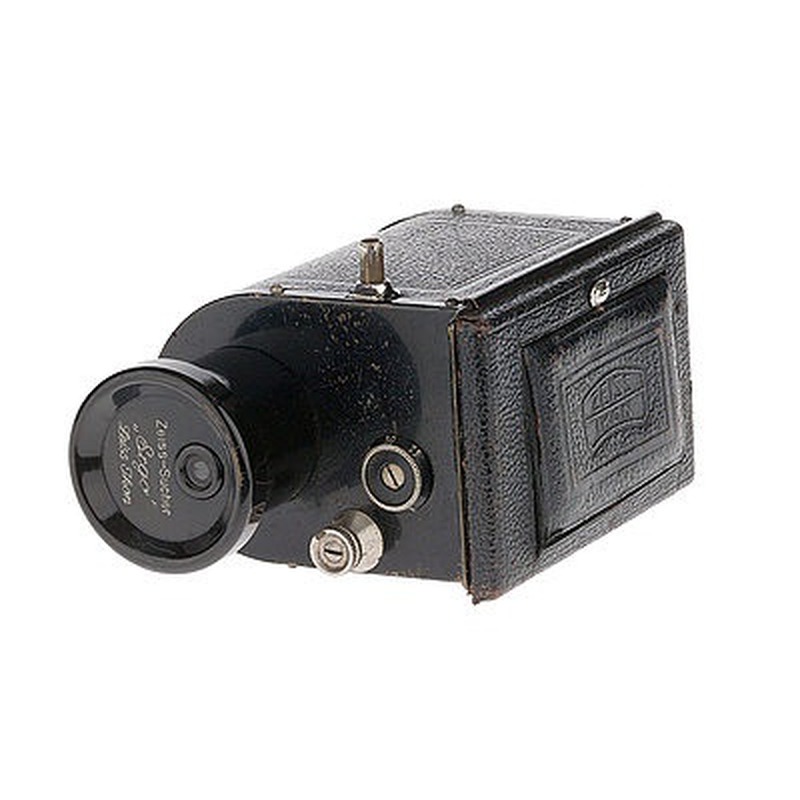
Zeiss Ergo
Zeiss · Germany · 1927–1931 (4 years) · 135 film
The Zeiss Ergo occupies a transitional but significant position in the evolution of 35mm photography. Produced by the renowned German optical manufacturer Zeiss Ikon from 1927 to 1931, it represents an early attempt by a major firm to establish itself in the burgeoning small-format market dominated by Leica. While sharing the 135 film format pioneered by Leica, the Ergo likely featured a more conventional design, potentially utilizing a coupled rangefinder and a leaf shutter typical of contemporary medium-format cameras adapted for 35mm. It embodied Zeiss's commitment to precision engineering and optical excellence, though its specific features and design details remain less documented than its more famous contemporaries. The Ergo served as a competitor and benchmark during a crucial period, contributing to the standardization and wider acceptance of the 35mm format as a viable tool for serious photography before the explosion of post-war models.
As an early 35mm offering from a premier optical house, the Ergo holds notable importance for collectors and historians interested in the foundational years of small-format photography. It illustrates the technological landscape of the late 1920s, where manufacturers were actively refining designs and battling for market share. While perhaps lacking the iconic status of the Leica I, the Ergo stands as a tangible artifact of Zeiss's ambitious entry into this new field, demonstrating their technical capabilities and reflecting the competitive drive that ultimately advanced camera design for decades. Its relatively short production run (1927-1931) further marks it as a distinct product of its specific historical moment.
Specifications
| Film Format | 135 |
/main.jpg)
/main.jpg)
/main.jpg)
/main.jpg)
 Enjoy this museum? Support on Ko-fi