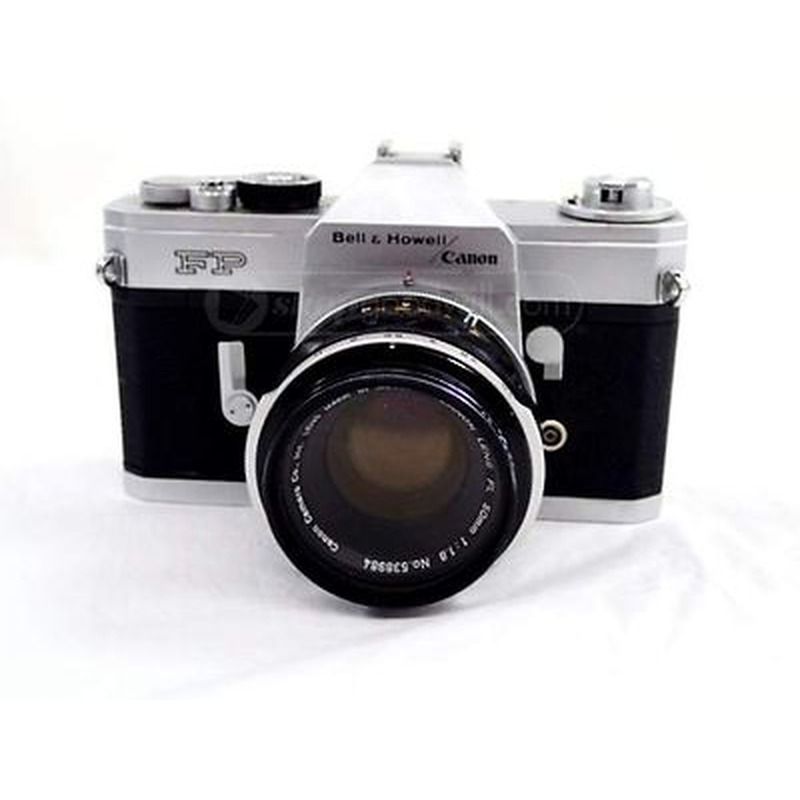
Canon FP Bell & Howell
Canon · Japan
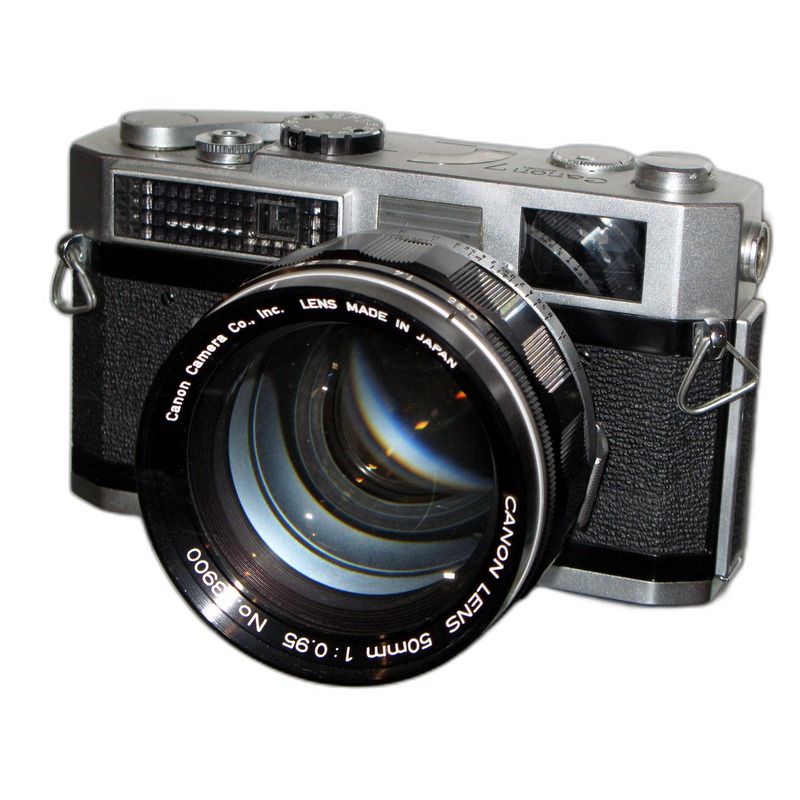
The Canon FP Bell & Howell is a result of Canon's early strategic partnership with the American distributor Bell & Howell in the mid-20th century, primarily aimed at establishing Canon's presence in the competitive US market. Designed as a rangefinder camera, likely for the 35mm format, it represents Canon's effort to offer functional and accessible photographic equipment under the trusted Bell & Howell nameplate. While sharing Canon's optical expertise in its lens, the FP model was positioned as a more practical, perhaps entry-level or mid-tier, option compared to Canon's own flagship models. Its design focused on straightforward functionality, essential controls, and reliable operation for amateur photographers and students seeking a dependable camera without the complexity or expense of higher-end offerings. This collaborative venture was crucial for Canon's growth, providing vital market experience and revenue before they fully established their own brand identity in the US.
As a product of this important but commercially oriented partnership, the FP embodies the transition in Japanese camera manufacturing towards global markets. It lacks the innovative features or groundbreaking design that would elevate it to iconic status, instead serving as a workhorse example of the rangefinder cameras popular during the 1950s and 1960s. Its primary historical context lies within Canon's business development story and the collaborative distribution model common at the time, rather than any technical leap or widespread cultural adoption. It remains a footnote, interesting as a Canon/Bell & Howell hybrid but not a significant driver of photographic history itself.
 Enjoy this museum? Support on Ko-fi