_Stereo/main.jpg)
Zenit Zorki 1 (Type 1d) Stereo
Zenit · Russia · 1953–1954 (1 years) · 135 film
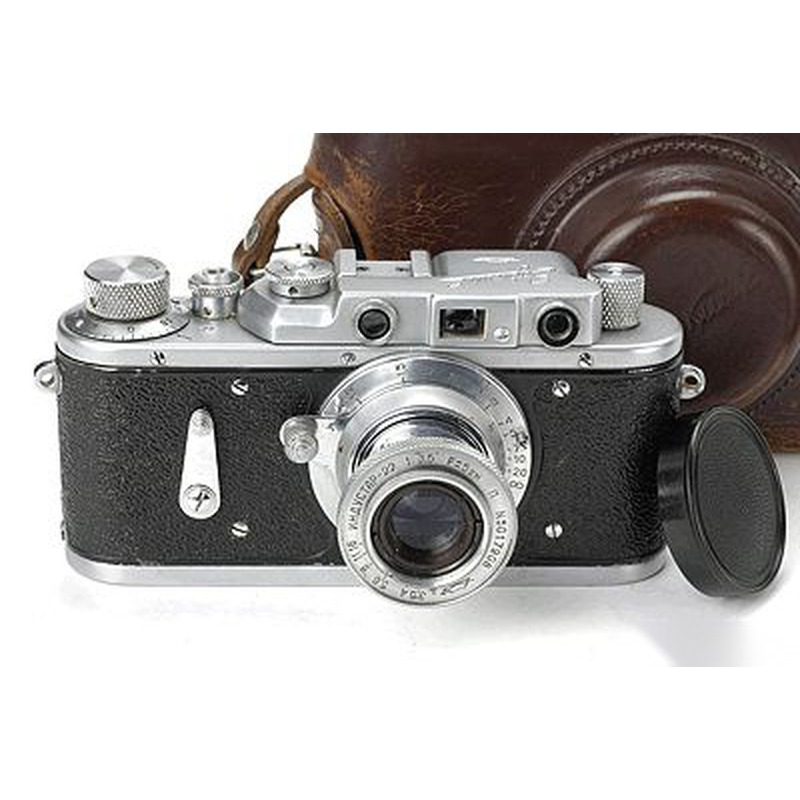
The Zorki 1 (Type 1d) Stereo by Zenit represents a unique but obscure variation within the Soviet camera industry's early experimentation with 35mm photography. Produced for a very brief period in 1953-1954, it was essentially the standard Zorki 1 body modified to incorporate a twin-lens system designed for stereo photography. This adaptation allowed the camera to capture two slightly offset images on a single frame of standard 135 film, enabling users to create 3D slides or prints with appropriate viewers. Characterized by its robust, albeit somewhat crude, construction typical of post-war Soviet manufacturing, it utilized a Leica-derived coupled rangefinder and a cloth focal-plane shutter, sharing the basic operational mechanics of its non-stereo counterparts but with the added complexity and bulk of the stereo optics.
This stereo variant was a niche product aimed at a small segment of the Soviet market and possibly for export, reflecting the era's interest in novel photographic techniques. Its production run was extremely short, making it a rare find today. While functional for its intended purpose, the stereo mechanism added weight and complexity without significantly improving upon the core Zorki 1's utility as a basic, reliable, and affordable 35mm camera. It serves more as a historical curiosity within the broader Zorki lineage than a model of widespread influence or technical achievement. Its primary significance lies in its embodiment of Soviet attempts to diversify the Leica clone formula and explore alternative photographic formats during a period of constrained resources and focused industrial production.
Specifications
| Film Format | 135 |
/main.jpg)
_Prototype/main.jpg)
/main.jpg)
 Enjoy this museum? Support on Ko-fi