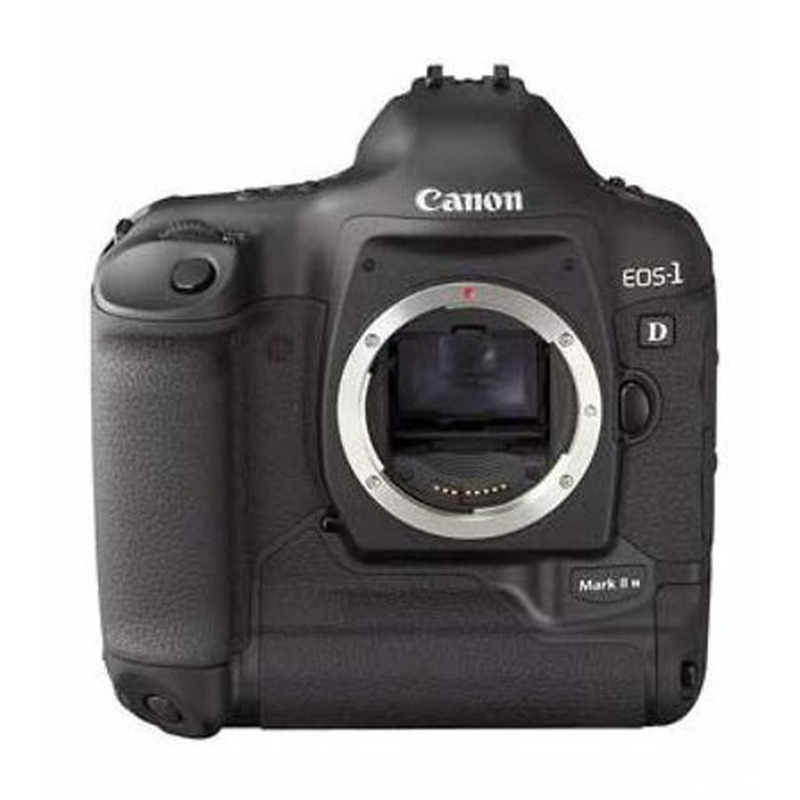
Canon EOS-1D Mark II N
Canon · Japan
The Canon EOS-1D Mark II N, released in 2005, represented the pinnacle of professional DSLF technology during the transition to digital dominance in photojournalism and sports photography. Building directly upon its predecessor, the EOS-1D Mark II, it addressed critical performance limitations by featuring a significantly enhanced processing engine. This resulted in a substantial improvement in buffer capacity, allowing for continuous bursts at 8.5 frames per second to capture up to 40 JPEG frames or 20 RAW files without interruption. It retained the robust, weather-resistant magnesium alloy monocoque body construction synonymous with the 1D series, incorporating a durable shutter rated for 200,000 cycles and dual processors (DIGIC II and a separate image processor) to manage the demanding workflow of press and event shooters. Utilizing an 8.2-megapixel APS-H (1.3x crop) CMOS sensor, it offered a unique balance between reach and resolution, paired with Canon's then-superior AF system with 45 points, including 8 cross-type points, ensuring reliable subject tracking. It was widely deployed by professional photographers covering major news events, conflicts, and high-stakes sports, cementing its reputation as a reliable and fast workhorse for deadline-driven digital capture. Its "N" designation specifically signaled these buffer and processing enhancements that made it significantly more practical for extended bursts than the original Mark II.
While sharing its core sensor and AF system with the high-resolution EOS 1Ds Mark II, the EOS-1D Mark II N carved out a distinct niche prioritizing speed and handling for photographers needing the highest possible frame rates without the bulk of a full-frame sensor. It inherited the excellent ergonomics and intuitive controls of the 1D series, featuring a large, bright pentaprism viewfinder and a dedicated top-mounted status LCD panel for quick review of key shooting parameters. Its design reflected Canon's commitment to professional durability, incorporating extensive sealing against dust and moisture. The camera gained significant visibility through its use by prominent wire services and independent photographers documenting pivotal moments, contributing to the broader narrative of digital photography replacing film in professional fields. It stands as a crucial evolutionary step in Canon's flagship 1D DSLF line, bridging the gap between the original Mark II and the subsequent 1D Mark III, demonstrating the rapid pace of technological advancement in the mid-2000s digital SLR market.

 Enjoy this museum? Support on Ko-fi