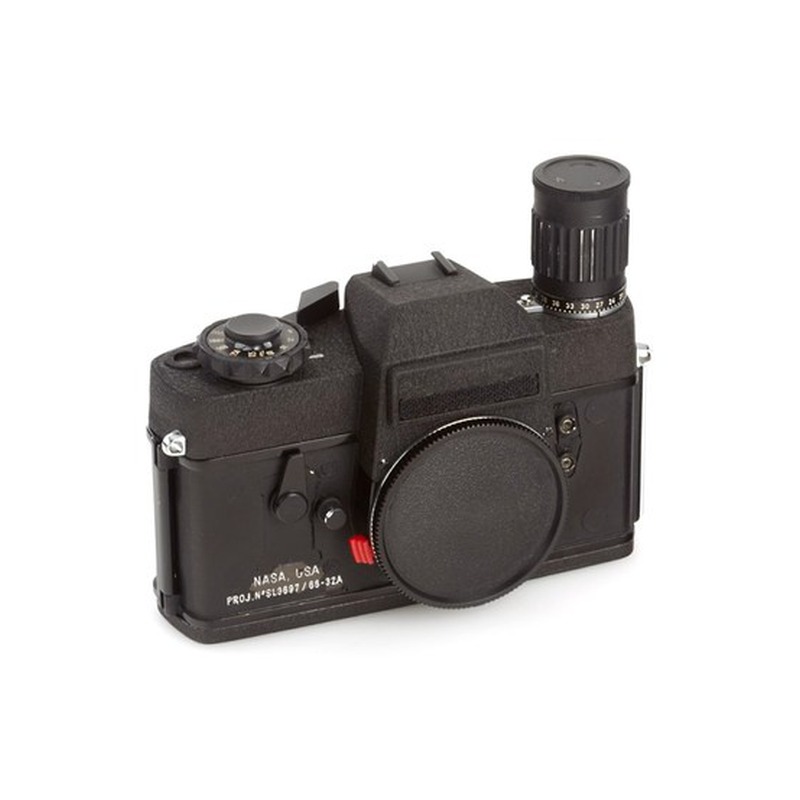
Leicaflex SL black NASA
Leica · Germany · 1970–1974 (4 years) · 135 film
The Leicaflex SL black NASA variant represents a distinctive chapter in Leica's transition into the single-lens reflex (SLR) market. Produced between 1970 and 1974, the Leicaflex SL was Leica's first SLR to feature through-the-lens (TTL) center-weighted metering, a significant technological advancement that finally brought Leica into parity with competing Japanese SLRs like the Pentax Spotmatic and Nikkormat FTN. This black-bodied version, reportedly commissioned for use by NASA personnel and potentially involved in space program documentation or training, leverages the SL's robust, all-metal construction and exceptional optics. While sharing the core mechanics and mount (M42) with the standard SL, the black finish and NASA association赋予它独特的身份 and desirability among collectors. Its production was relatively limited compared to the standard chrome models, contributing to its rarity.
The camera embodies Leica's commitment to precision engineering and build quality, featuring a heavy, magnesium-alloy body with distinctively sharp, angular lines characteristic of late-1960s and early-1970s Leica design. It retains the excellent viewfinder and focusing screen accuracy Leica users expect, along with its reliable, cloth focal-plane shutter. The TTL metering, displayed via a needle in the viewfinder, offered practical exposure automation without the complexity of later models. While the standard Leicaflex SL was an important, professional camera that secured Leica's foothold in the SLR world, the black NASA variant stands out primarily due to its exclusive provenance and color scheme, marking it as a notable and highly sought-after piece within Leica's SLR lineage.
Specifications
| Film Format | 135 |
/main.jpg)
/main.jpg)
/main.jpg)
/main.jpg)
 Enjoy this museum? Support on Ko-fi