_(tubular_viewfinder)/main.jpg)
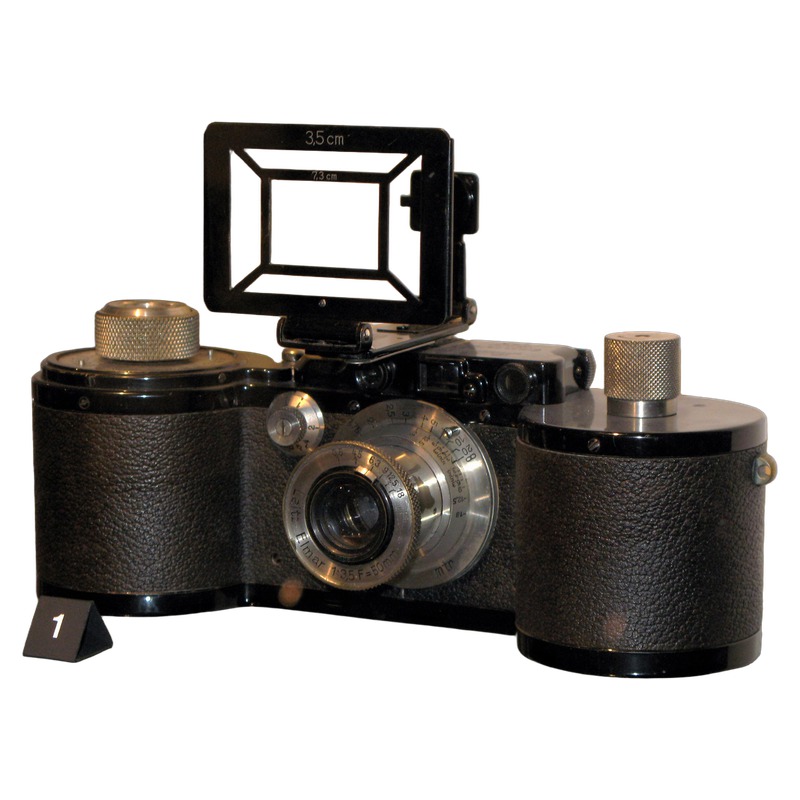
Leica O Series (0 Series, pre production) (tubular viewfinder)
Leica · Germany
The Leica O Series pre-production cameras represent the pivotal prototypes that gave birth to the 35mm still photography revolution in the early 1920s. Developed by Oskar Barnack at Leitz, these experimental models were created to test the feasibility of using 35mm motion picture film for still images, a radical departure from the bulky plate cameras of the era. The design featured a compact body with a unique tubular viewfinder, reflecting the experimental phase before the commercial Leica I’s release in 1925. These prototypes, with their simplified mechanics and lack of a coupled rangefinder, were functional testbeds that refined the core innovations—interchangeable lenses, focal-plane shutter, and miniature format—that would define modern 35mm photography. Their existence underscores Barnack’s vision to create a portable camera for "candid" photography, directly enabling the emergence of photojournalism and artists like Henri Cartier-Bresson. Today, fewer than 25 of these pre-production units are known to survive, making them among the rarest and most significant artifacts in camera history.
/main.jpg)
/main.jpg)
/main.jpg)
 Enjoy this museum? Support on Ko-fi