/main.jpg)
Pricing
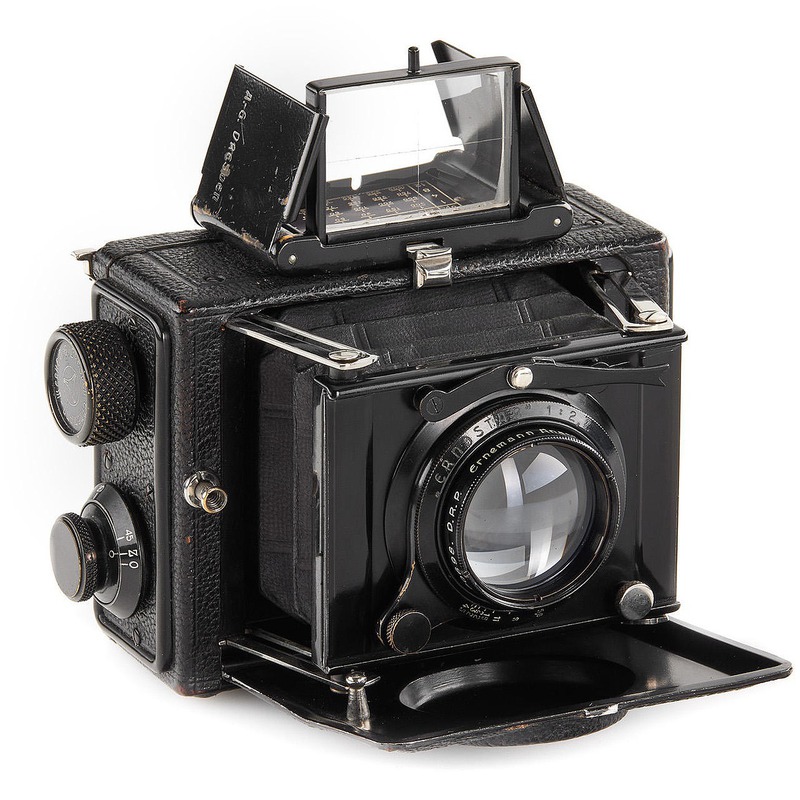
Ernemann Klapp-Reflex (double extension)
Ernemann · Germany · 1913–1919 (6 years) · 135 film
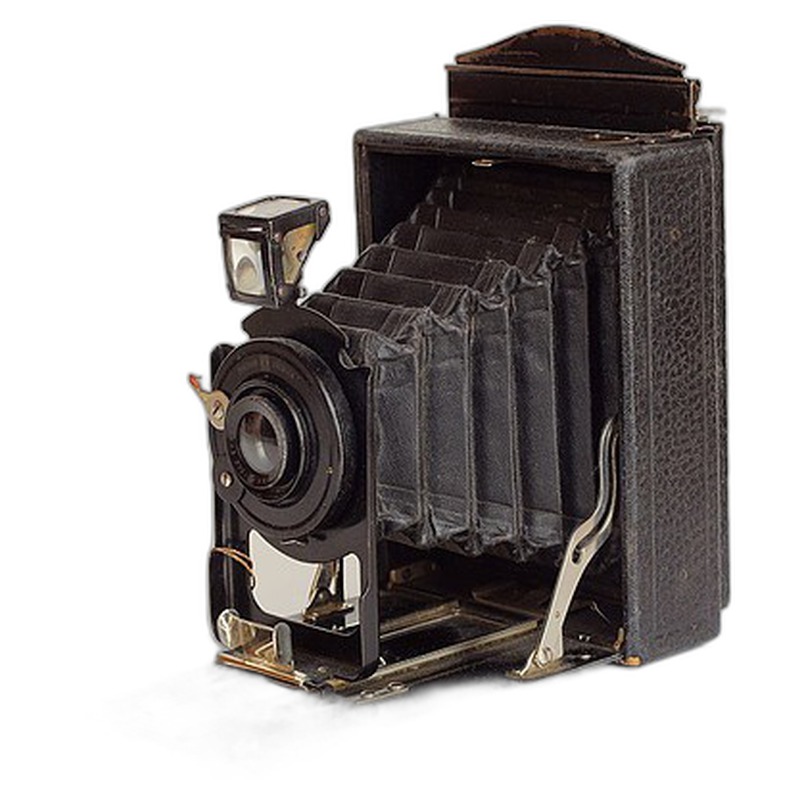
Produced by Ernemann between 1913 and 1919, the Klapp-Reflex (double extension) represents a mid-tier folding camera design aimed at serious amateurs. Its name clearly indicates its key features: "Klapp" signifies it folds down for portability, "Reflex" likely refers to a reflex-type viewfinder (possibly a waist-level finder rather than a true single-lens reflex), and "double extension" denotes the ability to extend the bellows significantly, providing greater focusing range for close-ups and improved image quality at larger apertures compared to simpler folder designs. It utilized roll film, likely 127 format (4 x 6.5 cm negatives) despite the catalog listing "135," as standard 35mm (135) film for still photography was not introduced until the Leica I in 1925. This camera offered a blend of compactness, extended bellows capability, and better optical quality than basic box cameras, positioning it as a practical tool for enthusiasts seeking more control and sharper images. Ernemann, a respected German manufacturer, incorporated solid engineering into its construction, though materials were typical for the era like polished wood, brass, and leatherette.
The Klapp-Reflex (double extension) served as a workhorse camera for dedicated amateur photographers during a period when roll film was becoming standard. It bridged the gap between simple snapshot cameras and more complex professional equipment, offering manual control over focus and aperture through its extended bellows and presumably a leaf shutter system. While not a revolutionary design like Leica's ur-Leica, it exemplified the steady evolution of camera technology in the early 20th century, emphasizing portability without sacrificing the image quality improvements afforded by longer bellows for critical focusing. Its production spanned the tumultuous World War I era, reflecting Ernemann's continued manufacturing capability during difficult times. It remains an example of competent, mid-range German camera engineering from the pre-Leica era, valued today more as a representative piece of early 20th-century amateur photography equipment than for any groundbreaking innovation.
Specifications
| Film Format | 135 |
/main.jpg)
/main.jpg)
/main.jpg)
 Enjoy this museum? Support on Ko-fi