Pricing
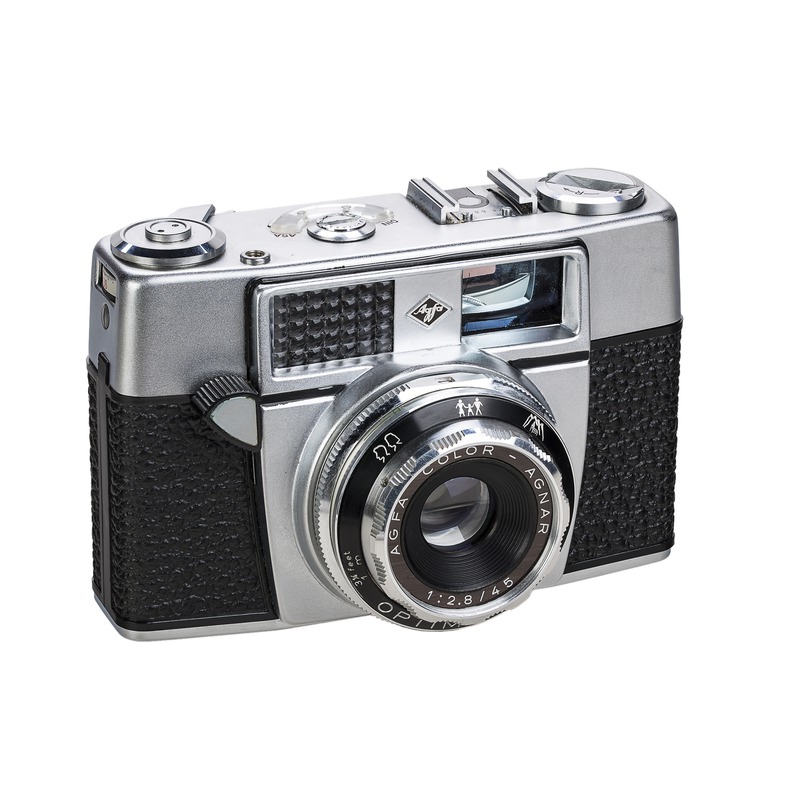
Agfa Optima 1a
Agfa · Germany · 135 film
The Agfa Optima 1a, also marketed as the Agfamatic, holds a pivotal place in the evolution of consumer photography as one of the first fully automatic scale-focusing 35mm film cameras introduced in 1962. Developed by Agfa, a prominent German manufacturer renowned for its photographic innovations, this camera marked a significant leap toward automation in the amateur market. Its design prioritized accessibility, utilizing a selenium cell light meter coupled with an automatic focusing system that eliminated manual adjustment—a groundbreaking feature for its time. Agfa’s engineers integrated this technology into a compact, user-friendly body, bridging the gap between complex professional cameras and simple box cameras. This innovation reflected broader mid-century trends aimed at democratizing photography, making high-quality image capture achievable for everyday users without technical expertise.
Technologically, the Optima 1a’s automatic scale-focusing mechanism was its cornerstone achievement. By measuring subject distance and correlating it to a rotating scale on the lens, it allowed photographers to achieve sharp focus with minimal intervention, a precursor to modern autofocus systems. While lacking automatic exposure control, it simplified the focusing process, which was often the most challenging aspect for novices. The camera’s construction, typical of Agfa’s mid-century engineering, emphasized durability with a metal body and straightforward mechanical components, designed to withstand regular use. Although no definitive records link the Optima 1a to specific notable photographers, its historical impact lies in its role as an enabler of mass participation in photography, contributing to the cultural shift where personal snapshot-taking became more widespread and accessible.
Specifications
| Film Format | 135 |
 Enjoy this museum? Support on Ko-fi