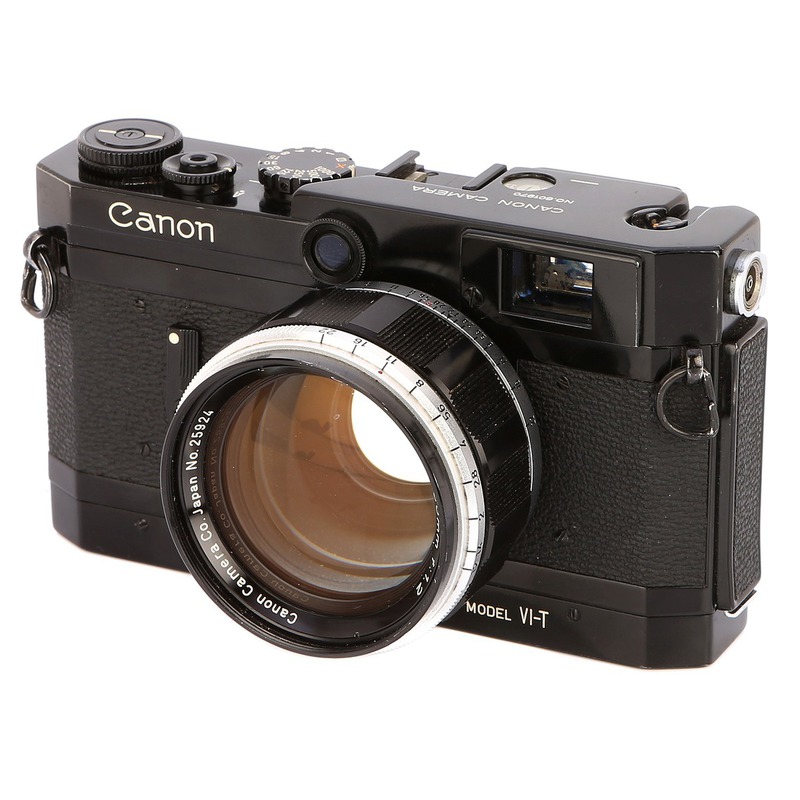
Canon VI T black
Canon · Japan
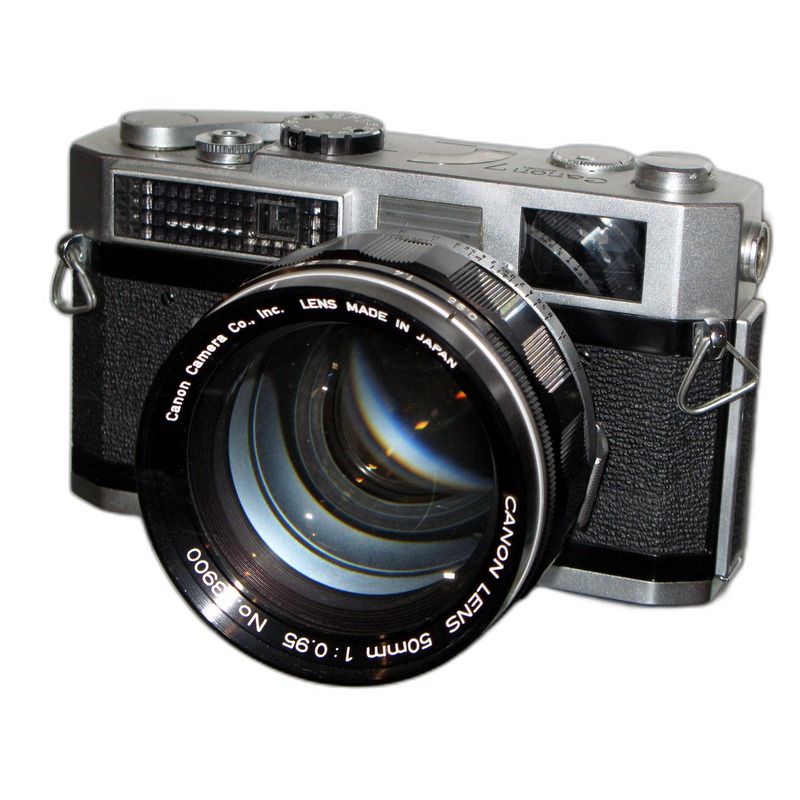
The Canon VI T black is a rangefinder camera belonging to Canon's post-war VI series, representing a significant refinement of their earlier designs. It features a coupled rangefinder for accurate focusing and a cloth focal-plane shutter offering speeds up to 1/1000th second, a notable capability for its era. The camera is constructed with a die-cast aluminum body covered in black leatherette, providing a relatively robust build typical of mid-century Japanese cameras. The VI T variant incorporated several improvements over its predecessors, including a more refined viewfinder with projected frame lines and a shutter release designed for easier operation. It was positioned as a reliable, high-quality option for advanced amateurs and professionals during Canon's transition period towards establishing a global presence.
While not achieving the legendary status of contemporaries like the Leica M3, the Canon VI T holds importance as a practical and well-engineered rangefinder that solidified Canon's reputation for producing quality equipment. It utilized Canon's standard 50mm lenses, often with excellent optics like the Serenar or later Canon lenses. The camera embodies Canon's commitment to refining rangefinder technology before their eventual shift to single-lens reflex systems. Its production period, likely late 1950s, places it just before Canon introduced their groundbreaking Canonet QL17 and SLR models, marking a key evolution in the company's camera line. It represents a solid, functional camera of its time, valued for its dependability and design maturity.
 Enjoy this museum? Support on Ko-fi