/main.jpg)
Pricing
Ernemann Unette (18x24)
Ernemann · Germany · 1925–1926 (1 years) · 135 film
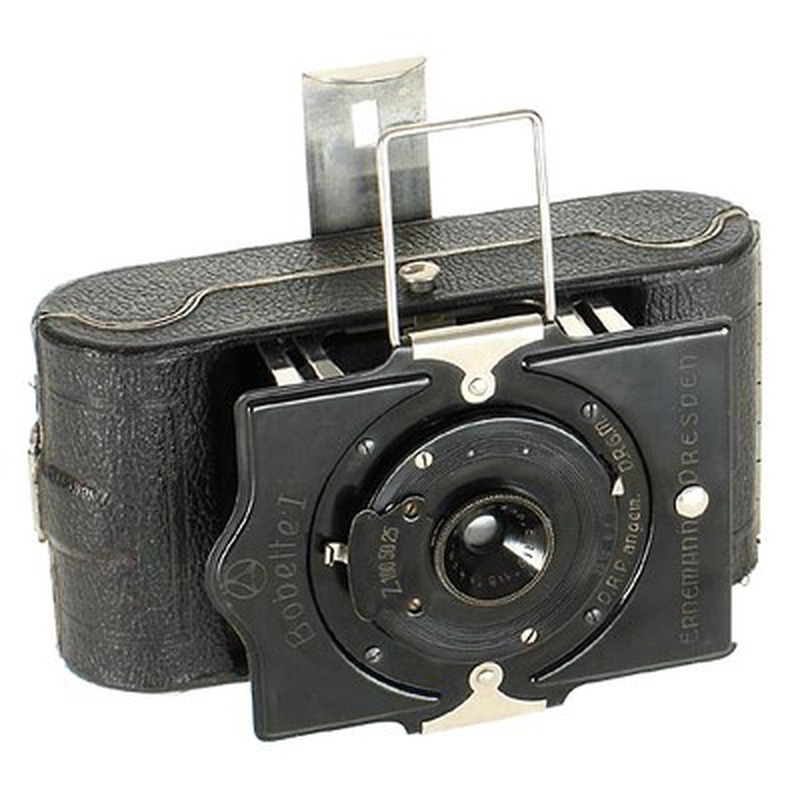
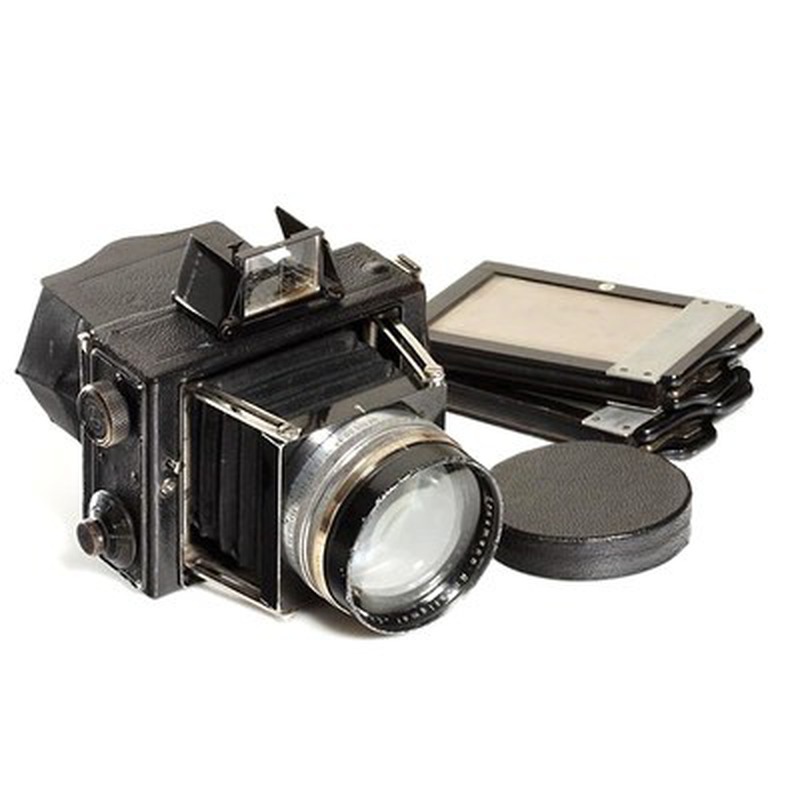
The Ernemann Unette (18x24) represents a brief and curious chapter in early 35mm photography. Produced for only a single year, 1925-1926, during the turbulent transition period when Ernemann was being absorbed into Zeiss Ikon, it was one of the company's early attempts at leveraging the emerging 135 cartridge format. Unlike the standard 24x36mm frame, this camera specifically utilized the smaller 18x24mm portion of the 35mm film, effectively doubling the number of exposures per roll to 72. This design choice, while offering practical advantages for film economy, resulted in a significantly different aspect ratio compared to what soon became the standard for 35mm photography. The Unette itself was a simple, boxy folding camera, constructed primarily from stamped metal with leatherette covering, typical of mid-range models of the era. It featured a central shutter and a fixed or modest range lens, designed for straightforward, everyday photography without advanced features.
Its significance lies primarily in its specific format and its place within Ernemann's final independent years. The 18x24mm format, while practical, proved a dead end commercially, overshadowed by the rise of the Leica and its 24x36mm standard. Consequently, the Unette (18x24) did not achieve widespread adoption or lasting influence on camera design. Today, it is primarily remembered by collectors of Ernemann or early 35mm formats as a rare and unusual model, notable for its distinct frame size and its production during a major industry consolidation. Its existence underscores the experimental nature of 35mm camera development in the mid-1920s before the format fully standardized.
Specifications
| Film Format | 135 |
/main.jpg)
/main.jpg)
/main.jpg)
/main.jpg)
 Enjoy this museum? Support on Ko-fi