/main.jpg)
Pricing
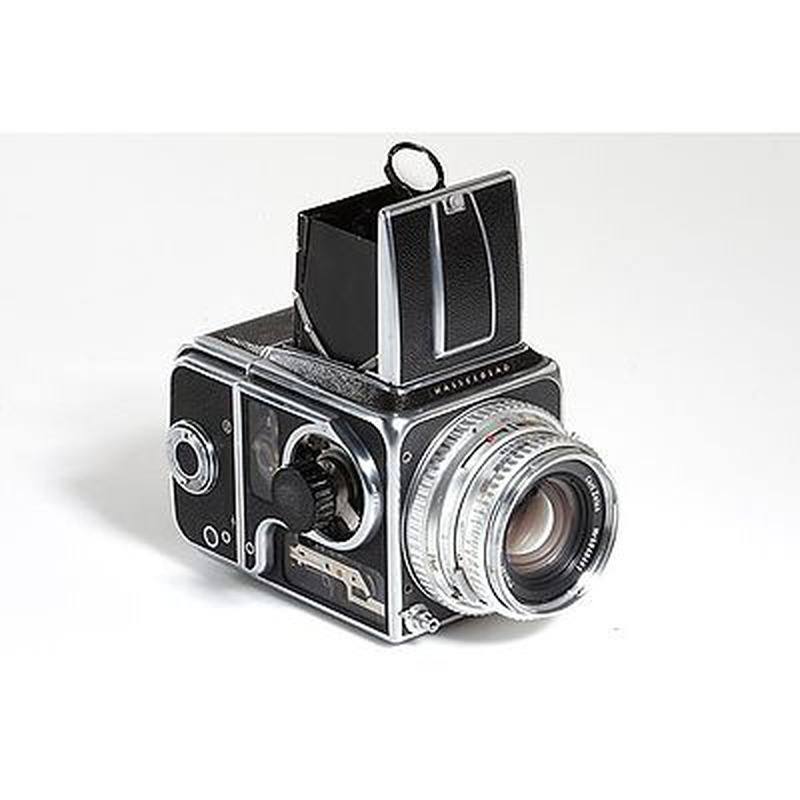
Hasselblad Super Wide A (SWA or SW)
Hasselblad · Sweden · 1954–1957 (3 years) · 120 film
The Hasselblad Super Wide A (SWA), also known as the SW, represents a specialized and innovative chapter in Hasselblad's mid-20th century evolution. Produced from 1954 to 1957, this medium format camera was designed for a unique purpose: capturing extremely wide-angle images using the company's standard 120 roll film. Its defining feature was the integrated Zeiss Biogon 38mm f/4.5 lens, offering a remarkably expansive 90-degree field of view, significantly wider than the standard lenses used on other contemporary Hasselblad bodies like the 500C. Focusing this super wide lens required a specialized internal helical focusing mechanism rather than the standard ground glass and magnifier system, a direct adaptation of the technique used on the earlier SWC (released the same year) to ensure precise focusing accuracy critical for such wide perspectives. The SWA utilized Hasselblad's standard modular body with interchangeable film backs and viewfinders, but its distinct lens unit and focusing mechanism set it apart as a highly specialized tool primarily intended for architectural and industrial photography where minimal distortion and maximum coverage were paramount. Its production run was relatively short, reflecting its niche application and the dominance of the SWC for most wide-angle work.
This camera underscores Hasselblad's commitment to expanding the creative capabilities of its system beyond portraiture and general use. By integrating a fixed, ultra-wide lens directly into a Hasselblad body, the SWA provided professional photographers with a compact, robust solution for demanding wide-angle assignments on medium format, a capability largely unaddressed by the mainstream line. While sharing the modular Hasselblad build quality, the SWA's value lay in its specific optical solution. Its limited production and unique design ensure it holds a place as a significant, though specialized, artifact in Hasselblad's history, representing the brand's continuous pursuit of lens innovation and system flexibility. Famous users are less documented than for flagship models, but its adoption by architectural photographers and professionals needing extreme coverage cemented its reputation for exceptional image quality in a dedicated wide-angle format.
Specifications
| Film Format | 120 |
/main.jpg)
 Enjoy this museum? Support on Ko-fi