/main.jpg)
Pricing
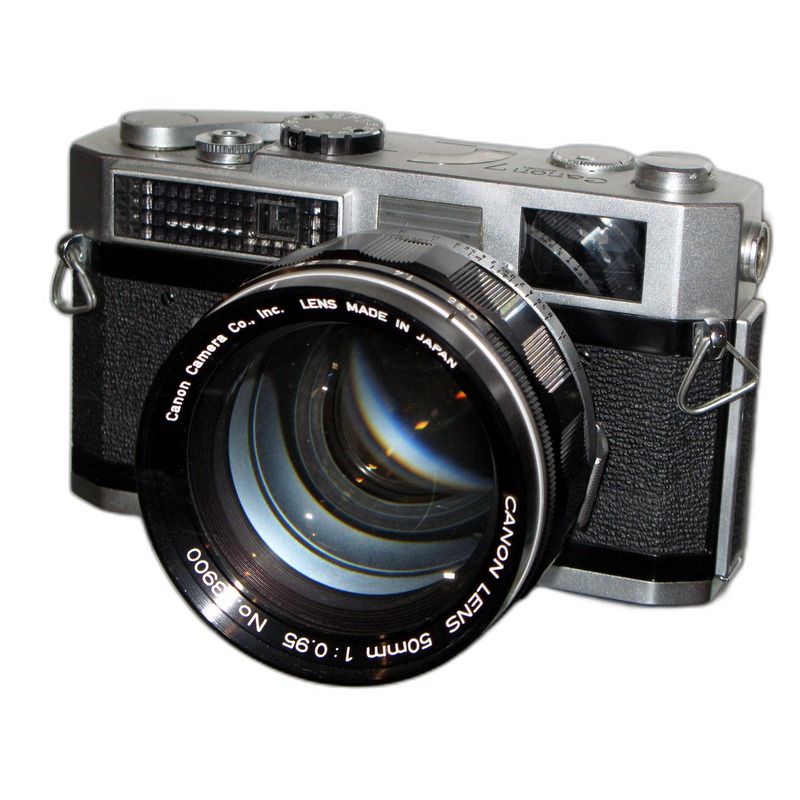
Canon 7S (Chrome,with 0.95 50mm lens)
Canon · Japan
The Canon 7S represents Canon's ambitious entry into the high-end rangefinder market during the 1960s, competing directly with established German manufacturers like Leica. As an updated version of the original Canon 7, it featured Canon's proprietary rangefinder system and mount, designed to be both compatible with Leica screw-mount lenses while offering Canon's own innovations. The most remarkable aspect of the Canon 7S was its compatibility with the Canon 50mm f/0.95 lens, one of the fastest lenses ever produced for a 35mm camera at the time. This ultra-bright lens allowed photographers to shoot in extremely low light conditions with shutter speeds that were previously impossible, opening new possibilities for photojournalism and available-light photography. The camera's construction reflected Canon's commitment to quality, featuring a durable body and precision engineering that appealed to professional photographers seeking an alternative to European rangefinder systems.
While the Canon 7S did not achieve the same legendary status as some of its European counterparts, it played an important role in establishing Canon's credibility in the professional camera market. The camera was used by photojournalists and documentary photographers who appreciated its compact size and exceptional low-light capabilities. The f/0.95 lens, in particular, became something of a cult item among photographers seeking ultimate light-gathering power. The Canon 7S represents an important chapter in Canon's evolution from a domestic Japanese camera maker to a global player in the photographic industry, bridging the gap between traditional rangefinder design and the emerging SLR technology that would soon dominate the market.
 Enjoy this museum? Support on Ko-fi