Pricing
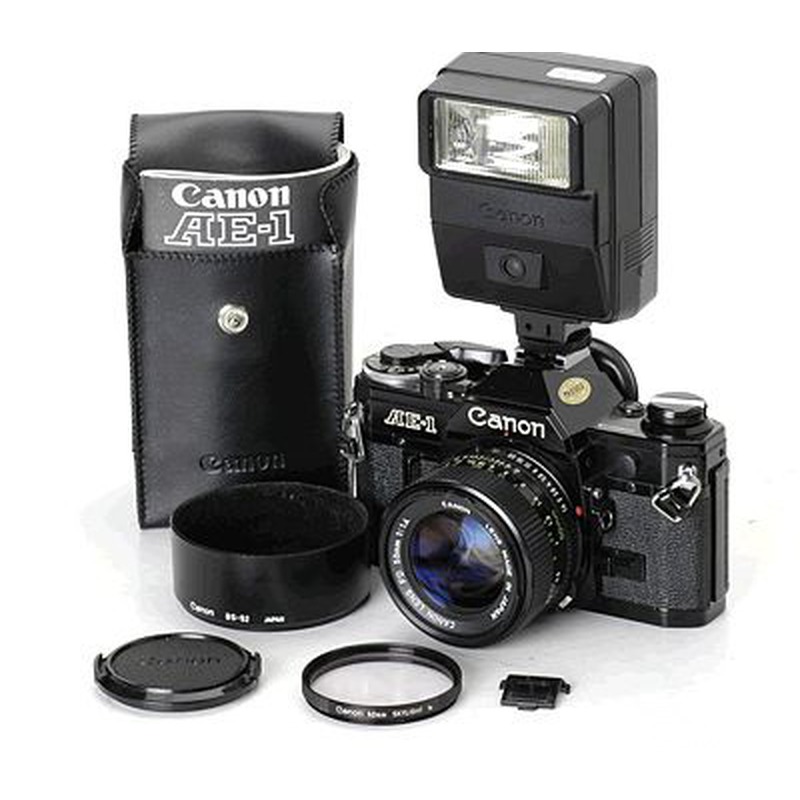
Canon AE-1
Canon · Japan
The Canon AE-1, introduced in April 1976, stands as a watershed moment in 35mm SLR history and one of the most influential cameras ever produced. Building upon Canon's successful F-1 professional line, the AE-1 pioneered the integration of microprocessor-controlled automatic exposure into a consumer-oriented SLR body, significantly simplifying operation and making advanced photography accessible to a vast new audience. Its revolutionary electronic shutter allowed aperture-priority automatic exposure with full manual override, controlled via a match-needle meter display visible in the viewfinder. This combination of automation, excellent Canon FD lens mount compatibility, and a relatively compact, lightweight magnesium alloy and polycarbonate body propelled the AE-1 to unprecedented commercial success, becoming the first camera to sell over one million units, fundamentally shaping the amateur SLR market for the remainder of its production run until 1984. Its design, featuring a distinctive black finish and integrated film winder, became iconic, and its reliability and feature set made it the go-to camera for millions of photographers worldwide, cementing Canon's dominance in the SLR market.
Beyond its direct impact, the AE-1's massive success demonstrated the viability of electronics in consumer cameras, forcing competitors to rapidly innovate and accelerate the shift from purely mechanical to electronically controlled SLRs. It effectively democratized photography by providing professional-like features (such as automatic exposure and a reliable metering system) at a consumer price point. The camera's widespread use and its role as a learning tool for countless photographers meant its aesthetic and functional design language became deeply embedded in the collective memory of late-20th-century photography. While not a tool demanding the same ruggedness as the Nikon F, its robust build for its class and the sheer volume produced ensured its long-term presence in the used market. The AE-1's legacy extends beyond its own production; it established a template for subsequent Canon AE program cameras and influenced the entire industry's approach to camera automation and design for decades.
 Enjoy this museum? Support on Ko-fi