Pricing
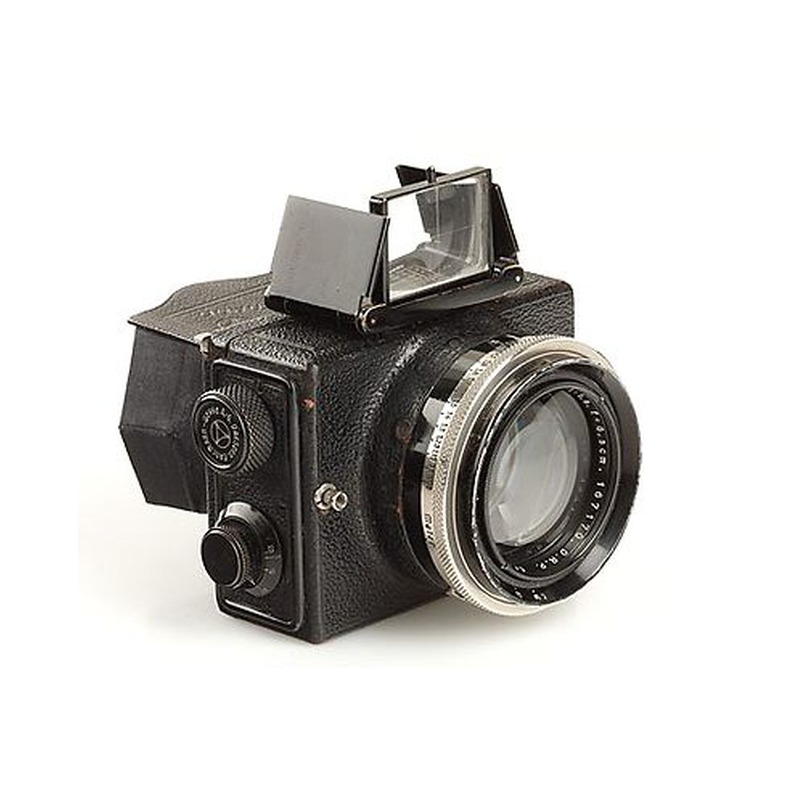
Ernemann Ermanox 4.5x6
Ernemann · Germany · 1924–1926 (2 years) · 135 film
The Ermanox 4.5x6 represents an important chapter in the early development of 35mm photography, produced by Ernemann during 1924-1926 just before the company merged into Zeiss Ikon. This camera occupied a significant position in the nascent 35mm market, competing directly with the Leica I that emerged shortly after. As one of the earliest practical 35mm cameras, the Ermanox featured a focal-plane shutter and interchangeable lenses, establishing design elements that would become standard in the format. The 4.5x6 cm image size provided a larger negative than the standard 24×36mm Leica format, offering a different approach to compact photography that appealed to some professionals and serious photographers of the era. Ernemann's engineering expertise is evident in the camera's precision construction, though the transition period before the Zeiss Ikon merger meant its production lifespan was relatively brief.
The Ermanox 4.5x6 embodies the experimental phase of 35mm photography when manufacturers were exploring different approaches to compact, high-quality cameras. Its relatively larger format compared to later 35mm standards provided a compromise between the convenience of roll film and image quality approaching that of medium format cameras. While it didn't achieve the enduring fame of some contemporary designs, the Ermanox 4.5x6 remains an important artifact in the evolution of photography, representing German engineering at a pivotal moment when the 35mm format was establishing itself as the dominant choice for serious photography despite being initially dismissed by many professionals as a mere novelty.
Specifications
| Film Format | 135 |
/main.jpg)
/main.jpg)
/main.jpg)
 Enjoy this museum? Support on Ko-fi