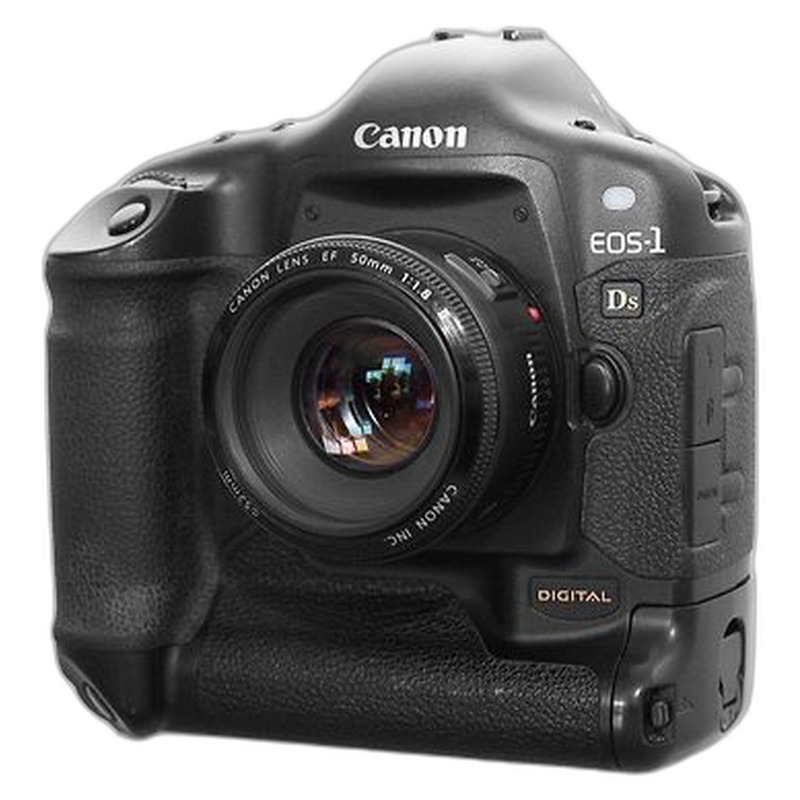
Canon EOS-1Ds
Canon · Japan
The Canon EOS-1Ds stands as a pivotal achievement in the transition to professional digital photography, marking Canon's ambitious entry into the full-frame DSLR market. Announced in 2002 and released in early 2003, it was the first DSLR to feature a full-frame (35mm equivalent) CMOS image sensor, specifically an 11.1-megapixel model. This was a revolutionary move at a time when most DSLRs, even professional ones, used cropped sensors (APS-C or smaller). The 1Ds offered unparalleled image quality for its era, with significantly higher resolution, superior low-light performance, and wider dynamic range compared to smaller sensors, effectively closing the gap between film and digital for high-end commercial and studio photographers. Its introduction signaled a major shift in the industry, forcing competitors to develop full-frame solutions and cementing Canon's dominance in the professional DSLR market segment.
Built to the exacting standards of Canon's flagship 1-series, the EOS-1Ds embodied robustness and reliability. Its magnesium alloy chassis featured extensive weather and dust sealing, dual CF card slots (a rarity at the time), and Canon's renowned EOS integrated control system with customizable functions and dials. Designed primarily for studio and controlled environment use, it was larger and heavier than contemporary DSLRs, reflecting its premium build and the demands of its target audience. While its frame rate was modest (3 fps), its exceptional image quality and the inherent benefits of the full-frame format made it the preferred tool for photographers in fashion, advertising, and high-end portraiture who needed maximum detail and precision. The 1Ds became the digital workhorse for many renowned professionals during the mid-2000s, establishing the full-frame DSLR as the new benchmark for high-resolution digital capture.

 Enjoy this museum? Support on Ko-fi